
In October 2024, a panel of European food experts handed the island of Crete a title it had arguably earned several thousand years earlier. Crete was named the European Region of Gastronomy for 2026, the award it now holds, and around the same time National Geographic put the island near the top of its list of the best food destinations in the world for the year. After centuries of quietly feeding its people some of the longest, healthiest lives on the planet, Crete is suddenly being celebrated as a food capital of Europe.
The timing is a little funny, because nothing about how Cretans eat has changed. The island is being discovered, not transformed. What the award actually honors is a way of eating so old and so simple that the modern science of healthy diets was essentially built by studying it in the first place.
And here is the part worth your attention. The Cretans who live the longest, the old people in the mountain villages who reach ninety and a hundred in good health, do not eat an elaborate or exotic diet. They eat more or less the same handful of humble things, day after day, and that short list is one of the most studied longevity diets in existence.
We have eaten our way around enough of the Mediterranean to recognize the pattern when we see it, and Crete is the purest version of it we have come across. There is nothing precious about the food. It is village cooking, cheap and plain, and that plainness is exactly what makes it work.
The Title Is Real, And So Is The Pedigree
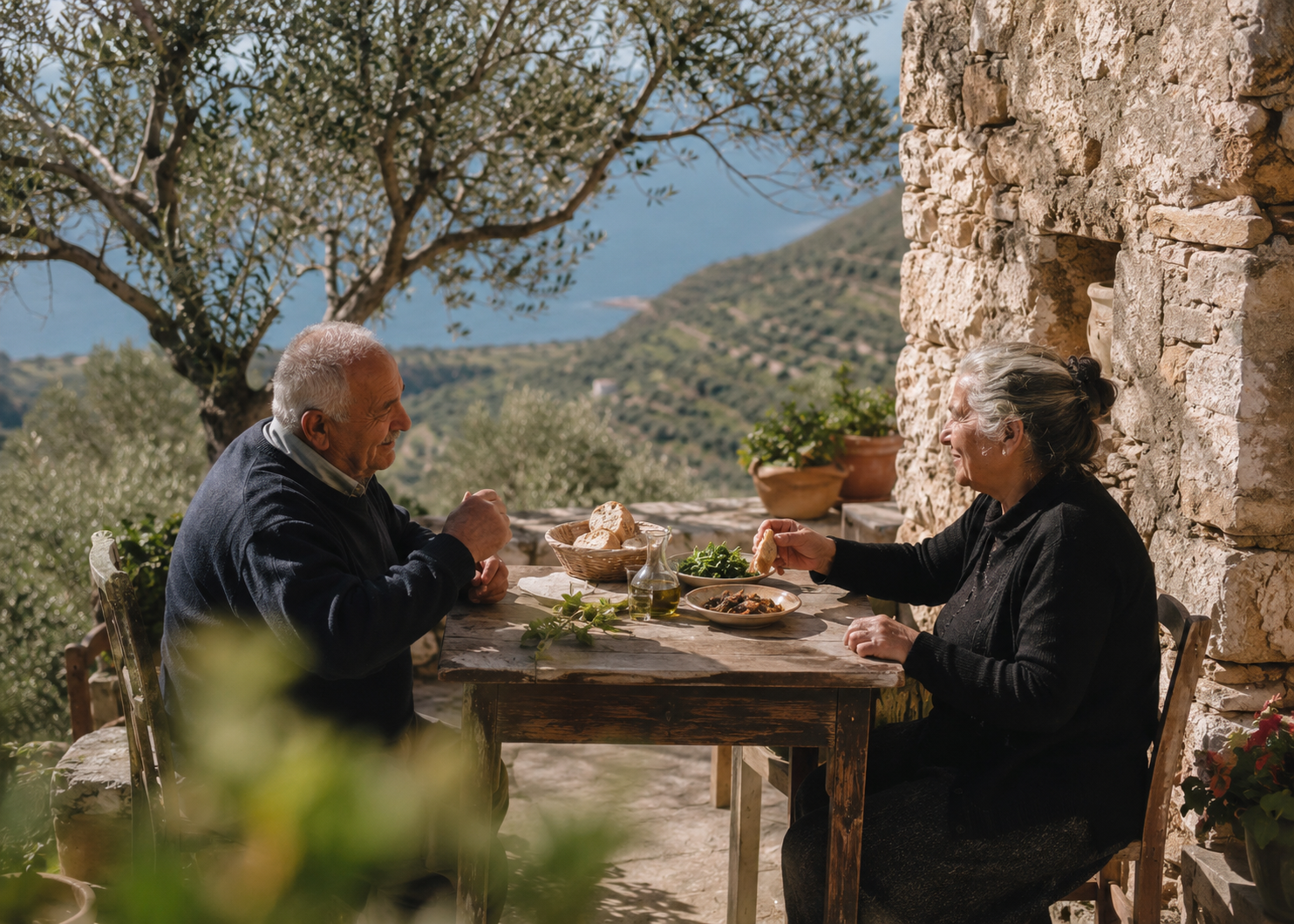
It is worth being precise about the award, because the headlines simplify it. The specific honor is the European Region of Gastronomy 2026, granted by an international gastronomy institute that evaluates regions on their food culture, sustainability, and culinary heritage. Crete won it on the strength of exactly the qualities this article is about, simplicity, quality ingredients, and a living food tradition.
The recognition did not come from nowhere. Crete sits at the historical center of the whole idea of the healthy Mediterranean diet. When scientists first set out in the 1950s and 60s to understand why some populations barely got heart disease, Crete was the standout. The famous Seven Countries Study found Cretans living remarkably long lives with strikingly low rates of heart disease, and the diet they ate became the model for what the world now calls the Mediterranean diet. The American scientist Ancel Keys, who led that research, was so struck by the Cretan example that the island became a kind of reference point for healthy eating worldwide. The diet that nutritionists have recommended for seventy years is, at its root, a description of what Cretan villagers were already eating without thinking about it.
So the 2026 title is not a marketing invention. It is a formal acknowledgment of an island whose ordinary daily food became, quite literally, the scientific blueprint for eating well. The longevity came first. The award is just catching up.
The Five Things The Oldest Cretans Eat
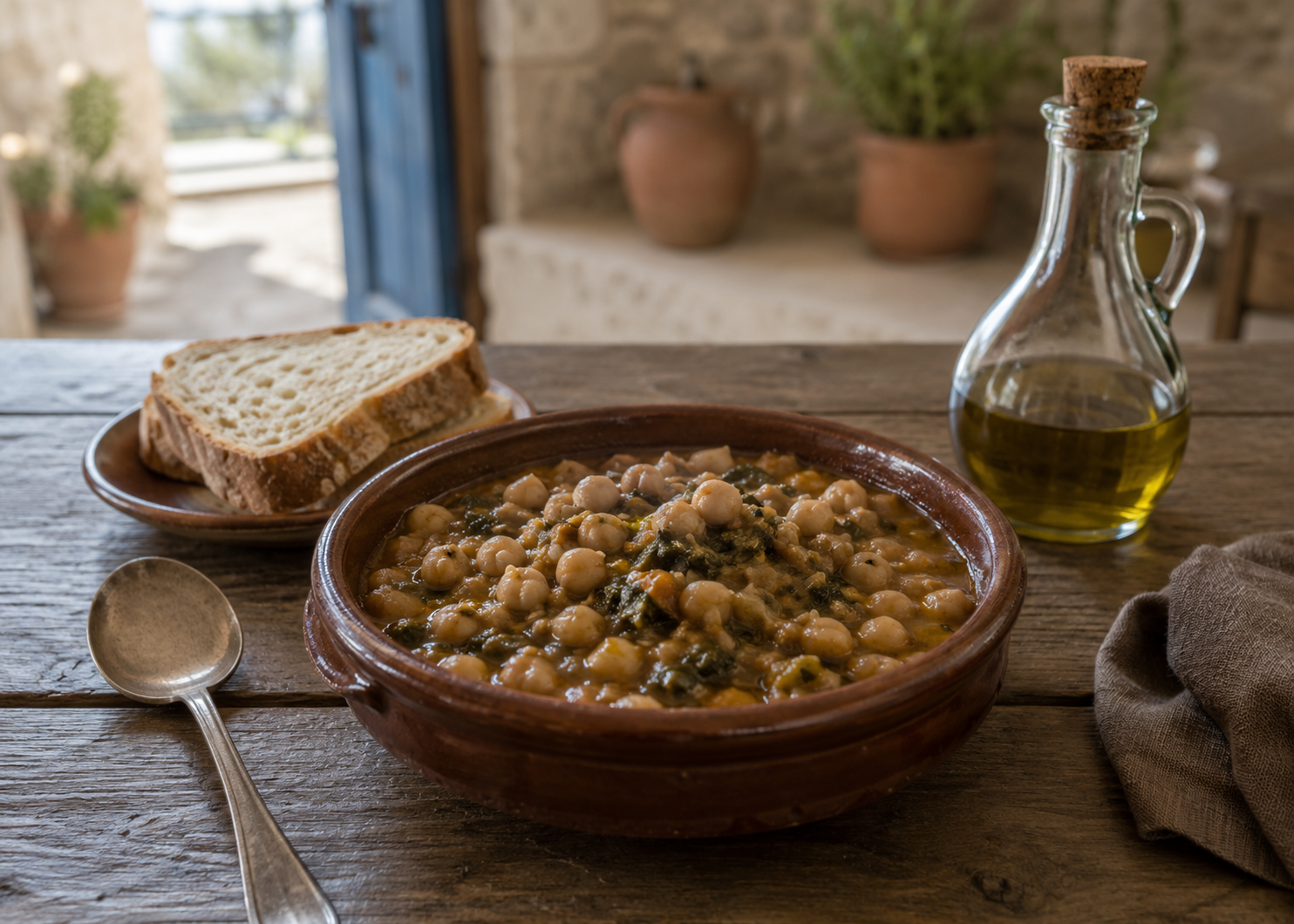
Strip the Cretan diet down to what actually appears on the table of a long-lived villager, and it comes down to a short, unglamorous list. These are the foundations, eaten in real quantity, day in and day out.
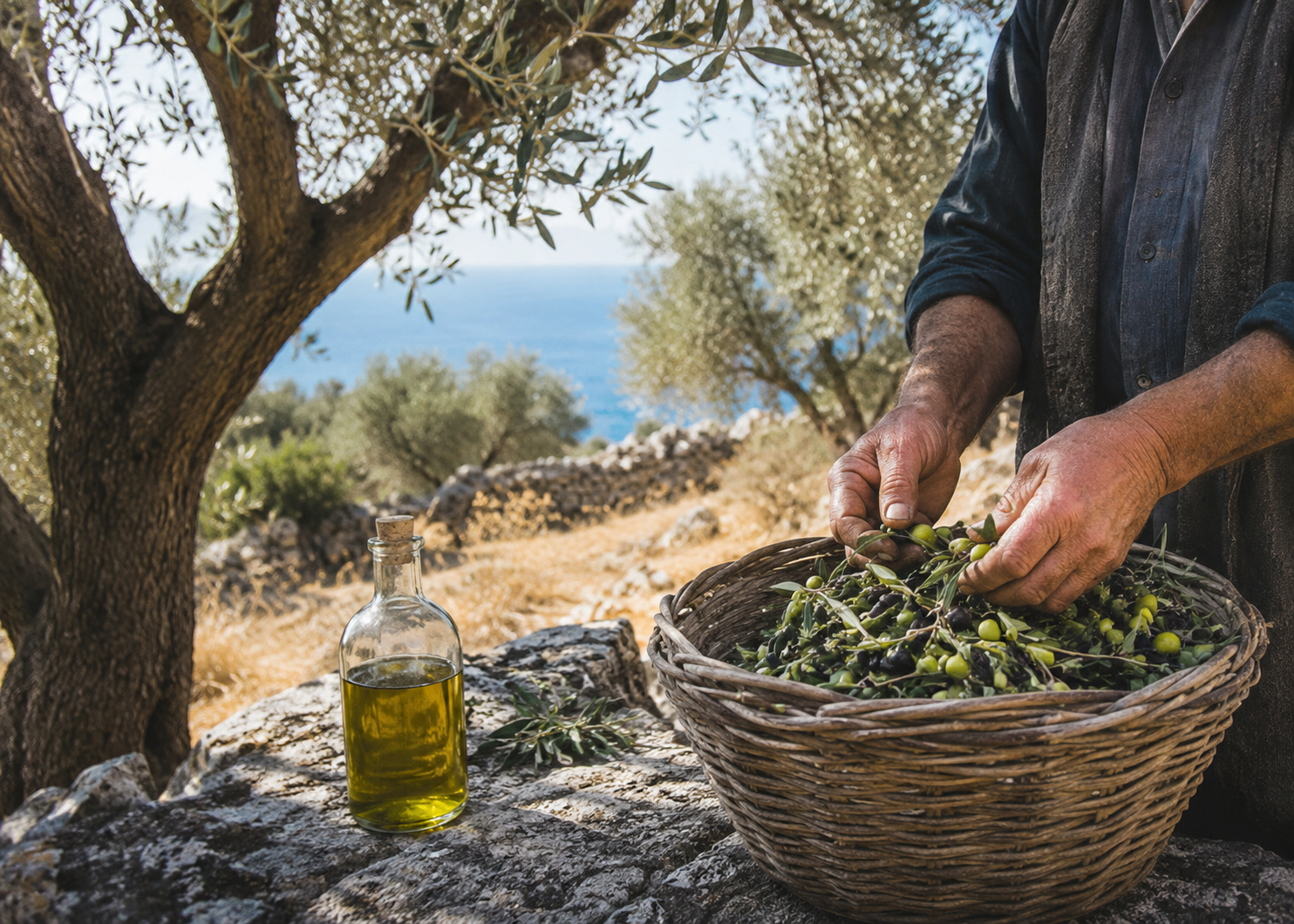
The first is olive oil, and not as a garnish. Traditional Cretans consume astonishing amounts of it, pouring it over almost everything, using it as the main fat for cooking and dressing alike. It is the single most characteristic feature of the diet, a rich source of the fats now understood to protect the heart, and Cretans treat it as a staple food rather than a condiment. Historically, Cretans were among the highest olive oil consumers anywhere on earth, taking a remarkable share of their daily calories from it, which startled the early researchers who expected so much fat to be harmful and found the opposite.
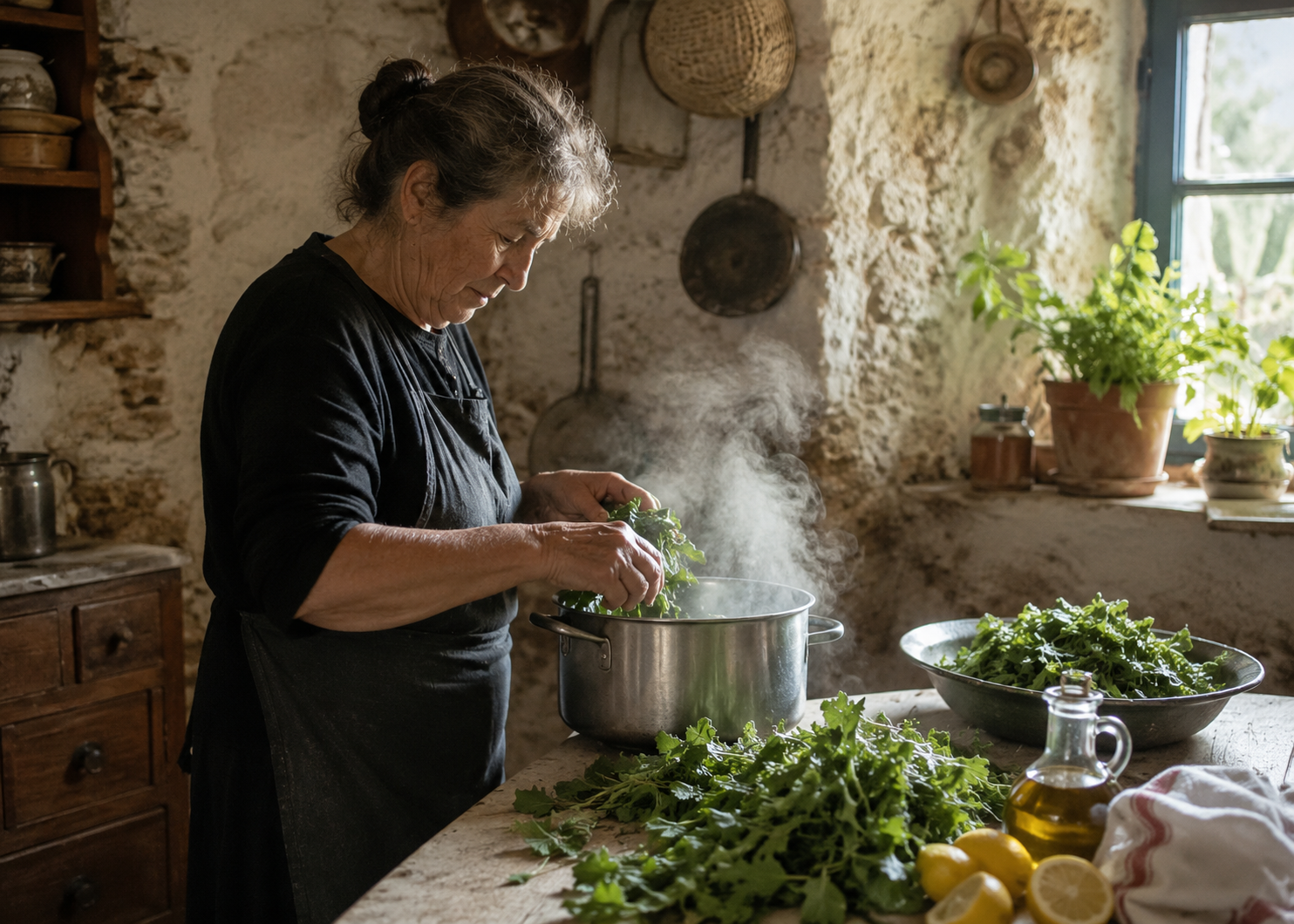
The second is wild greens and vegetables. The Cretan countryside is full of edible wild greens, known as horta, which villagers gather and eat in large quantities, alongside tomatoes, peppers, eggplant, and whatever the season provides. Vegetables are not a side dish here. They are the bulk of the plate, often cooked slowly in that generous olive oil until soft and savory. The foraging culture behind the greens is its own quiet marvel. Cretans know dozens of edible wild plants by sight and gather them from the hillsides, and the island’s herbs, oregano, thyme, wild mountain tea, season the food and the daily cup alike. Much of the diet was, for centuries, simply whatever the land offered for free.
The third is legumes, the beans, lentils, chickpeas, and broad beans that have fed the island for millennia. These are the protein the traditional diet is built around, eaten far more often than meat, in stews and soups and simple dishes that are cheap, filling, and, as longevity research keeps confirming, strongly associated with long life.
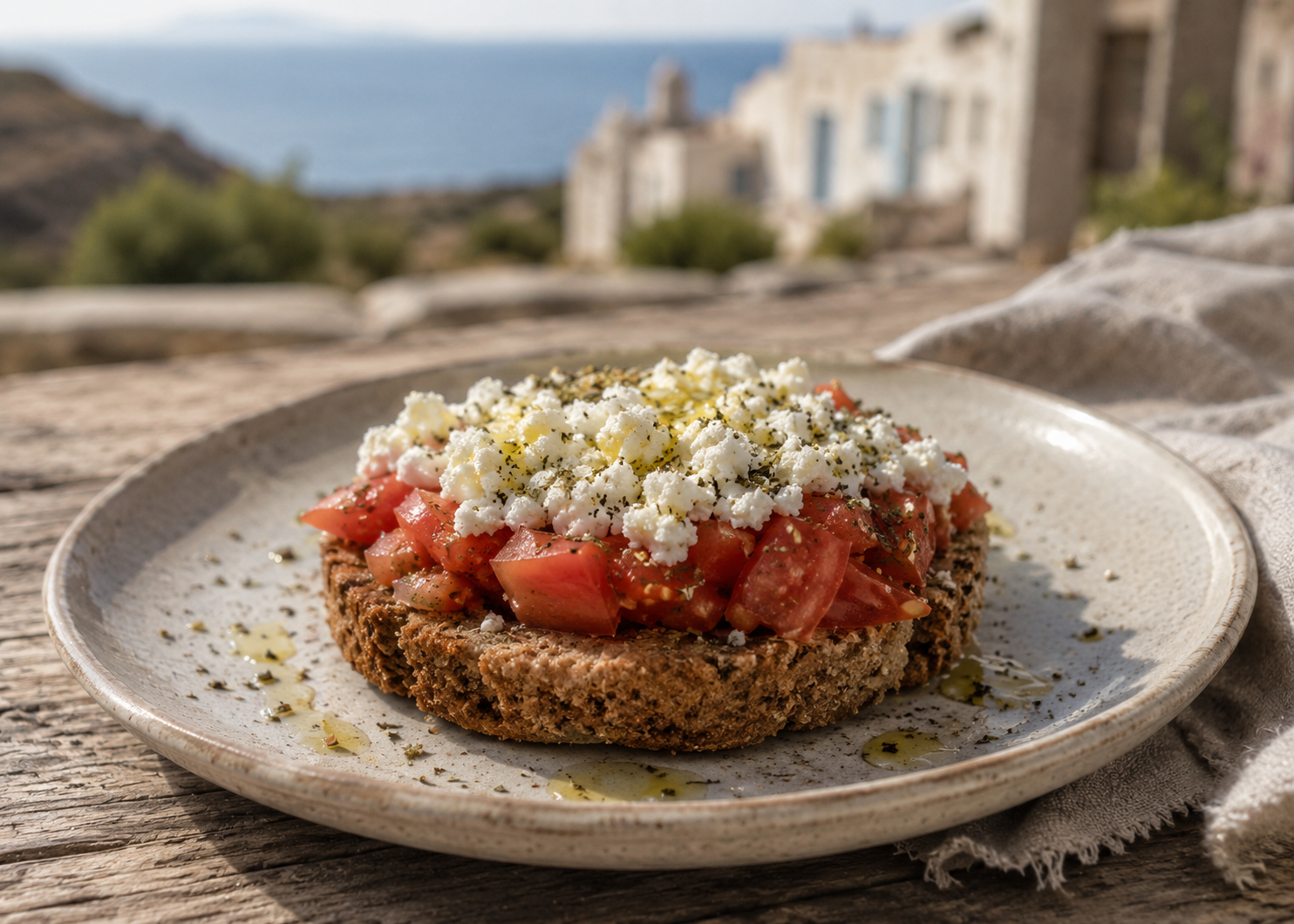
The fourth is whole grains, especially barley. The iconic Cretan food here is the barley rusk, a twice-baked, rock-hard bread called paximadi, softened with water and olive oil and topped with tomato into the dish known as dakos. Whole, minimally processed grains rather than refined white flour have anchored the Cretan table for as long as anyone can trace.
The fifth is fruit and nuts. Fresh fruit is the everyday dessert, the sweet course being an orange or grapes or a fig rather than anything baked, and nuts like almonds and walnuts turn up throughout. Together they round out a diet that is overwhelmingly plant-based, whole, and simple.
What Is Barely On The List
The list above is striking as much for what it leaves out as for what it includes, and the absences are the point.
Meat is a minor character in the traditional Cretan diet, eaten in small amounts and often reserved for Sundays and feast days rather than appearing at every meal. Fish and a little cheese and yogurt show up in modest quantities, real but secondary. There is very little sugar, almost no processed food, and none of the engineered, packaged products that dominate a modern Western diet. The traditional Cretan plate is built from whole ingredients that would have been recognizable a thousand years ago.
That is the quiet secret hiding inside the five staples. It is not just that Cretans eat a lot of olive oil and beans. It is that those things crowd out the meat, sugar, and processed food that fill the modern plate elsewhere. The longevity comes as much from what is absent as from what is present.
How They Actually Eat It
The five foods are only half the story. How Cretans put them together matters just as much, and it is the part the gastronomy award was really honoring when it praised the island’s culinary magic of simplicity.
Cretan cooking is built on doing very little to very good ingredients. A handful of wild greens boiled and dressed with olive oil and lemon. A bowl of giant beans baked slowly with tomato and herbs. A barley rusk soaked and topped with grated tomato, a little cheese, oregano, and a flood of oil. These are not recipes so much as assemblies, and the skill is in the quality of what goes in rather than in any technique.
The food is also deeply seasonal and deeply social. People eat what is ripe, they eat it together, slowly, often outdoors, and the meal is an occasion rather than a refueling. The simplicity is not poverty of imagination. It is confidence that good ingredients, barely interfered with, are enough. That confidence is the whole philosophy of the Cretan table, and it is exactly what a modern diet of complicated, engineered food has lost.
Why These Five Foods Actually Work
It is fair to ask what it is about these particular foods that science keeps connecting to long life, and the answer is reassuringly unmysterious.
Olive oil supplies monounsaturated fats and a load of plant compounds now linked to lower inflammation and better heart health. Legumes, wild greens, vegetables, and whole-grain barley deliver enormous amounts of fiber, which feeds the gut, steadies blood sugar, and fills you up on few calories. Fruit and nuts add more fiber, healthy fats, and antioxidants. Taken together, it is a diet extremely high in plants and fiber and good fats, and extremely low in the refined sugar, processed food, and excess meat that drive modern chronic disease.
There is no single miracle nutrient in any of it, and that is precisely the point. The benefit comes from the whole pattern, not from one hero ingredient, which is why it has never been successfully bottled and sold. You get it by eating the five things, in those proportions, for years. That is the entire mechanism, and it is available to anyone.
It Was Never Only About The Food
Honesty requires widening the lens, because no diet works in a vacuum, and the old Cretans had more going for them than their plates.
The villagers who reached great age were also moving constantly, walking the hills, working the land, physically active well into old age as a matter of daily life rather than exercise. They lived embedded in tight communities, with strong family and social bonds and the unhurried, sociable pace of Mediterranean village life. Sun, movement, connection, and low chronic stress all sat alongside the food. The diet was the centerpiece, but the long life was the whole way of living.
This matters because it is tempting to think you can buy the longevity in a bottle of olive oil. You cannot. The five foods are real and they matter enormously, but they were one part of a life that also moved, rested, and connected in ways the modern world makes difficult. The food is the most portable piece, which is why it gets the attention, but it was never working alone.
Modern Crete Is Not Frozen In Time
It would be misleading to suggest every Cretan today eats like a 1950s villager, because they do not, and that is part of why the award matters.
Like everywhere, Crete has seen processed food, fast food, and modern habits creep in, especially among the young, and rates of obesity and related problems have risen from the historic lows the early studies found. The pristine traditional diet that produced those famous long-lived elders is partly a thing of the past even on its home island. The 2026 recognition is, in part, an effort to protect and revive exactly that heritage before it fades further.
So when you read about the Cretan diet, understand that it describes a traditional pattern, the one the research was built on, not necessarily what every islander eats today. The good news is that the traditional pattern is fully recoverable, because it was never complicated. It is the same five humble things it always was, available to anyone, anywhere, who wants to eat the way the longest-lived Cretans did.
What You Can Actually Take From It
The beauty of this particular longevity diet is that there is nothing to buy and nothing to decode. The five foundations are cheap, ordinary, and available in any supermarket on earth.
You do not need Cretan olive oil or wild Cretan greens specifically. You need to make good olive oil your main fat, build meals around vegetables and beans, choose whole grains over refined ones, eat fruit and nuts, and let meat and sugar and processed food recede to the edges. That is the entire Cretan diet, and it is less a diet than a set of proportions, the same proportions that have quietly produced long life on that island for generations.
And you can layer the rest of it on over time, in whatever form your own life allows. Walk more. Eat with other people. Slow the meal down. None of those require Crete either, and each one nudges you a little closer to the whole pattern rather than just the plate. The food opens the door, and the way of living walks through it.
It will not, on its own, buy you the village, the hills, or the unhurried community that surrounded those long-lived Cretans. But the food is the foundation everything else was built on, and it is the part you can start tomorrow. The island that taught the world how to eat well is being honored for it in 2026, and the lesson it is being honored for costs almost nothing to learn. There is something fitting in that. The most studied longevity diet on earth turns out to be the cheapest, plainest food imaginable, and the award is really just the world finally saying out loud what the old Cretans knew all along.

About the Author: Ruben, co-founder of Gamintraveler.com since 2014, is a seasoned traveler from Spain who has explored over 100 countries since 2009. Known for his extensive travel adventures across South America, Europe, the US, Australia, New Zealand, Asia, and Africa, Ruben combines his passion for adventurous yet sustainable living with his love for cycling, highlighted by his remarkable 5-month bicycle journey from Spain to Norway. He currently resides in Spain, where he continues sharing his travel experiences with his partner, Rachel, and their son, Han.