
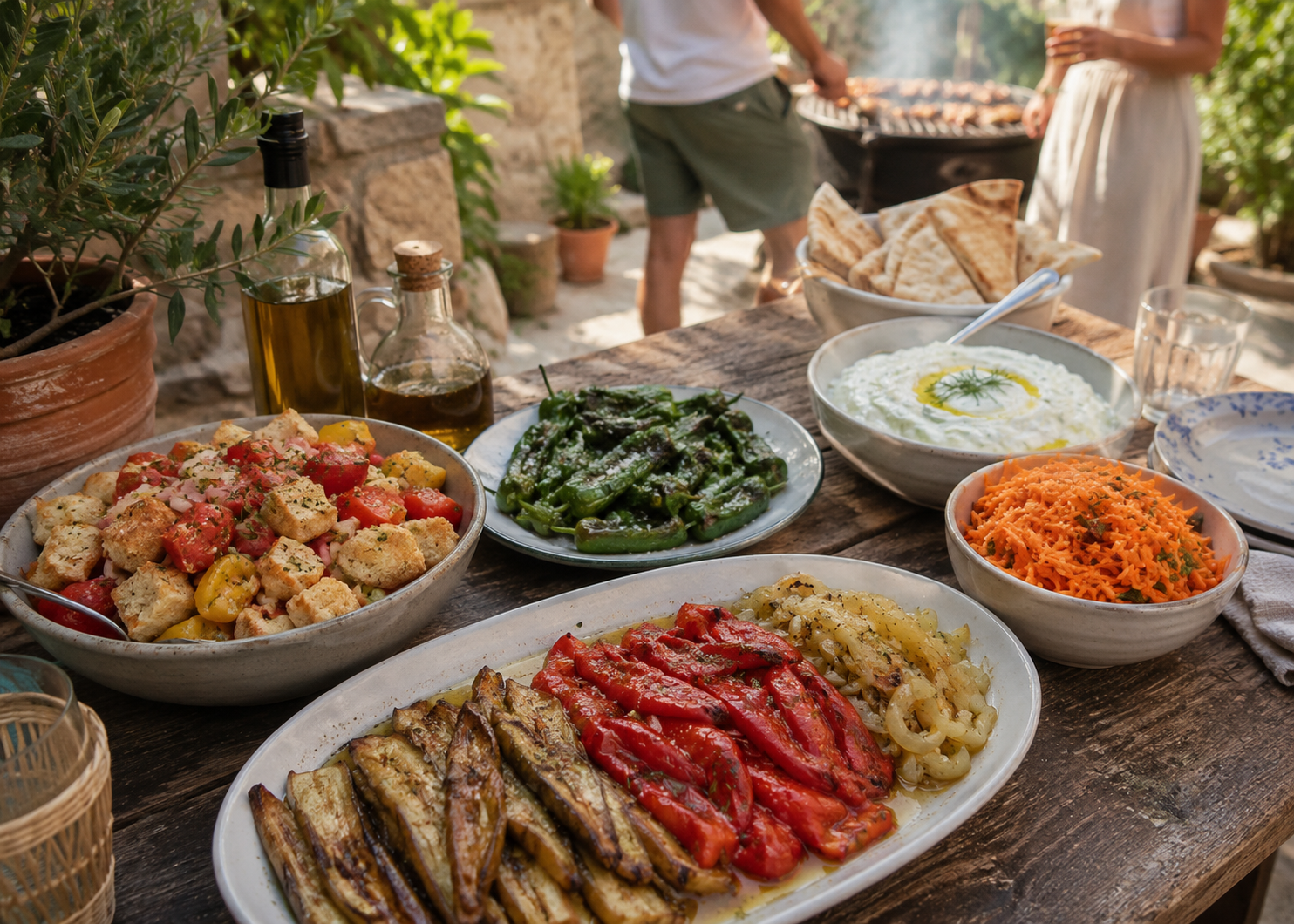
The village we spend summers in, out in Cuenca province, does its barbecues on vine cuttings and almond wood. Someone’s uncle runs the fire and nobody argues with him.
But watch where people actually gather. It is not the meat. It is the side table: a tray of blackened peppers and eggplant shining with olive oil, a bowl of bread salad gone dark with tomato juice, a plate of small green peppers under flaky salt that everyone eats standing up.
The American cookout settled on its sides decades ago. Potato salad, coleslaw, baked beans, a bag of chips, most of it from the deli counter, none of it anyone’s favorite part of the meal.
Europe’s grill culture solved the same problem differently. The five sides below are built for exactly what a cookout needs: they feed a crowd outdoors, they cost very little, they are made ahead, and most get better sitting on the table while the burgers come off. All five translate to an American backyard with ingredients from a regular supermarket.
Escalivada, The Side You Cook In The Fire You Already Built
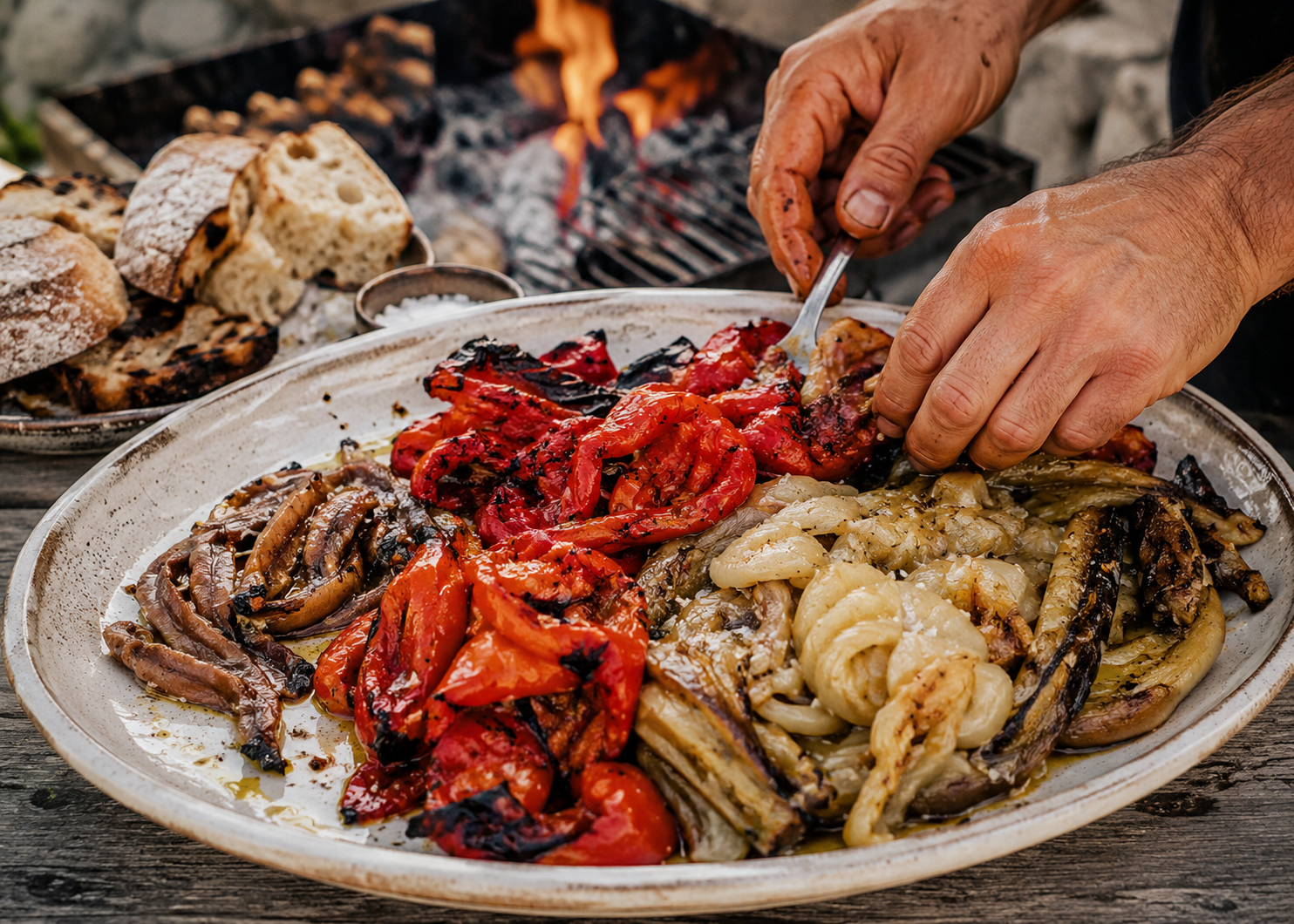
Catalonia’s escalivada takes its name from the verb escalivar, to cook in embers, and that is the entire recipe. Whole peppers, eggplants, and onions go straight onto the grill or into the coals while the fire is still too fierce for meat.
They blister, blacken, and collapse. You peel them, tear the flesh into strips, and dress everything with olive oil and salt.
The result is smoky, sweet, and silky, and it costs almost nothing in August when peppers and eggplants are practically given away. In Spain it goes on bread, next to grilled meat, or under a few anchovies, and it is better an hour after you make it, which happens to be the exact timeline of a cookout.
The scheduling is the clever part. Escalivada uses the stage of the fire American grillers waste, the first raging half hour before the coals settle down. Your vegetables cook while you wait to put the meat on.
Ingredients
- 3 red bell peppers
- 2 medium eggplants
- 2 onions, unpeeled
- 5 tablespoons (75ml) olive oil
- Salt
- Optional: 1 garlic clove sliced thin, or a few anchovy fillets
Method
- Put the whole vegetables on the hot grill or directly in the coals. Turn every 10 minutes.
- Cook 30 to 40 minutes until the skins are black and the vegetables have collapsed.
- Pile them in a bowl, cover with a plate, and rest 15 minutes. The steam loosens the skins.
- Peel everything, tear the peppers and eggplant into strips, slice the onions. Do not rinse; a few black flecks are the point.
- Layer on a platter, dress generously with olive oil and salt, add the garlic or anchovies if using.
- Serve at room temperature, with bread.
Panzanella, What Tuscany Does With Stale Bread
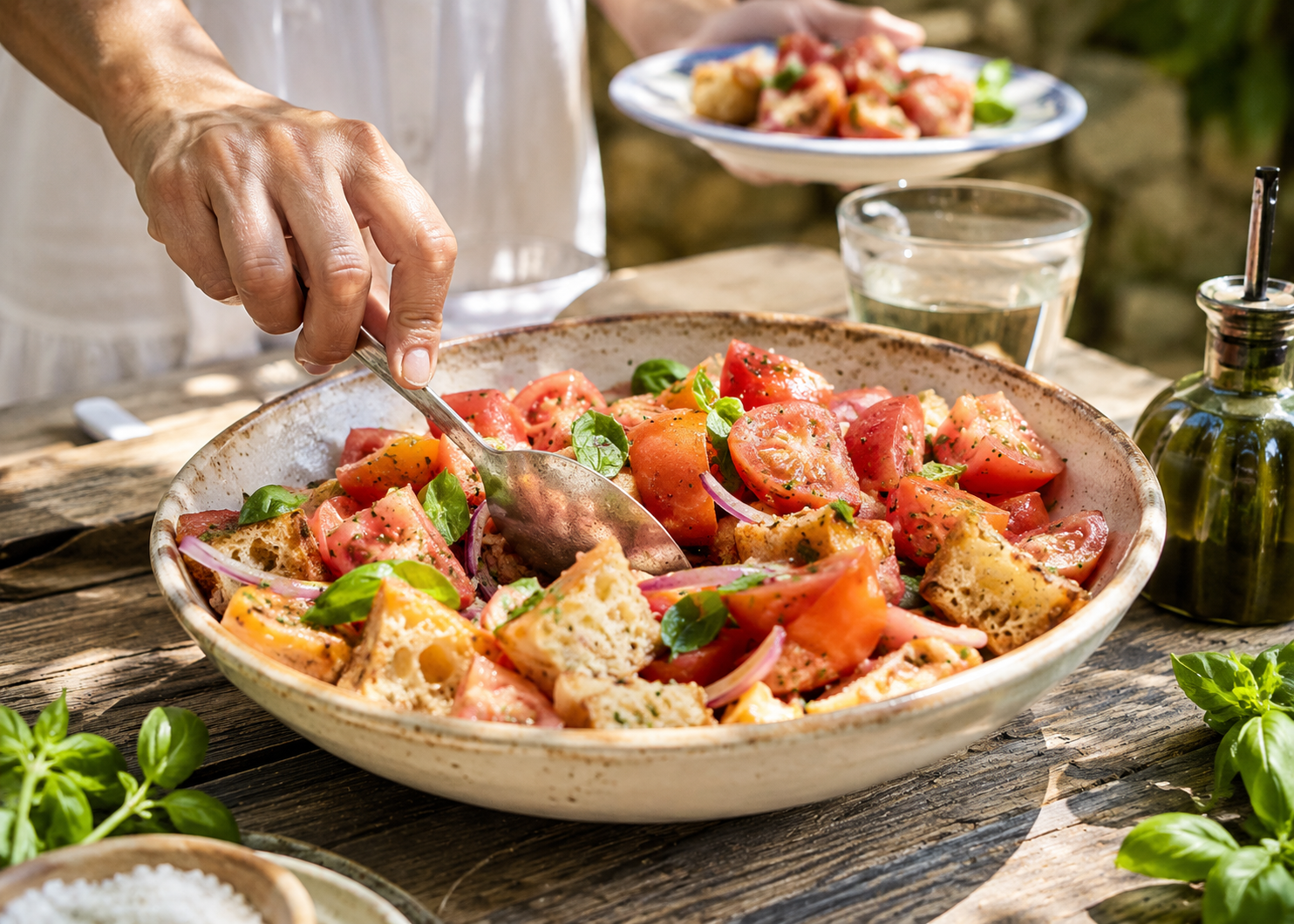
Tuscany invented panzanella because bread there was too valuable to throw away and too hard by day two to eat plain. The fix was tomatoes.
Torn stale bread, ripe tomatoes and their juices, red onion, basil, vinegar, and enough olive oil to pull it together. The bread drinks the tomato and vinegar and turns into something between a salad and a meal.
Two rules decide whether it works. The tomatoes must be genuinely ripe, August tomatoes, because their juice is the dressing. And the bread must be real crusty bread a day or two old, since soft sandwich bread dissolves into mush.
One Tuscan trick worth stealing: soak the sliced red onion in cold water for 10 minutes before it goes in. It keeps the crunch and loses the harshness that lingers on people at a party.
At a cookout it does the potato salad job, the starchy side that fills people up, with none of the weight. It also solves the American problem of the half-stale loaf, which Tuscans would recognize as the whole reason the dish exists.
Ingredients
- 300g (about half a loaf) stale country bread or baguette
- 600g ripe tomatoes
- 1 small red onion, sliced thin
- A handful of basil leaves
- 2 tablespoons red wine vinegar
- 6 tablespoons (90ml) olive oil
- Salt
Method
- Tear the bread into rough bite-size pieces.
- Chop the tomatoes over the bowl so no juice is lost, and add them with all their liquid.
- Add the onion, vinegar, oil, and a good pinch of salt. Toss with your hands.
- Rest 30 minutes at room temperature, tossing once, until the bread is soaked but not falling apart.
- Tear in the basil just before serving. Taste for vinegar and salt.
Padrón Peppers, The Only Side People Cheer For
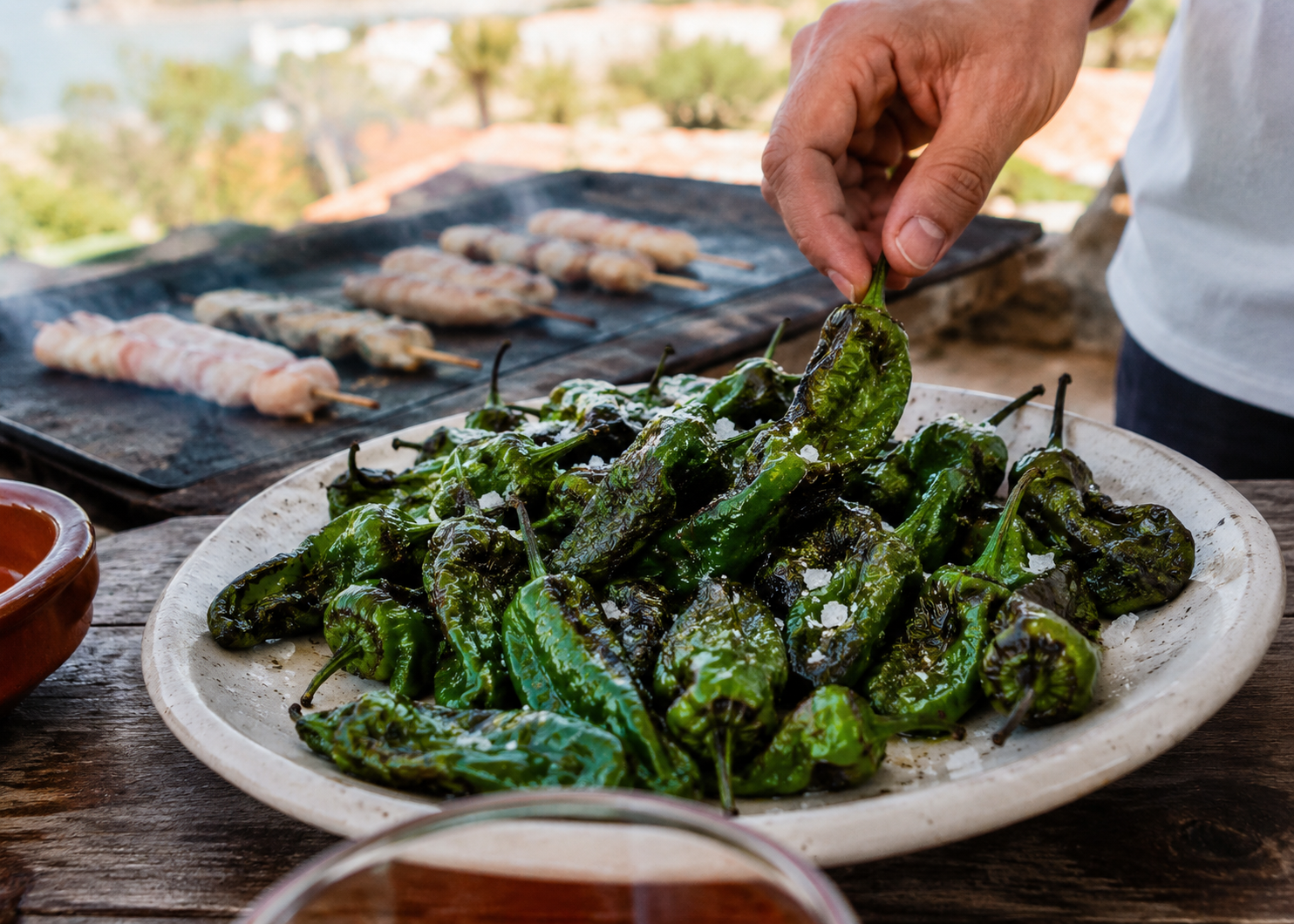
Galicia’s pimientos de Padrón are small green peppers, blistered fast in olive oil and buried under flaky salt, eaten by the stem while they are still too hot to hold.
The famous part is the roulette. Most are mild, but roughly one in ten is properly hot, and there is no way to tell from the outside. The Galician saying covers it: unos pican e outros non. Some bite, some don’t.
That gamble is why they belong at a party. A plate of padróns is a game, and whoever gets the hot one owes the table a story. No other side dish comes with its own entertainment.
The peppers arrived in the town of Padrón centuries ago with Franciscan monks returning from the Americas, and the local crop now carries EU protected status under the name Pemento de Herbón. In the United States the real thing is rare, but shishito peppers are the accepted stand-in, close cousins sold in most large supermarkets now, and they cook identically.
Ingredients
- 250g padrón or shishito peppers
- 2 tablespoons olive oil
- Flaky salt
Method
- Get a heavy pan or a plancha smoking hot on the grill grate.
- Add the oil, then the peppers whole, in one layer.
- Cook 3 to 4 minutes, tossing, until blistered and slumped in spots.
- Tip onto a plate, salt heavily, and eat immediately, by the stem.
Tzatziki, The Sauce Grilled Meat Actually Wants
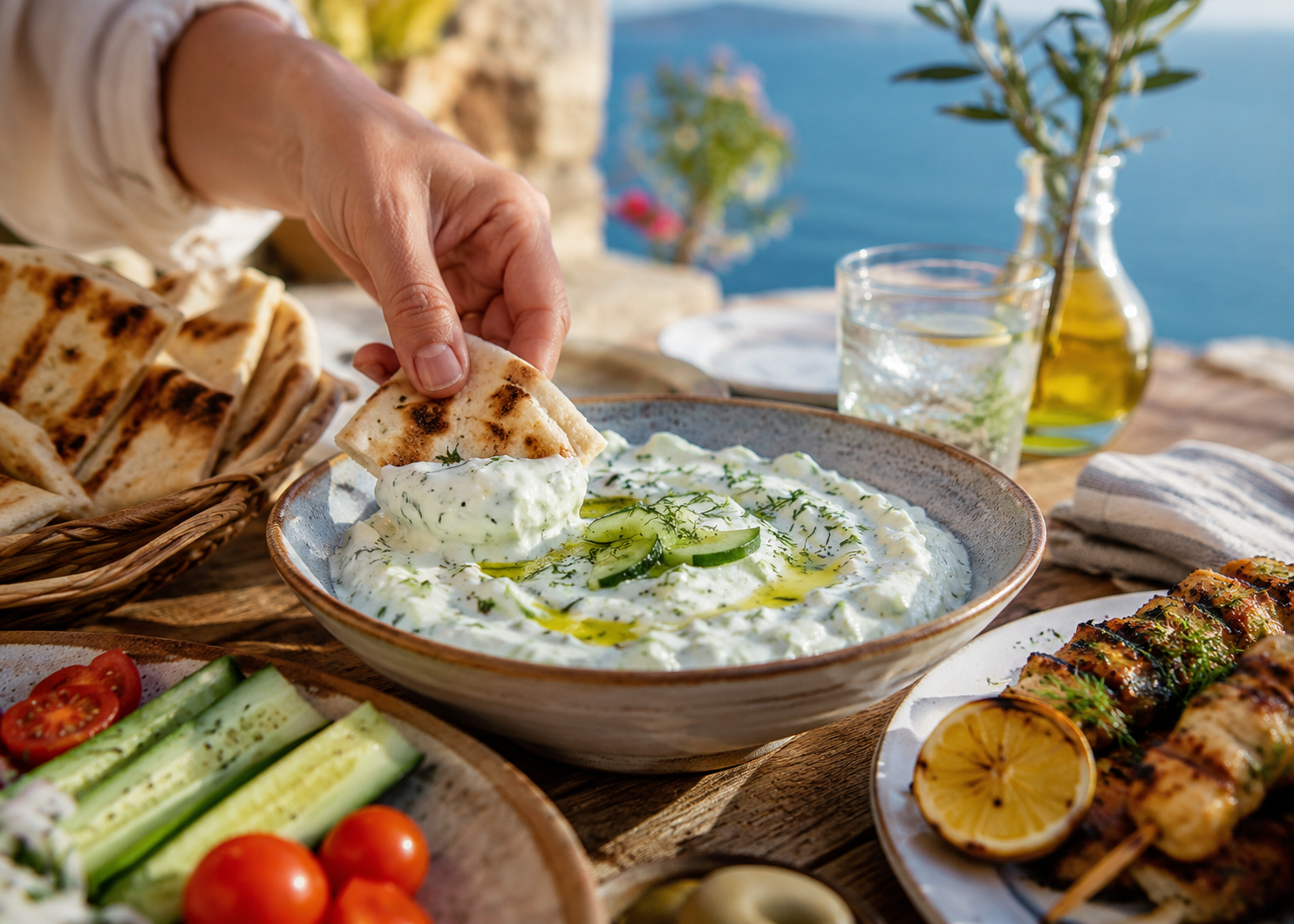
Greece put tzatziki next to grilled meat for a reason. Cold, garlicky yogurt against char and fat is one of the great pairings, and it embarrasses the bottled dips it would replace on an American table.
Two techniques separate real tzatziki from the watery supermarket tub. The cucumber gets grated, salted, and squeezed hard until it stops dripping, and the yogurt is thick strained Greek yogurt, full fat. Skip either and you have soup by the second hour.
Made right, it holds its texture through a whole afternoon outdoors. It works as a dip for vegetables, a sauce for burgers and grilled chicken, and the thing people drag the last piece of bread through. One bowl covers three jobs on the table.
In Greece it lands on the table with warm pita and stays there for the whole meal, and the garlic is a choice you make about your evening. Two cloves is sociable. Four is a commitment.
Ingredients
- 400g full-fat Greek yogurt
- 1 large cucumber
- 2 garlic cloves, grated fine
- 2 tablespoons olive oil
- 1 tablespoon red wine vinegar or lemon juice
- 2 tablespoons chopped fresh dill or mint
- Salt
Method
- Grate the cucumber coarsely, toss with a teaspoon of salt, and leave it 10 minutes in a sieve.
- Squeeze the cucumber in your fists, hard, until it stops dripping.
- Stir it into the yogurt with the garlic, oil, vinegar, and herbs.
- Rest at least 30 minutes in the fridge. Taste for salt before serving.
Carottes Râpées, The French Salad That Costs Two Dollars
Walk into any French traiteur, school canteen, or supermarket deli case and there it is: grated carrots in a lemon and Dijon dressing, the most ordinary salad in France and one of its best.
The whole dish is five ingredients and ten minutes, and it depends on one detail. Grate the carrots fine and dress them immediately, then let the bowl sit. The salt and lemon soften the shreds just enough and the carrots drink the vinaigrette.
French children eat this by the plateful, which tells you how far it is from the sad shredded-carrot garnish Americans know. It is bright, sweet, and sharp, and next to smoky grilled meat it does the job coleslaw was hired for at a fraction of the weight.
It is also the cheapest thing that will be on the table. A bag of carrots and a lemon, maybe two dollars (under 2€), feeds eight people.
Ingredients
- 500g carrots, peeled
- Juice of 1 lemon
- 1 teaspoon Dijon mustard
- 4 tablespoons (60ml) olive oil or neutral oil
- 1 teaspoon honey
- 2 tablespoons chopped parsley
- Salt
Method
- Whisk the lemon juice, mustard, honey, a good pinch of salt, and the oil in the bottom of a large bowl.
- Grate the carrots on the fine holes of a box grater, or in a food processor.
- Toss the carrots in the dressing immediately.
- Rest 20 to 30 minutes, stir in the parsley, taste, and serve. It keeps well for two days.
Why None Of These Lean On Mayonnaise
It is not an accident that four of the five run on olive oil, vinegar, lemon, or yogurt. These dishes are older than refrigeration, invented for tables that sit outdoors for hours in a Mediterranean summer, so they were built around dressings that improve at room temperature instead of fighting it.
That design is exactly what an American cookout asks of a side and rarely gets. The deli-counter classics were engineered for a fridge and a spoon, and they show it by hour two, when the potato salad has gone claggy and the coleslaw is sitting in its own puddle.
The European versions move in the opposite direction as the afternoon goes on. The escalivada settles into its oil, the panzanella finishes soaking, the carrots keep drinking their dressing. Time on the table is an ingredient, not a threat.
Running All Five At A Real Cookout
Everything except the padróns is made before anyone arrives. The tzatziki and the carrot salad the night before, since both improve overnight. The panzanella an hour ahead.
Escalivada slots into the fire’s own timeline. The vegetables go on when you light the coals, and they are peeled and on a platter by the time the grill is ready for meat. The padróns take four minutes in a cast-iron pan set on the grate while the burgers rest.
For quantities, plan on the sides doing more work than you expect. A kilo of carrots and a full recipe of tzatziki cover a dozen people, the panzanella stretches by adding another tomato and more bread, and one bag of shishitos disappears in ten minutes regardless of how many guests there are, so buy two. The escalivada is the one to overproduce on purpose, because whatever survives the afternoon becomes tomorrow’s lunch on toast, and in Spain that leftover is considered the best part.
The shopping is one regular supermarket run: shishitos, Greek yogurt, carrots, tomatoes, a day-old loaf, peppers and eggplants. The whole table of five sides lands around $25 (about 23€) and feeds a dozen people, which is roughly what two tubs of deli potato salad cost now.
Which One To Bring First
If you control the grill, start with escalivada, because it uses fire you were going to waste anyway and it makes you look like you know something.
If you are a guest, bring the carottes râpées. It travels in one container, wilts at nothing, and nobody else will have brought it. Then stand nearby and watch how fast a two-dollar bowl of carrots disappears next to somebody’s forty-dollar brisket.

About the Author: Ruben, co-founder of Gamintraveler.com since 2014, is a seasoned traveler from Spain who has explored over 100 countries since 2009. Known for his extensive travel adventures across South America, Europe, the US, Australia, New Zealand, Asia, and Africa, Ruben combines his passion for adventurous yet sustainable living with his love for cycling, highlighted by his remarkable 5-month bicycle journey from Spain to Norway. He currently resides in Spain, where he continues sharing his travel experiences with his partner, Rachel, and their son, Han.