
Every winter, a certain kind of Chicago couple has the same conversation. The wind is howling off the lake, the heating bill has arrived, and they are dreaming of somewhere warm to spend their retirement. For generations the answer was obvious and singular, which was Florida, the default sunbelt escape for the frozen Midwest. But a growing number of these couples are now weighing a second option their parents never considered, which is Portugal, and when they run the numbers, a surprising share are choosing Lisbon’s latitude over the Gulf Coast. This is the story of one such couple, and of the single number that decided it.
The couple here is a composite, a representative stand-in for the many Midwestern retirees now truly torn between Florida and Portugal, and their three-hundred-and-ten-thousand-dollar decision is offered as a realistic worked comparison rather than one family’s literal ledger. But the figures on both sides are grounded in what these two retirements really cost, so while the couple is illustrative, the comparison is real enough to reason with. This is how a Chicago couple with a middle-class nest egg can look hard at Florida, look hard at Portugal, and find that the deciding number points across the Atlantic.
Here is how that comparison works, why Portugal increasingly wins it for couples like this one, and what the single deciding number turns out to be. This is a general financial illustration rather than personalized advice, individual circumstances and exchange rates vary widely, and anyone weighing this choice needs proper legal and financial guidance, but as a picture of a real and growing decision, the comparison is worth walking through.
The Old Default and the New Contender
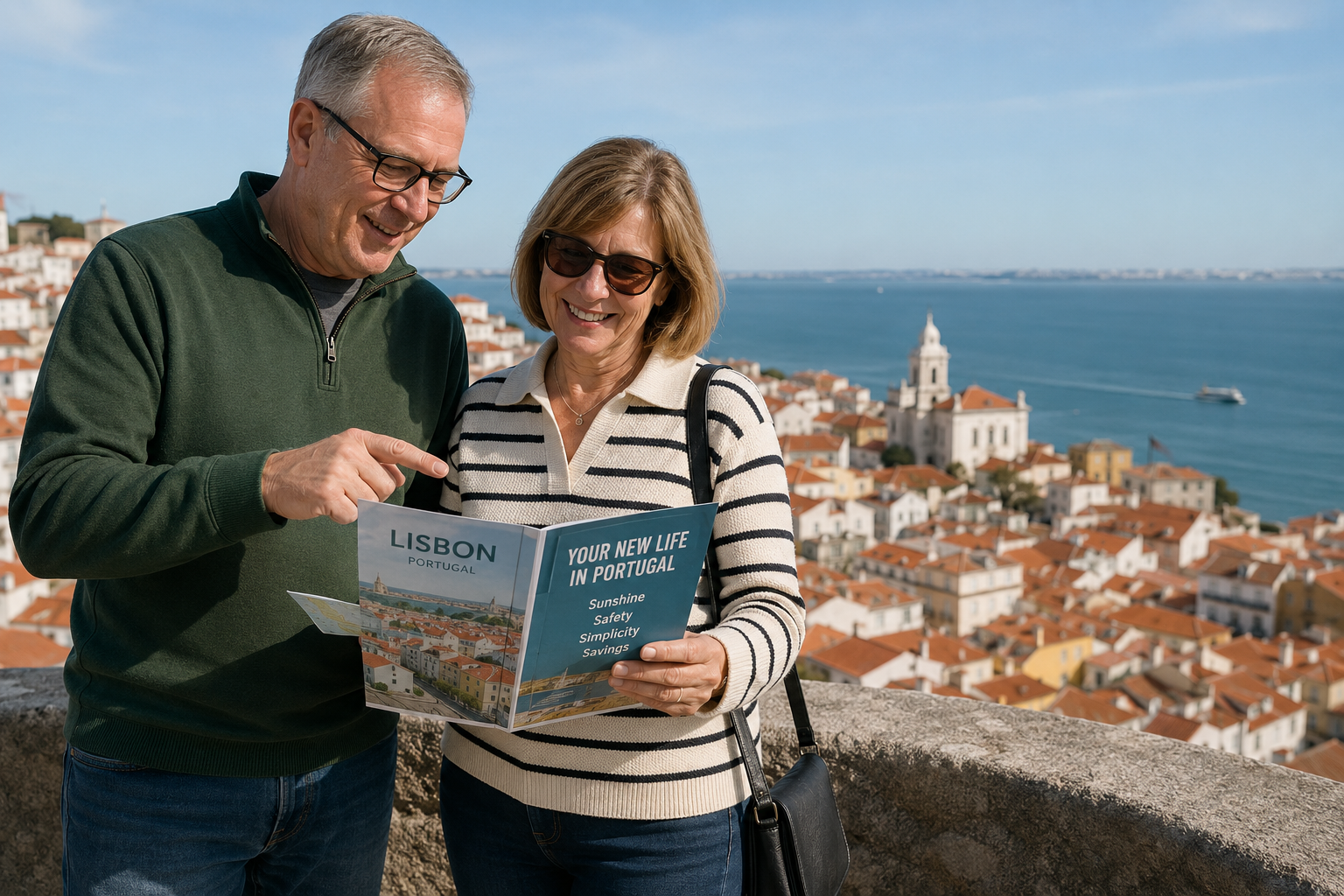
Begin with the choice itself, because it represents a genuine shift in how Midwesterners think about retirement. For decades, the Chicagoan fleeing winter had one obvious destination, Florida, close enough to drive, full of familiar comforts, and long established as the retirement home of the frozen North. It was less a decision than a reflex, the place you went when you were done with snow.
Portugal has emerged as a real alternative to that reflex, and not a fringe one. Once an exotic notion, retiring to Portugal has become a well-trodden path for Americans, with an established expat infrastructure, a dedicated retirement visa, and a reputation as one of the best and most affordable places in the world to grow old, so that a Chicago couple can now consider it as seriously as they once considered Naples or Sarasota. The Atlantic is no longer the barrier it once seemed.
What makes the comparison truly competitive is that Portugal beats Florida on several of the same measures that sent people to Florida in the first place. Warmth, a lower cost of living, a relaxed pace, a welcoming community of fellow retirees, all the things the Midwest couple wanted from Florida, Portugal often provides in greater measure and at lower cost, which is exactly why the old default is being challenged. When the alternative outperforms the default on the default’s own terms, a real contest begins. What has changed is not only Portugal but Florida, and the two shifts have moved in opposite directions. Florida has grown more crowded and more costly over the decades that Portugal has grown more accessible and more welcoming to Americans, so the gap that once made Florida the obvious choice has narrowed and, for many couples, reversed. The contest is close now precisely because both places have changed, one for the worse from the retiree’s budget and one for the better.
What Florida Costs Now
The case for Portugal begins, oddly, with a hard look at Florida, because Florida is no longer the bargain it once was. The Sunshine State has grown markedly more expensive in recent years, with housing costs climbing steeply, and a Chicago couple arriving with their nest egg finds that it buys less than they expected in the desirable parts of the state. The cheap Florida retirement of legend has quietly become a pricier proposition.
The hidden costs are what truly sting. Beyond the rising price of a home, Florida retirees face high and climbing home insurance costs, driven by hurricane risk, along with the ordinary weight of American healthcare, so the true cost of a Florida retirement includes line items that erode the nest egg faster than the sticker price suggests. The insurance problem in particular has become a heavy burden, a recurring bill that rises year after year with the storms.
Then there is the American healthcare system, the great background cost of any US retirement. Even with Medicare, an American couple retiring in Florida faces the ongoing expense and uncertainty of American medical costs, the supplements, the gaps, the fear of a serious illness, and this cost, more than any other, is the one that Portugal quietly erases. Florida offers sunshine, but it offers it inside the most expensive healthcare system in the developed world, and that fact shadows the whole calculation. This single factor does more to drive the comparison than any other, because it is both large and frightening. A serious illness in American retirement can threaten a nest egg in a way that is hard to insure fully against, and the low, predictable cost of good healthcare in Portugal removes not just an expense but a dread, which many retirees find changes the whole feel of their later years. The number on the healthcare line is big, but the peace of mind behind it is bigger still.
What Portugal Costs

Set against that, the Portuguese numbers look strikingly gentle, and this is the heart of the comparison. Portugal is one of the more affordable countries in Western Europe, and a retired couple can live there comfortably on far less than an equivalent life would cost in much of Florida, with a modest monthly budget stretching to cover a thoroughly good life of good food, good weather and ease.
The regional numbers make it concrete. In the more affordable parts of Portugal, a couple can live comfortably on something in the range of fifteen hundred to twenty-eight hundred euros a month, covering rent, food, healthcare and leisure, with the cheaper inland and central regions at the low end and the fashionable Algarve coast at the higher. This is a budget well within reach of a couple’s pensions and Social Security, and often below what the same life would cost in Florida.
Housing is where the contrast bites hardest. Whether renting or buying, our couple finds that Portuguese property, especially away from the most expensive coastal hotspots, costs considerably less than comparable property in desirable Florida, so their three hundred and ten thousand dollars either buys a home outright with room to spare or funds many years of comfortable renting. The money that felt stretched in Florida feels ample in Portugal, which is the pivot on which the whole decision turns. It is worth stressing that this is not about accepting a lesser life to save money, which is the assumption many bring to the idea. The Portuguese retirement on offer is not a downgrade endured for thrift but often an upgrade enjoyed for less, with better weather than much of the mainland United States, superb food, and a gentle pace of life, so the couple trading Florida for Portugal are not sacrificing comfort for savings but gaining both at once. That combination is what makes the choice so compelling once the numbers are clear.
The Silver Coast Sweet Spot
For a couple watching every euro, one region of Portugal stands out as the value sweet spot, and it deserves a special mention, because it is where the deciding number often gets its edge. The Silver Coast, the Costa de Prata stretching north of Lisbon, has become the fastest-growing area for foreign retirees precisely because it offers the Portuguese good life at a discount, running some twenty to forty percent cheaper than the more famous Algarve.
What the Silver Coast offers is remarkable value without sacrifice. Towns like Nazaré, Caldas da Rainha and São Martinho do Porto give a retiree dramatic Atlantic beaches, a growing English-speaking community, easy connections to Lisbon, and a markedly lower cost of living than the crowded southern coast, so a couple gets the sunshine and the sea and the ease for meaningfully less money. For anyone who has explored the region in depth, as I have written about elsewhere in detailing the Silver Coast’s appeal, its combination of beauty and affordability is the quiet secret of the Portuguese retirement.
This is what tips many a comparison decisively toward Portugal. A Chicago couple choosing the Silver Coast over the Algarve, and Portugal over Florida, compounds two savings at once, the lower cost of Portugal against Florida and the lower cost of the Silver Coast against Portugal’s pricier regions, arriving at a retirement that is comfortable, beautiful and remarkably affordable. The sweet spot within the cheaper country is what makes the numbers so persuasive.
The Deciding Number
So what is the single number that decides it? It is not the price of a house or the cost of a month’s groceries, but the figure that captures the whole difference, which is how long the nest egg lasts, the number of years of comfortable retirement that three hundred and ten thousand dollars, combined with the couple’s ongoing income, will truly buy in each place. That figure is the true bottom line, and it is where Portugal wins.
The logic of it is straightforward once you see it. Because the ongoing cost of living is markedly lower in affordable Portugal than in desirable Florida, and because the great American healthcare cost is so reduced, the couple’s monthly income stretches much further and their capital drains much more slowly, so the same three hundred and ten thousand dollars and the same pensions fund a longer, less anxious retirement in Portugal than in Florida. The deciding number is not a price but a duration, and duration is what a retiree most wants to maximize.
Put most simply, the deciding number is the answer to the question every retiree is really asking, which is whether the money will last. In Florida, with its rising costs and its healthcare burden, the plain answer for a middle-class couple is increasingly uneasy, while in affordable Portugal the same resources buy a comfortable retirement with a wider margin of safety and less fear of running short. When the deciding number is the years your money buys, Portugal simply buys more of them, and that, for a growing number of Chicago couples, settles the matter. There is a psychological weight to this that goes beyond the arithmetic, because running out of money is the deepest fear of retirement. A plan that visibly extends the life of the nest egg does not just improve a spreadsheet but lifts a genuine anxiety, letting a couple spend their later years enjoying their retirement rather than watching their balance with dread. The deciding number, in the end, is a measure of security, and security is what turns a comfortable retirement into a happy one.
The Costs the Number Hides

It must be acknowledged that the deciding number, powerful as it is, does not capture everything, and a fair comparison names what it leaves out. Portugal, whatever its financial advantages, is undeniably far away, an ocean from children and grandchildren, in a country with a different language and culture, and these distances carry real emotional costs that no favorable budget can offset. Florida, for all its expense, keeps a couple within an easy flight of American family and inside their own familiar culture.
There are practical complications too that the headline number glosses. Moving to Portugal means securing a visa, becoming a Portuguese tax resident with worldwide income subject to Portuguese tax, navigating a system where the old favorable tax regime for retirees has narrowed, and handling cross-border financial and legal affairs that a move to Florida would never involve. The US-Portugal tax treaty prevents double taxation, but the complexity is real, and it needs professional help. These are not reasons against the move, but they are weights on the other side of the scale.
The fair conclusion is that Portugal wins the financial comparison clearly but not the whole comparison automatically. For a couple who prize being near family above all, or who dread the upheaval of a new country and language, Florida’s higher cost may be a price worth paying for closeness and familiarity, and that is a legitimate choice. The deciding number points to Portugal, but each couple must weigh it against the things the number cannot measure, and for some the balance still tips home.
Why the Number Increasingly Wins
Step back, and the striking thing is how often, for couples willing to make the leap, the deciding number now points across the Atlantic. As Florida grows more expensive and its insurance and healthcare costs climb, and as Portugal remains affordable and welcoming with a clear path for retirees, the financial gap between the two has widened to the point where a middle-class couple can retire markedly better on the same money in Portugal than in the Florida their parents chose by default. The old reflex is being overtaken by the arithmetic.
For our composite Chicago couple, the calculation resolves the winter argument at last. Their three hundred and ten thousand dollars, deployed in the affordable comfort of Portugal’s Silver Coast and stretched by a low cost of living and gentle healthcare costs, buys more years of good retirement, more peace of mind, and more margin against the unexpected than the same sum would buy in an ever-pricier Florida, and once they see that number, the decision makes itself. The sunshine they wanted is available in both places. The security is not, and security is what the number measures.
So the next time the wind howls off Lake Michigan and a Chicago couple dreams of warmth, they might do what a growing number of their neighbors now do, which is to put Florida and Portugal side by side and run the real numbers on each. What many of them find is that the old default has quietly lost its edge, that the money goes further and lasts longer across the ocean, and that the deciding number, the years of comfortable retirement their savings will really buy, points not to the Gulf Coast but to the Atlantic shore of Portugal. It is a bigger leap than a flight to Florida, but for those who take it, the number, and the life it buys, tends to prove them right.

About the Author: Ruben, co-founder of Gamintraveler.com since 2014, is a seasoned traveler from Spain who has explored over 100 countries since 2009. Known for his extensive travel adventures across South America, Europe, the US, Australia, New Zealand, Asia, and Africa, Ruben combines his passion for adventurous yet sustainable living with his love for cycling, highlighted by his remarkable 5-month bicycle journey from Spain to Norway. He currently resides in Spain, where he continues sharing his travel experiences with his partner, Rachel, and their son, Han.