
Of all the shocks that await the American who moves to Spain, this is the one almost nobody sees coming, and it is among the most maddening. You have been driving for forty years. You have a spotless record and a valid license from your home state. And roughly six months after you become a resident of Spain, that license quietly stops being valid for driving there, and the only way to get it back is to start over from scratch, at a Spanish driving school, taking lessons and passing exams, including a practical test conducted entirely in Spanish. Grandparents who taught their own children to drive find themselves sitting in a classroom again, learning to parallel park for a Spanish examiner.
It sounds like a bureaucratic error, but it is the settled reality, and it catches an enormous number of American retirees and expats completely off guard. Unlike drivers from many other countries, Americans cannot simply swap their license for a Spanish one, because the agreement that would allow it does not exist. What follows the six-month deadline is not a form to fill out but a return to driving school, and understanding this before you move is the difference between planning for it calmly and discovering it in a panic.
Here is exactly what happens to an American driver’s license in Spain, why there is no simple exchange, what the driving-school process really involves, and how to plan around one of the most notorious surprises of the American expat experience. This is general information rather than legal advice, the rules are administered by Spain’s traffic authority and can change, and you should verify the current requirements with official sources, but the fundamental situation is well established and unlikely to shift soon.
The Six-Month Cliff
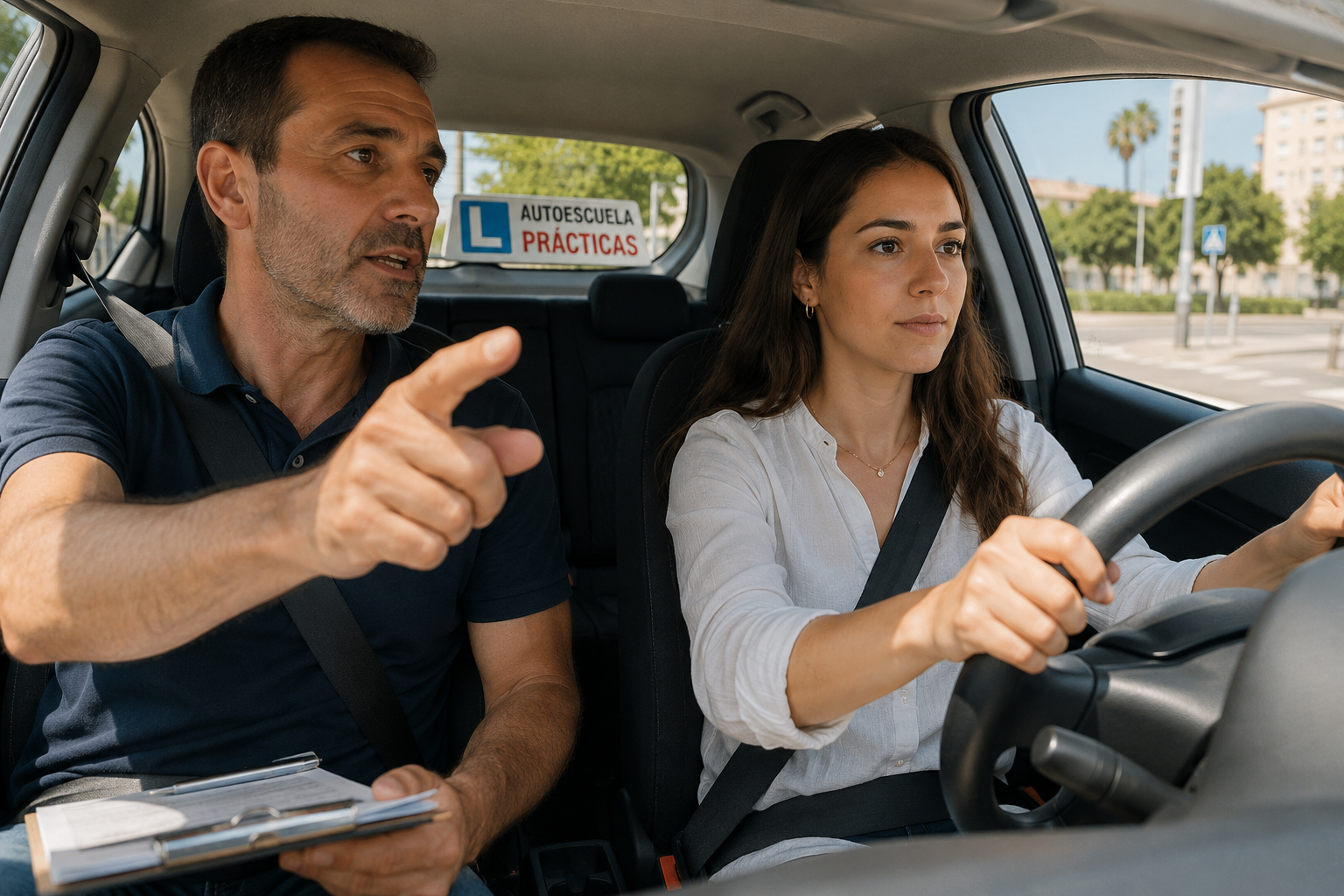
Start with the timeline, because it is the part that ambushes people. When an American establishes legal residency in Spain, their valid US driver’s license is recognized for driving, but only for a limited grace period, and that period is roughly six months from the point of becoming a resident. For those first six months you drive legally on your American license, and everything feels normal.
Then the cliff arrives. Once that six-month window closes, your US license is no longer valid for driving in Spain, full stop, and continuing to drive on it means driving without a valid license, with the fines and consequences that carry. The license did not expire in any American sense, since it remains perfectly valid back home, but for the purpose of driving in Spain it has simply run out of road. The date that matters is the date you became a resident, not anything printed on the license itself.
This is where a crucial misunderstanding trips people up, the belief that an International Driving Permit solves the problem. It does not. An International Driving Permit is only a translation of your existing license, useful for short visits, and it does nothing to extend the six-month residency deadline, so an American who dutifully obtained one before moving still faces exactly the same cliff. The permit translates the license. It does not lengthen its life in Spain. This misunderstanding is so common that it deserves emphasis, because a great many Americans arrive believing the permit is their long-term solution and relax accordingly. The permit is a truly useful document for a tourist or a short-stay visitor, allowing you to drive on holiday with an official Spanish translation of your credentials, but the moment you become a resident a different clock starts, and no permit slows it down. Confusing the tourist rule with the resident rule is the single most frequent mistake in this whole area.
Why There Is No Simple Exchange
The natural question is why Americans cannot just exchange their license the way so many other foreigners can, and the answer is a single missing document at the government level. Spain has bilateral license-exchange agreements with many countries, arrangements under which a valid foreign license can be swapped directly for a Spanish one through a simple administrative process, no tests required. Drivers from those countries have it easy.
The United States is not on that list, and no individual state is either. As of 2026, there is no bilateral driving-license agreement between Spain and any US state, not California, not Florida, not New York, not Texas, none of them, so the direct exchange that drivers from agreement countries enjoy is simply not available to Americans. This is the whole root of the problem, a diplomatic gap rather than any judgment about American driving.
The contrast with other nationalities makes the gap especially galling. A British, Swiss, Japanese or Latin American driver in Spain can generally exchange their license through a straightforward bureaucratic procedure, while the American next to them, with the same clean record and the same decades of experience, must go back to driving school, purely because of which country issued the license. It is not about competence. It is about the absence of a treaty, and the American simply falls on the wrong side of it. There have been periodic reports over the years of negotiations toward such an agreement, which raise hopes and then fade, so it is wise to treat any rumor of an imminent US-Spain exchange deal with caution and to plan on the basis of the rules as they stand rather than as they might one day become. Until a signed agreement appears on the traffic authority’s official list, the driving-school route is the only route, and betting on a treaty that may never come is a poor substitute for starting the process you can control.
Then Comes Driving School
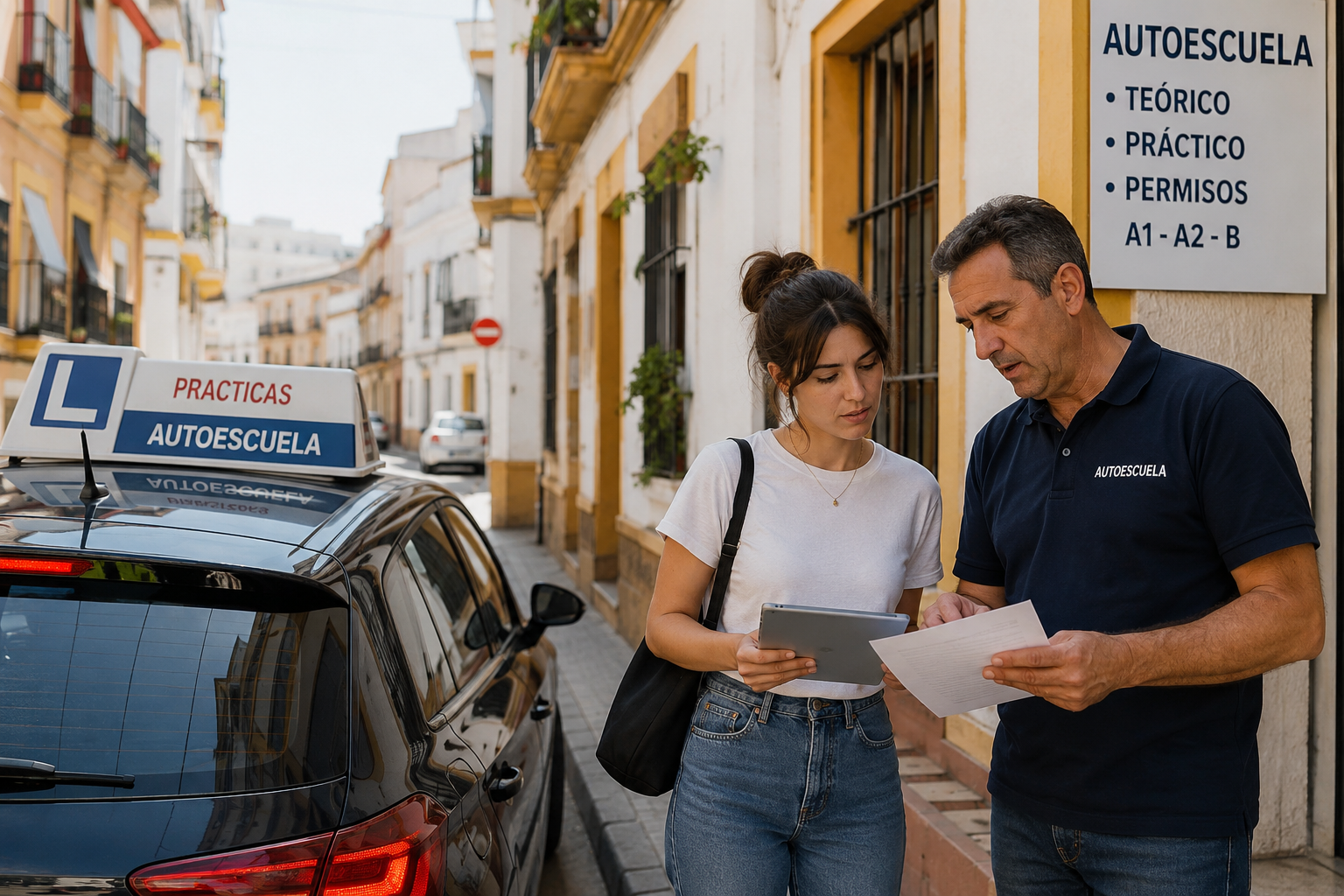
So what really happens after the six-month deadline, if you cannot exchange? You do what a Spanish teenager does, which is to obtain a Spanish driving license from the beginning, through the full official process administered by the traffic authority, the DGT. There is no shortcut for experience, no credit for your decades behind the wheel, only the standard path that every new Spanish driver walks.
That path has several stages. You typically enroll in an autoescuela, a driving school, which guides you through the process, and you complete a medical and psychological fitness exam known as the psicotécnico at an authorized center. Then come the two exams that stand between you and the license, a theory test and a practical driving test, both of which you must pass to earn your Spanish permit. The experienced American driver is, in the eyes of the system, a learner like any other. There is a particular indignity in this for the older newcomer that is worth naming honestly. A retiree who has driven safely for half a century, taught their children and perhaps their grandchildren to drive, and never had a serious accident, must sit through lessons designed for seventeen-year-olds and submit to a road test they may find quite nerve-racking. The blow to the ego is real, and pretending otherwise helps no one, but it is also survivable, and countless dignified adults have swallowed it and come out the other side with a license.
The exams are where the real challenge lives, and one of them in particular. The theory test can generally be taken in English, which helps, but the practical driving test is conducted in Spanish, so a candidate must be able to understand a Spanish examiner’s instructions in the car in real time. For an American whose Spanish is still developing, being tested on their driving in a second language, by an examiner they may struggle to follow, is a truly daunting prospect, and it is the part that wounds people’s pride most.
What It Actually Costs, in Time and Money
The process is not just humbling but expensive and slow, and the real costs surprise people as much as the requirement itself. In money, obtaining a Spanish license through the full driving-school route commonly runs somewhere in the range of six hundred to twelve hundred euros in 2026, depending on the city, the number of lessons you need and whether you have to retake either exam. It is a substantial sum for something you thought you already had.
Time is the heavier cost for many. Because of high demand and appointment backlogs, especially in big cities like Madrid and Barcelona, many American expats report the whole process takes somewhere between three and nine months from enrollment to holding the license in hand, a long stretch during which getting a Spanish license is effectively a part-time project. The bureaucracy moves at its own pace, and the queues for tests can be long. The backlogs are worst precisely where many expats settle, in and around the biggest cities, where demand for test slots vastly outstrips supply and waits stretch for months. This geographic reality means the timeline is not fully within your control no matter how diligent you are, since you can study hard and still wait weeks for an available examination date, which is exactly why starting the moment you arrive matters so much more than studying intensely at the end.
And there is the gap in the middle to contend with, the period when you may be without a valid license at all. If your six-month grace period ends before you have passed the Spanish tests, you are left unable to drive legally in the interim, which in a car-dependent area can be a serious practical problem. This timing squeeze, between the license that has died and the one you have not yet earned, is the logistical heart of the whole ordeal and the thing that most needs planning around.
The Trap That Catches the Unaware

Beyond the inconvenience, there is a genuine legal trap here for the American who does not realize the deadline has passed, and it is worth stating plainly. Spanish police are aware of this rule and enforce it, and they can and do check whether a foreign driver is past their grace period, sometimes by comparing the date of a person’s town-hall registration, their empadronamiento, against the status of their license. The system has a way of knowing when you became a resident.
Driving past the deadline is driving without a valid license in the eyes of Spanish law, and the consequences are real. An American who keeps driving on a dead US license, whether through ignorance or wishful thinking, risks fines and the other penalties that come with unlicensed driving, and pleading that you did not know the rule is no defense. The grace period is not a suggestion but a hard legal line, and crossing it turns an ordinary drive to the shops into an offense.
This is why awareness matters so much, because the trap is baited with the very normality of driving. Nothing feels different on the day your license quietly becomes invalid, the car still starts and the roads look the same, so it is entirely possible to drive illegally for months without realizing it, until a routine police check turns an innocent errand into a fine. The danger is not that the rule is harsh but that it is invisible, and the unaware fall into it without ever seeing the edge.
How to Plan Around It
The good news is that the whole ordeal is manageable if you see it coming and plan from the start, and the single most important move is to begin early. Do not wait until your six-month grace period is nearly up to start the process, because with test backlogs of many months, a late start guarantees a gap during which you cannot drive, whereas beginning soon after you arrive gives you the runway to finish before your American license dies.
A few concrete steps smooth the path. Enroll in a reputable autoescuela early, ideally one experienced with foreign and English-speaking students, and get onto the waiting lists for the medical exam and the tests as soon as you can, since the queues are the main source of delay. Study the theory in English while working on enough Spanish to follow an examiner’s directions in the car, and treat the practical-test language barrier as a real obstacle to prepare for rather than a formality.
Above all, build the timeline into your move itself, rather than treating the license as an afterthought. If you are moving to a car-dependent part of Spain, the loss of driving is not a minor inconvenience but a major disruption, so the license process deserves to be near the top of your settling-in list, started in your first weeks rather than your last. The Americans who handle this well are simply the ones who knew about it in advance and began at once, turning a nasty surprise into a manageable, if tedious, project.
The Surprise Worth Knowing First

If there is a single lesson in all of this, it is that the death of your American license in Spain is not a rare quirk but a near-universal experience for American residents, and one far better learned before you move than after. The retirees who struggle are almost always the ones who arrived assuming their decades of driving would carry over, only to discover the six-month cliff and the driving school waiting beyond it. Foreknowledge changes everything.
It helps to hold the situation in perspective, frustrating as it is. Millions have gone through this before you, the driving schools are well used to guiding foreigners through it, and on the far side is a perfectly good Spanish license and the freedom to drive again. It is an ordeal of time, money and wounded pride rather than an insurmountable barrier, and it ends, for the great majority, with a license in hand and the whole thing behind them.
So if Spain is in your future, put the driver’s license near the top of the list of things to understand before you go. Know that your American license has roughly six months in you as a resident, that no simple exchange exists, and that driving school in Spanish lies on the other side of the deadline, and plan accordingly, starting early and budgeting for the cost and the wait. It is one of the most famous shocks of the American move to Spain, and also one of the most avoidable in its worst forms, because the whole difference between a crisis and a chore is simply knowing it is coming. Now you do.

About the Author: Ruben, co-founder of Gamintraveler.com since 2014, is a seasoned traveler from Spain who has explored over 100 countries since 2009. Known for his extensive travel adventures across South America, Europe, the US, Australia, New Zealand, Asia, and Africa, Ruben combines his passion for adventurous yet sustainable living with his love for cycling, highlighted by his remarkable 5-month bicycle journey from Spain to Norway. He currently resides in Spain, where he continues sharing his travel experiences with his partner, Rachel, and their son, Han.