
Walk up to a perfume counter in an American department store and you will be handed a bottle, encouraged to spray liberally, and sold on the biggest, longest-lasting, most noticeable scent they can move. Walk into the life of a French woman and you will find something almost the opposite, a quiet, practiced, deeply considered relationship with fragrance that treats perfume as an intimate finishing touch rather than a broadcast. The French approach to perfume follows a set of unwritten rules, absorbed rather than taught, and almost none of them are the ones a department store wants you to learn.
The gap exists because the incentives differ. The store wants to sell volume, the strongest scent and the most of it, while the French woman wants an effect, a subtle, personal, lasting impression that flatters rather than overwhelms. The result is a body of quiet wisdom about how to choose, apply and wear perfume that runs contrary to almost everything the commercial counter teaches, and that produces a far more elegant result. These are rules of restraint and intimacy rather than projection and volume.
Here are the perfume rules French women tend to follow, the ones the department store never mentions, covering how they choose a scent, how they apply it, how they wear it, and the whole philosophy of restraint behind it. This is general lifestyle and style observation rather than any kind of expert prescription, taste in fragrance is deeply personal, and the point is a different way of thinking about perfume rather than a set of commandments. But the French approach is worth understanding, because it tends to produce something the loud approach cannot.
Perfume Is Meant to Be Discovered, Not Announced
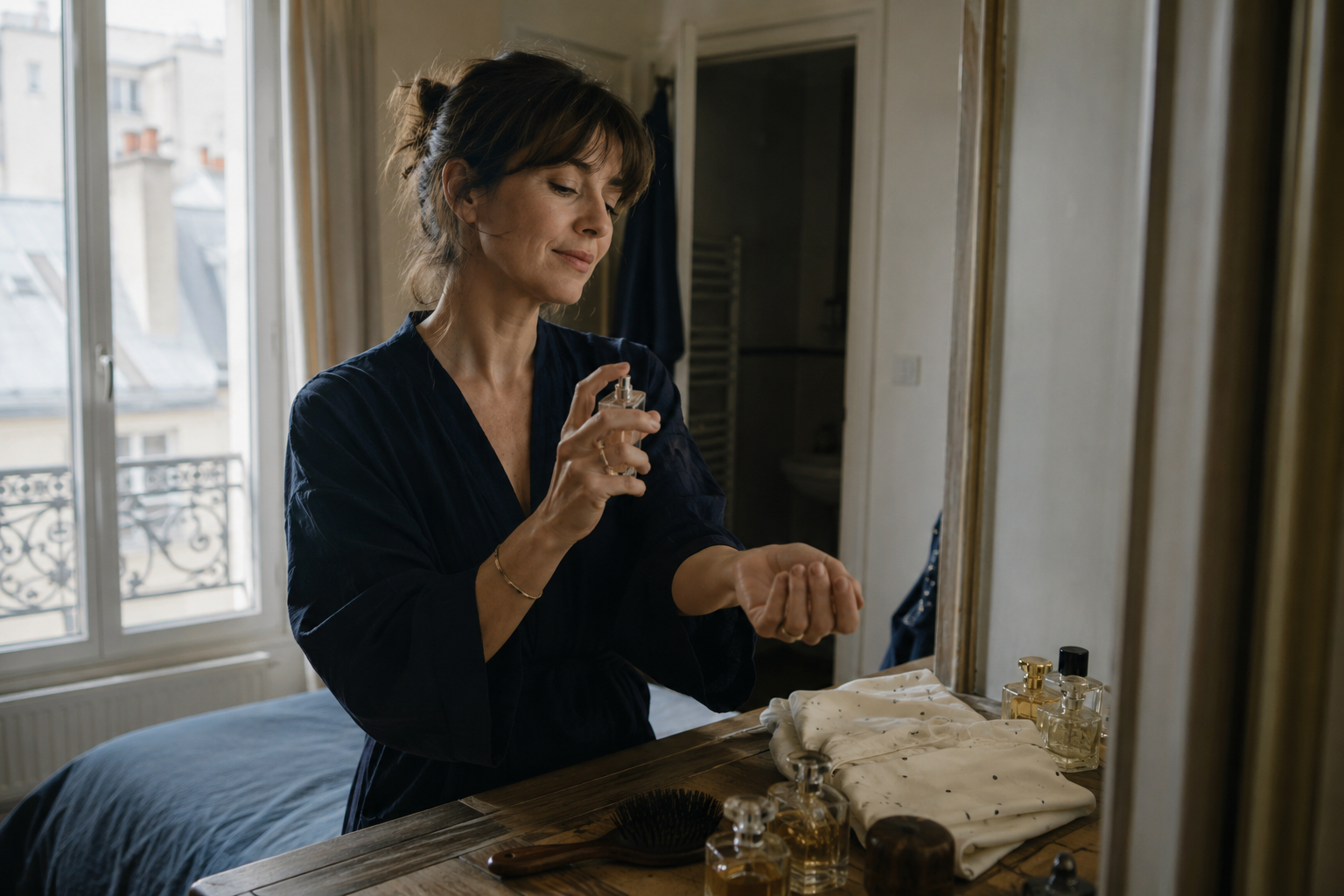
The single most important French rule, the one that reframes everything else, is that perfume is meant to be an intimate discovery rather than a public announcement. The French ideal is a scent that someone notices only when they are close to you, a private pleasure revealed at conversational distance, not a cloud that enters the room before you do and lingers after you leave.
This flips the American logic on its head. Where the commercial approach prizes projection and longevity, the scent that fills a space and announces its wearer, the French prize intimacy, a fragrance that rewards closeness and stays personal. To be noticed only by those who come near you is not a failure of the perfume but the entire point of it, a scent worn for the pleasure of the wearer and the privileged few who get close. There is an intimacy to this that the broadcast approach loses entirely. A fragrance meant to be discovered becomes a small secret between the wearer and whoever draws near, a reward for closeness rather than a fact imposed on strangers, and that quality of privacy is a large part of what makes the French approach feel so refined. The scent belongs to the encounter, not the room.
Everything else follows from this principle. Once you understand that the goal is intimate discovery rather than broadcast, the rest of the French rules make sense, the light application, the careful placement, the restraint, all of it in service of a scent that whispers rather than shouts. The department store sells projection. The French woman cultivates intimacy, and the difference shapes every other choice.
Apply to Moisturized Skin So It Lasts
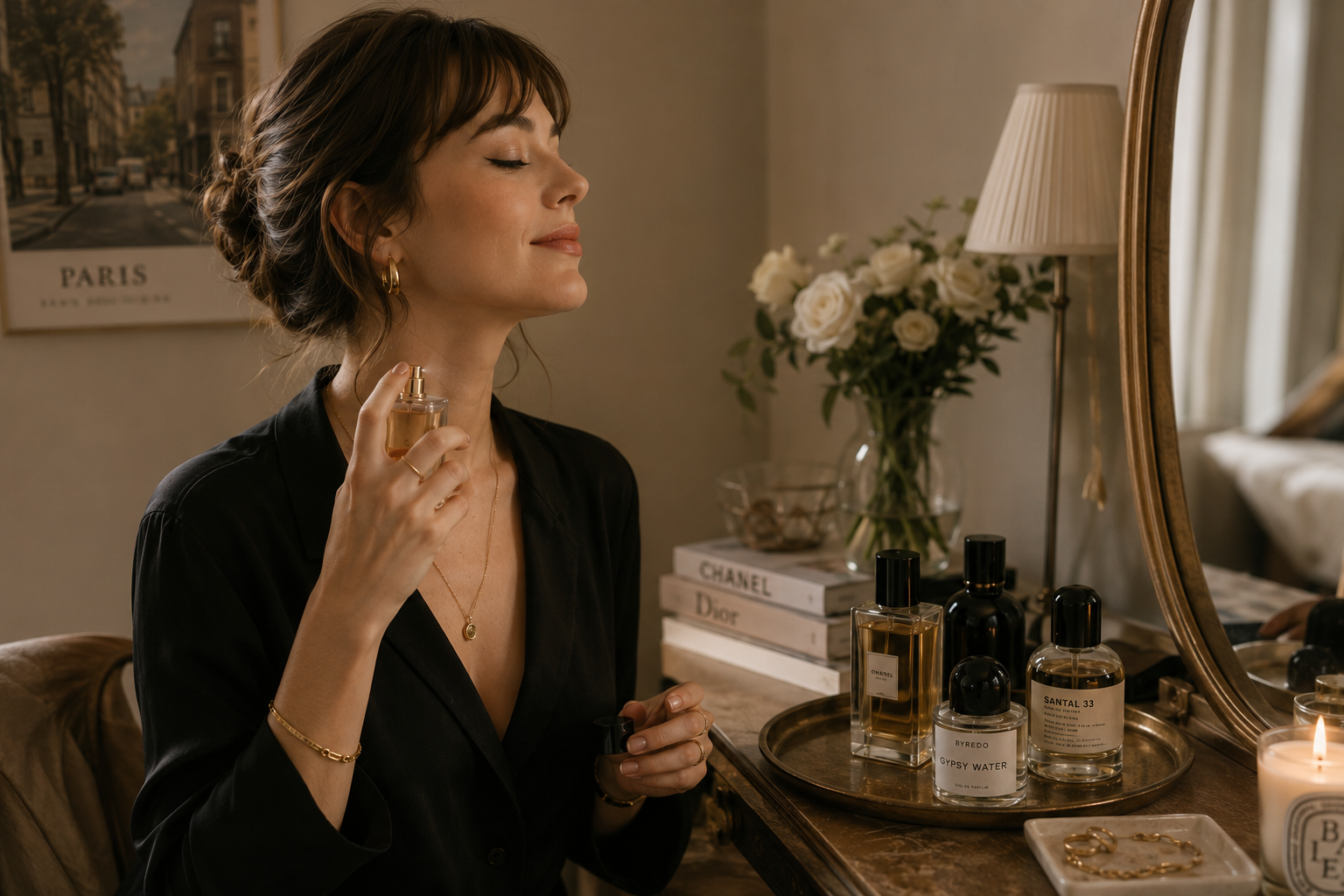
One of the most practical French rules is technical and quietly transformative, which is that perfume should be applied to well-moisturized skin. Fragrance clings to and lasts far longer on skin that is hydrated, so the French woman moisturizes before she applies her scent, often with an unscented lotion, giving the perfume something to hold onto.
The reasoning is simple chemistry. Dry skin absorbs and dissipates fragrance quickly, so a scent applied to parched skin fades fast, while the oils in moisturized skin trap the fragrance and release it slowly over hours, making even a light application last. This is how the French achieve longevity without volume, not by spraying more but by preparing the skin to hold what little they use.
This single trick undoes the department store’s logic. Where the counter would sell you a stronger, longer-lasting perfume to solve the problem of a scent fading, the French woman simply moisturizes first and makes a subtle scent last all day, achieving longevity through preparation rather than potency. It is the kind of quiet, practical wisdom that the commercial approach has no interest in teaching. It also quietly solves the complaint that drives most over-application, which is that a perfume disappeared by lunchtime. The woman who moisturizes first is not left reaching for the bottle again at noon, because the scent she applied in the morning is still gently present, held in the skin rather than evaporated off it. The problem the store solves by selling strength, the French solve by preparing the surface.
Place It on Pulse Points, and Think Beyond the Obvious
The French pay careful attention to where perfume goes, applying it to the pulse points where the skin is warm and the scent will develop and radiate gently. The classic points are the wrists, the neck, behind the ears, the inner elbows, places where the blood runs close to the surface and the warmth lifts the fragrance softly through the day.
There is real logic to this placement. The warmth of the pulse points activates and diffuses the fragrance naturally, releasing it in a gentle, living way as the body moves and warms, which is far more flattering than a scent that simply sits on the surface. The French apply to these specific points deliberately, letting the body’s own heat do the work of projection at an intimate scale.
Some French women go a step further, to less obvious places. A touch of fragrance in the hair, which holds and releases scent beautifully as it moves, or a light mist on the clothing, or behind the knees, extends the effect in subtle, unexpected ways, so the scent seems to come from the person as a whole rather than from an obvious dab on the wrist. This thoughtful placement is a world away from the department store’s suggestion to simply spray the neck and go.
Never Rub Your Wrists Together
Here is a rule that nearly every American gets wrong, and that French women treat as obvious, which is that you must never rub your wrists together after applying perfume. The instinct to press and rub the wrists to spread the scent is precisely the wrong move, because the friction and heat crush the fragrance and distort how it develops.
The chemistry explains the rule. Rubbing generates heat and friction that break down the delicate top notes of a perfume and speed up its evaporation, so the scent both changes for the worse and fades faster, losing the careful structure the perfumer built. The correct approach is to apply and let it be, allowing the fragrance to settle and unfold on its own.
This is one of those small pieces of knowledge that separates the practiced from the casual. The French woman dabs or sprays and then simply lets the perfume dry and develop untouched, preserving its intended progression from top notes to heart to base, while the American rubbing her wrists together is unknowingly damaging her own scent. The department store, having sold the bottle, rarely bothers to mention it.
Build a Wardrobe of Scents, Not One Signature
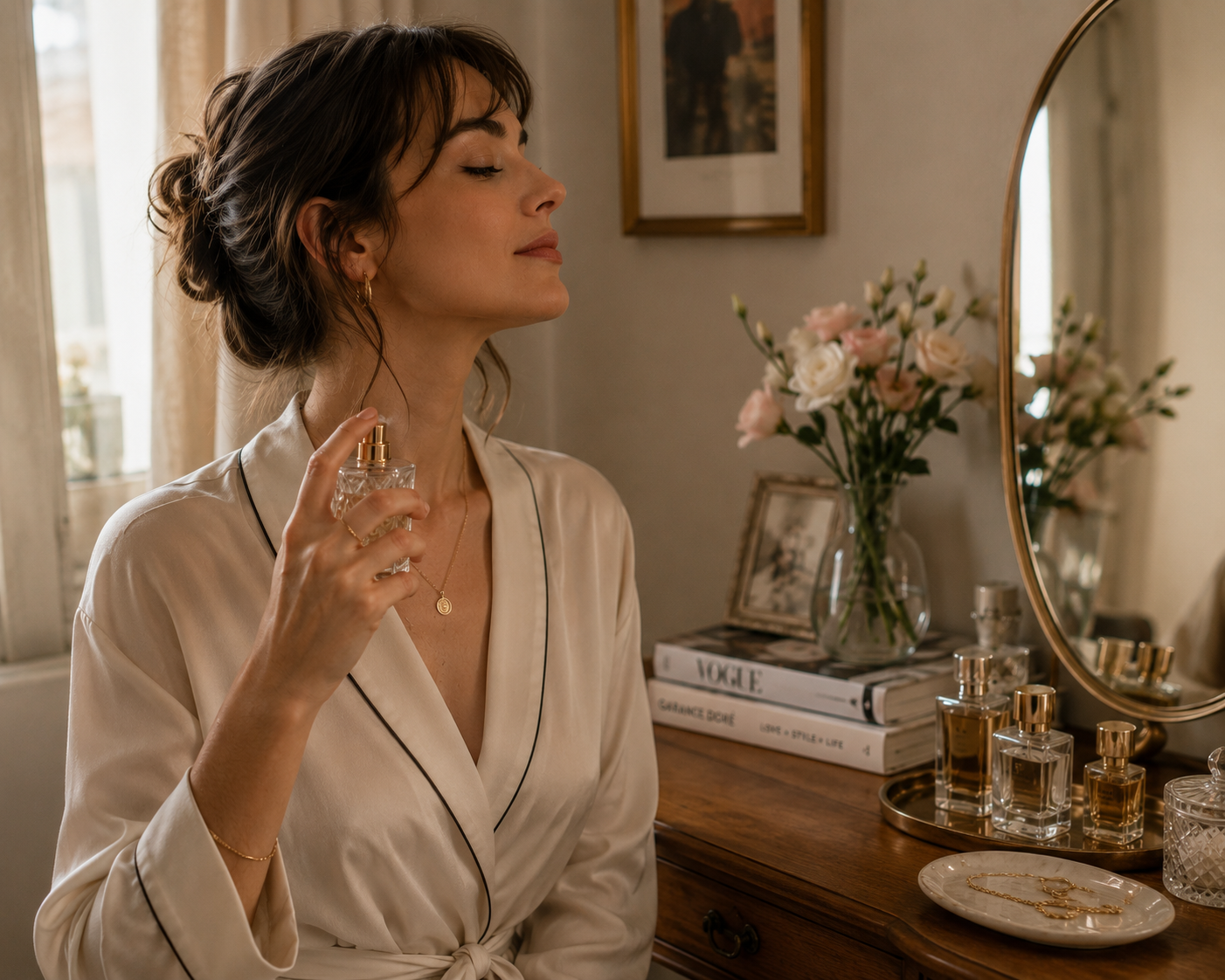
While the idea of a single signature scent is romantic, many French women in fact keep a small wardrobe of fragrances and choose among them to suit the occasion, the season and the mood. Rather than one perfume worn relentlessly, they might have a light fresh scent for summer days, a warmer deeper one for winter evenings, something for work and something for going out.
The thinking treats perfume as an accessory rather than a fixed identity. Just as one would not wear the same shoes to the beach and to a dinner party, the French woman matches her fragrance to the context, a lighter scent for daytime and heat, a richer one for evening and cold, so the perfume suits the moment rather than fighting it. The scent becomes part of dressing for the occasion.
This does not mean owning dozens of bottles, and restraint applies here too. A small, considered collection of a few well-chosen fragrances, each suited to a different mood or season, is the French ideal, curated rather than accumulated, so that the woman always has the right scent for the moment without drowning in choice. It is a more flexible and thoughtful approach than either the single rigid signature or the chaotic overflowing shelf.
Less Is Always More
If there is one overriding rule, it is restraint, the conviction that when it comes to perfume, less is always more. The French woman applies a small amount, one or two considered touches rather than many, trusting that a little of a good fragrance, well placed, achieves far more than a generous dousing ever could.
The horror, in the French view, is the overpowering cloud. A scent that announces itself from across a room, that fills an elevator and lingers oppressively, is considered a genuine failure of taste, the mark of someone who has misunderstood what perfume is for. The goal is never to be the person whose fragrance arrives before them and offends the crowded space around them.
This restraint is the throughline of the entire French approach. The light application, the intimate placement, the preference for discovery over announcement, all express the same conviction, that perfume should enhance subtly rather than dominate, whispering at close range rather than shouting across a room. Where the department store measures success by how far and how long a scent projects, the French measure it by how elegantly and intimately it flatters, which is a completely different standard.
Choose the Scent Slowly, and Let It Meet Your Skin
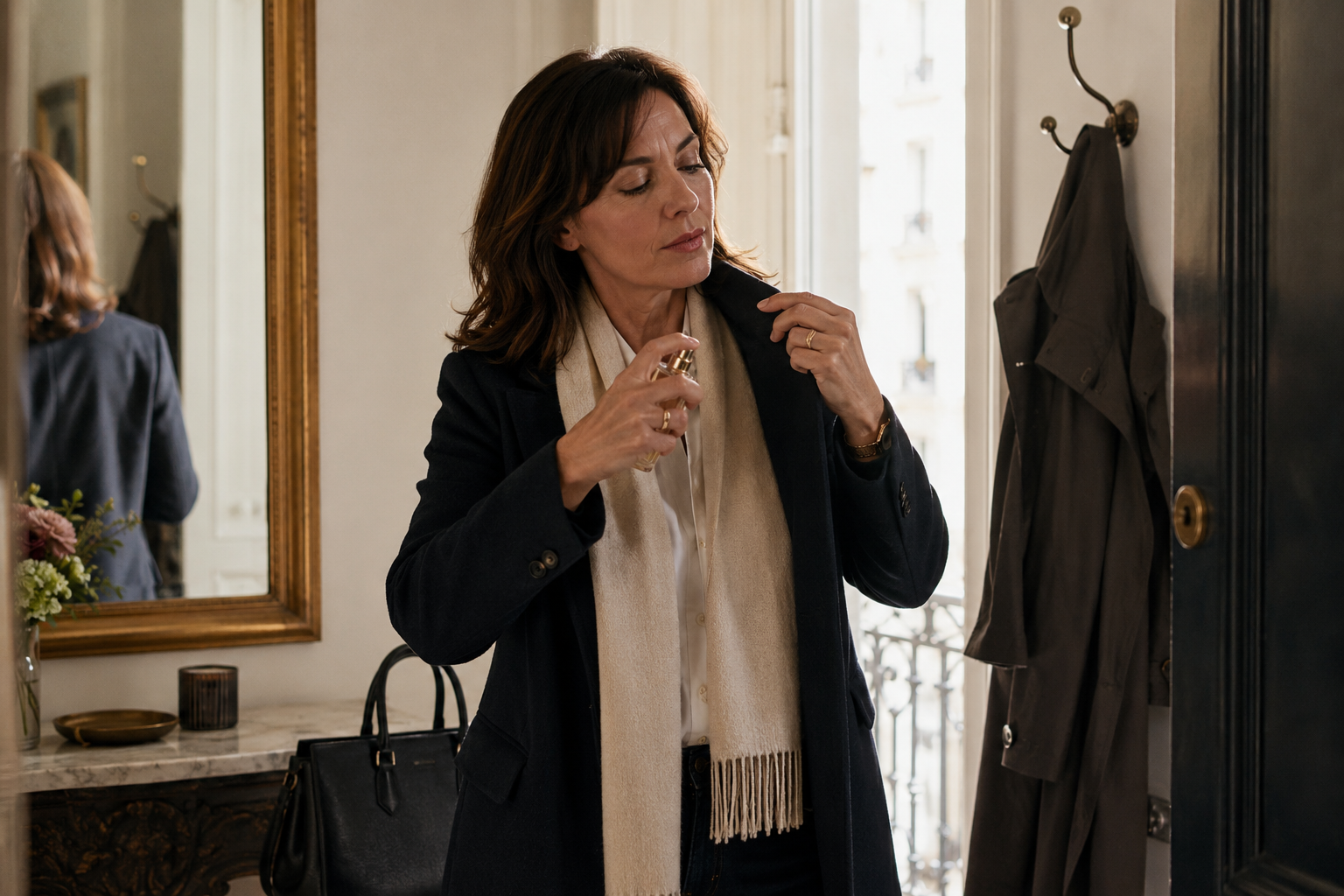
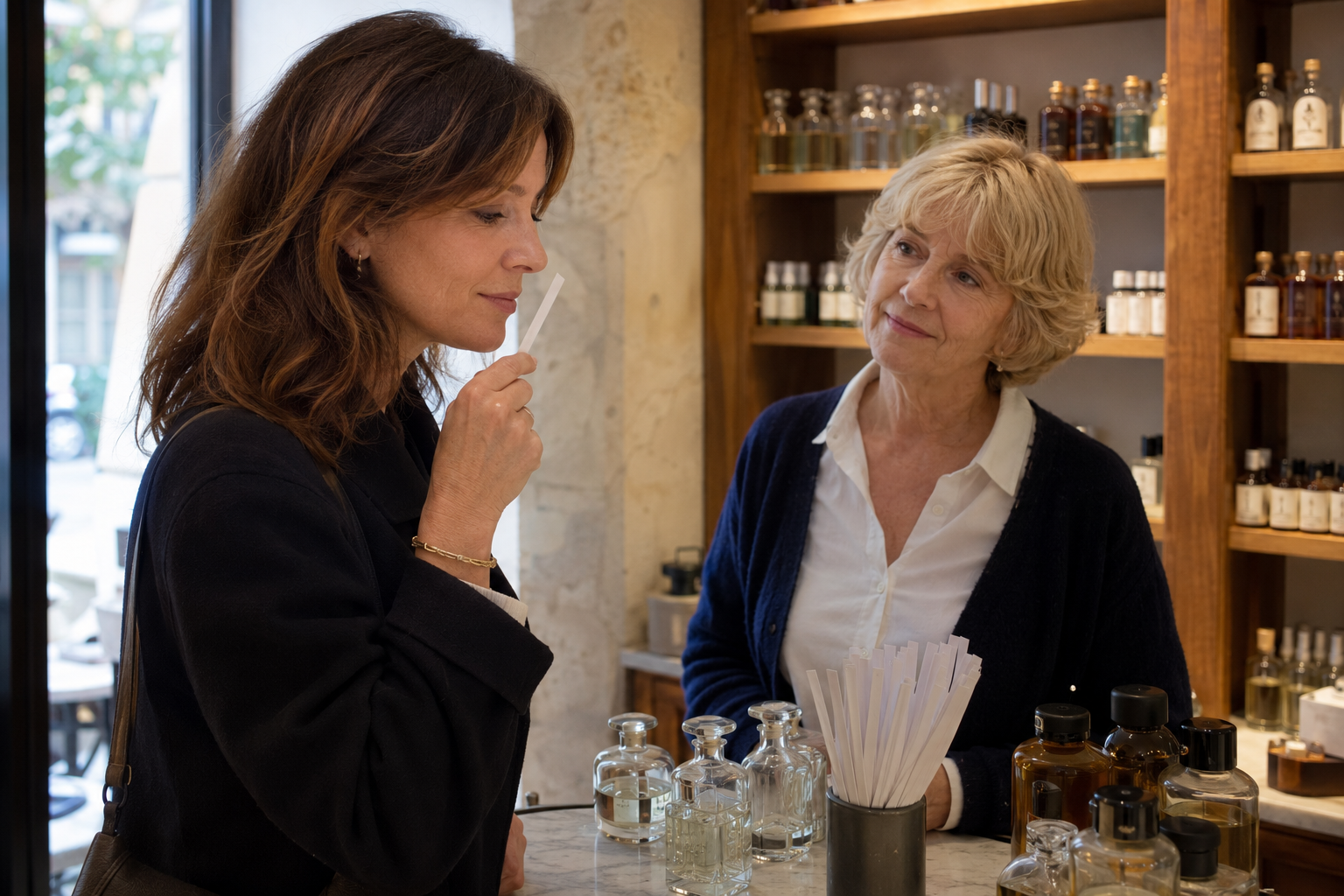
The French also tend to choose their perfumes with a patience the department store discourages, understanding that a fragrance must be tested properly before it is judged. A perfume smells different on paper than on skin, and different again after an hour, so the French way is to apply it to the skin and live with it for hours before deciding, letting it develop through its stages.
This unhurried testing respects how perfume truly works. A fragrance unfolds over time, opening with bright top notes, settling into its heart, and finally revealing the deep base notes that will linger longest, and only by wearing it for hours can you know how it truly smells on you. The quick sniff of a blotter at the counter, which is all the store encourages, tells you almost nothing about how a scent will live on your skin.
The deeper principle is that a perfume must suit the individual wearer, because scent interacts with each person’s skin chemistry uniquely. The same fragrance can smell wonderful on one woman and wrong on another, so the French choose by how a scent behaves on their own skin over time rather than by how it smells in the bottle or on someone else, which is why they test slowly and personally. The result is a perfume that truly belongs to the wearer. This is also why borrowing someone else’s signature rarely works, however much you admired it on them, since a scent that enchanted you on a friend can turn flat on your own skin, the chemistry that shaped it being hers and not yours.
The Philosophy Behind the Rules
Step back from the individual rules and a single coherent philosophy emerges, one the department store has every reason not to teach. For the French, perfume is a personal, intimate, elegant finishing touch, chosen carefully, applied sparingly, and worn for subtle effect, an expression of taste and self rather than a bid for attention. The rules all serve this vision of fragrance as quiet refinement.
This philosophy stands in direct opposition to the commercial one. The industry profits from selling more perfume, stronger and in greater quantity, so it encourages heavy application, projection and the endless pursuit of the next bottle, none of which serves the wearer’s elegance and all of which serves the seller’s sales. The French rules, by contrast, are optimized for the wearer’s actual benefit, a beautiful, subtle, personal result achieved with restraint.
Understanding this is what lets anyone adopt the French approach, because it is available to everyone regardless of budget or bottle. You do not need an expensive French perfume to wear fragrance the French way, only to embrace the philosophy, choosing a scent you love, moisturizing first, applying a little to your pulse points, never rubbing, and trusting restraint. The elegance lies not in the perfume but in how it is worn.
Wearing Perfume the French Way
The lesson of the French rules is that wearing perfume well is a matter of understanding rather than expense, of restraint rather than volume, and of intimacy rather than projection. Everything the department store teaches points toward more, a stronger scent applied more heavily to project further, while everything the French practice points toward better, a considered scent applied thoughtfully for a subtle, lasting, personal effect. The two approaches lead to entirely different places.
What makes the French rules worth adopting is that they simply produce a more elegant result. A subtle fragrance on moisturized pulse points, chosen slowly and worn with restraint, flatters the wearer and pleases those who come near without ever imposing on a room, which is a far lovelier way to wear a scent than the overwhelming cloud the commercial approach encourages. The French are not being precious but have simply understood what perfume is really for, which is to flatter the wearer and reward those who come close, not to lay claim to a room.
So the next time you choose or wear a fragrance, consider setting aside what the counter taught you and trying the French way instead. Moisturize first, apply a little to your warm pulse points, resist the urge to rub or to overdo it, and wear a scent meant to be discovered rather than announced. You will find, as French women have always known, that perfume worn quietly and intimately is not a weaker version of wearing perfume but a far more elegant one, the difference between shouting and being worth leaning in to hear.

About the Author: Ruben, co-founder of Gamintraveler.com since 2014, is a seasoned traveler from Spain who has explored over 100 countries since 2009. Known for his extensive travel adventures across South America, Europe, the US, Australia, New Zealand, Asia, and Africa, Ruben combines his passion for adventurous yet sustainable living with his love for cycling, highlighted by his remarkable 5-month bicycle journey from Spain to Norway. He currently resides in Spain, where he continues sharing his travel experiences with his partner, Rachel, and their son, Han.