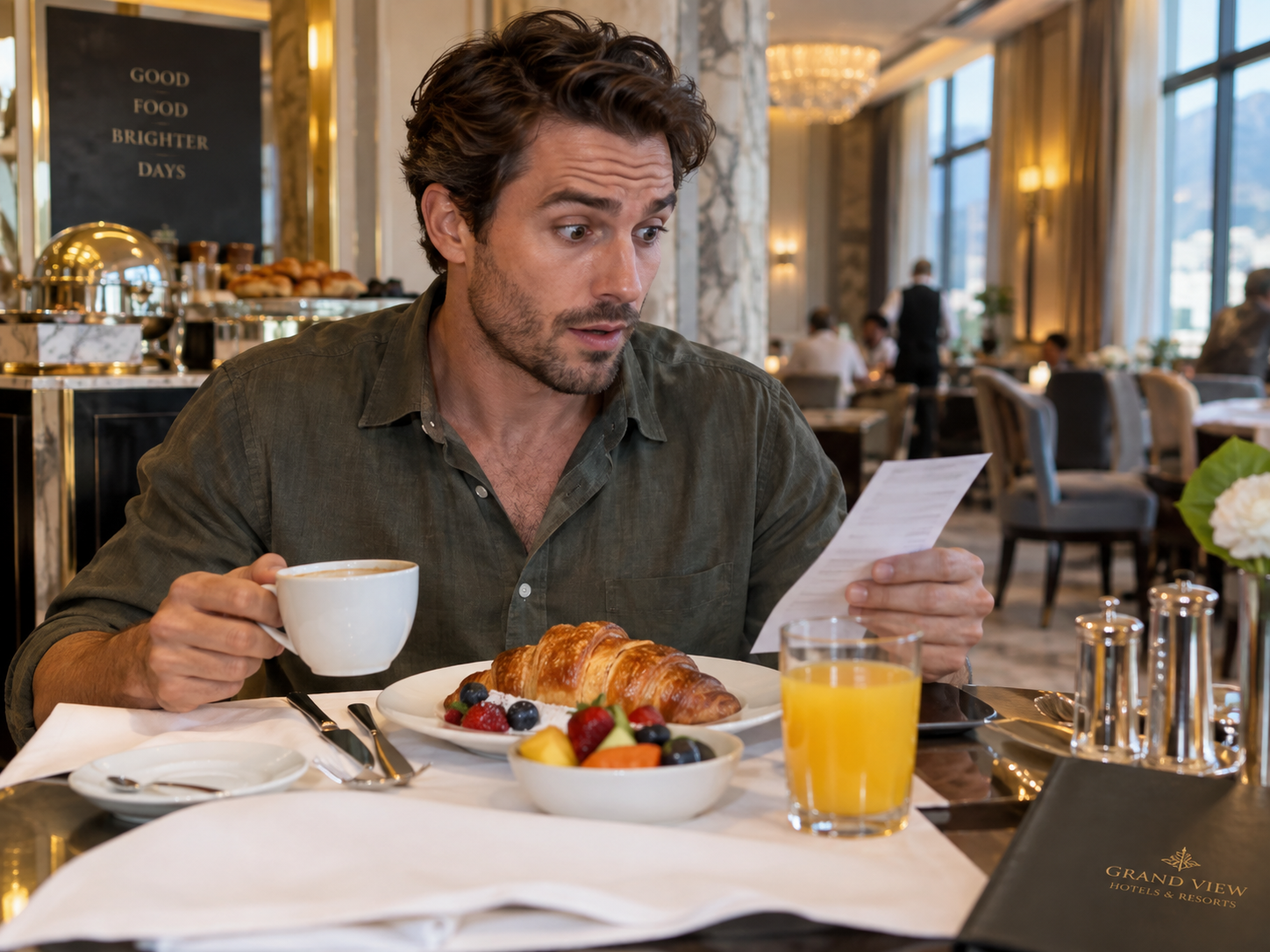
Every morning of every European trip, the same little question presents itself, and almost nobody actually does the math on it. The hotel offers breakfast, sometimes bundled into the room, more often as an add-on at, say, roughly €18 a head, and and you have to decide on the spot whether to take it or wander out and find a cafe instead.
Most people just default one way or the other, either always paying for the convenience or always skipping it on principle, and both defaults quietly cost you, because the right answer genuinely changes from one morning to the next. The always-payers overspend on breakfasts they barely touch, and the always-skippers trudge out into the rain to save a couple of euros on mornings when staying put was plainly the smarter move. Neither rigid habit is really a decision at all, just a way of not deciding, and both leave money or comfort on the table over the course of a trip. Sometimes that €18 buffet is a genuine bargain that fuels your whole day and saves you money overall, and sometimes it is a straight-up robbery you would happily trade for a two-euro croissant from the bakery down the street. The trick is knowing which is which before you sit down, and it takes about ten seconds of thinking once you know what to weigh. Do that little calculation each morning and, over a two-week trip, the savings and the better meals genuinely add up.
What follows is the first question that settles half of it, the times the buffet genuinely wins, the times it robs you, and the quick way to decide every morning.
The First Question That Settles Half of It

Before any math, ask one thing: is breakfast included in your room rate, or is it a separate charge? This single question resolves a huge share of the decision instantly. If breakfast is genuinely bundled into the price at no extra cost, whether as a feature of the rate or a perk of your loyalty status, then you have already paid for it, and you should almost always eat it. Walking past a breakfast you have already been charged for to go spend more money at a cafe is simply throwing money away twice. The only reason to skip an included breakfast is if the local cafe scene is so tempting that the experience is worth paying twice for, which is occasionally true in France or Italy but rarely elsewhere.
The real decision only arises when breakfast is a paid add-on, the classic offer of a buffet for a fixed price per person on top of your room. That is where the genuine math lives, and where most people go wrong by treating it as an automatic yes or an automatic no. And a small but crucial caveat here, learned by many a traveler the hard way: always confirm which situation you are actually in, because it is easy to assume breakfast is included when it is not, and to discover the charge only at checkout. Once you know whether you are spending nothing or spending eighteen euros, the rest of the decision falls into place. Everything that follows assumes you are in the second case, weighing a real charge against the alternatives, since the included breakfast needs no further thought at all.
When the Buffet Genuinely Wins
There are several situations where paying for the buffet is not extravagance but the smart, economical move, and the biggest one is a piece of math most people never run. If a generous buffet lets you eat enough to skip lunch entirely, then you have not really spent €18 on breakfast, you have spent it on two meals, and suddenly it looks like a bargain. Load up on eggs, cold cuts, bread, cheese, fruit, and coffee at nine, and a light snack may be all you need until an early dinner, which turns three restaurant meals a day into one. On a trip where lunch out might easily run fifteen or twenty euros a head, a breakfast that reliably erases it is not a cost at all but a saving, and the more expensive the destination, the more that logic holds. For a big eater, that skip-lunch math is often decisive on its own.
Convenience tips the balance too, and it is worth real money on the right morning. If you have an early train to catch, if the weather is foul, if you are in a remote spot with nothing good nearby, or if you simply cannot face hunting for coffee before you have had any, the buffet’s value is not just the food but the time and hassle it saves.
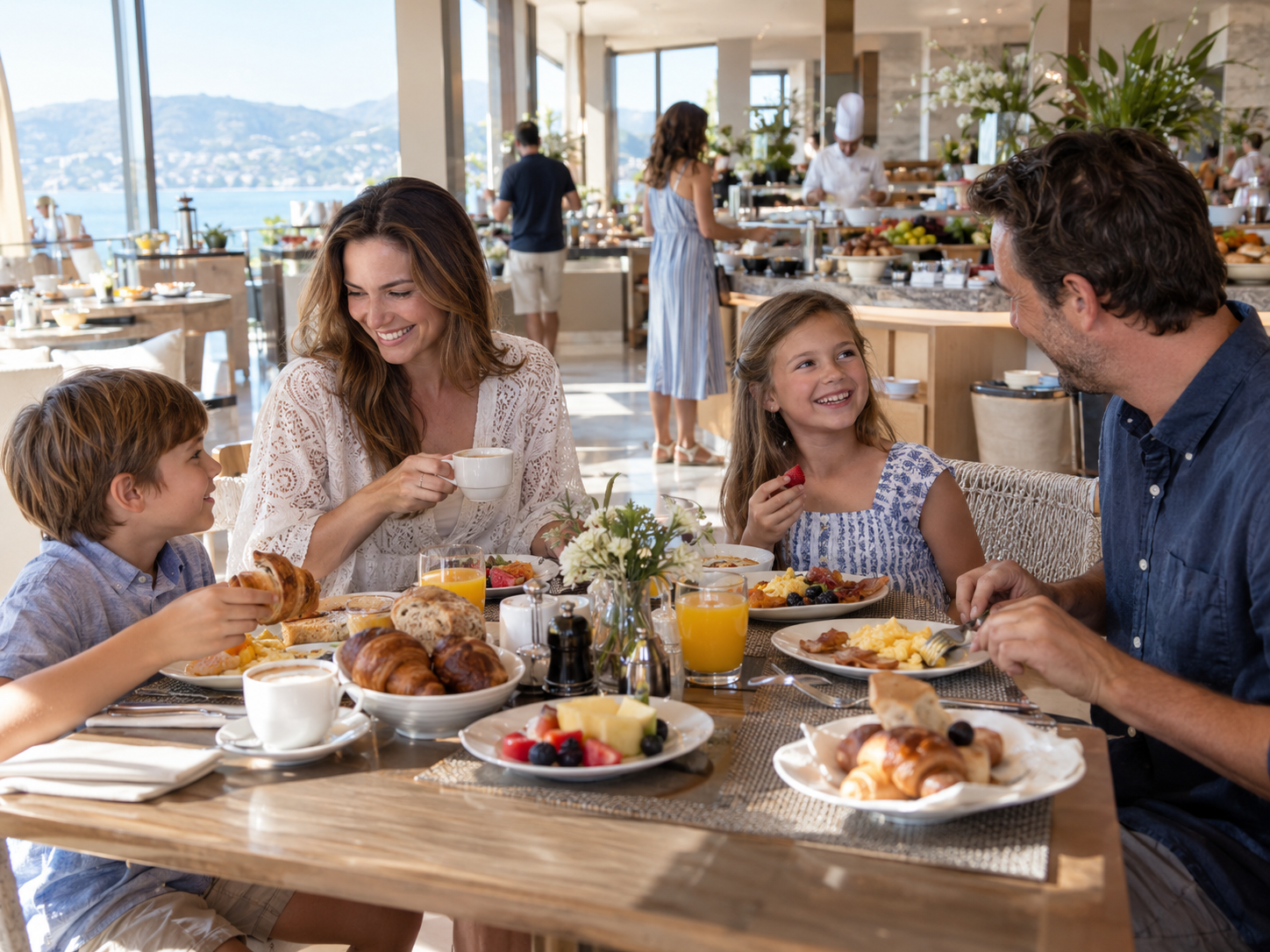
Families gain the most of all, since many hotels let children eat free or at a steep discount, which can make a family buffet cheaper than feeding everyone at a cafe, and the logistics of feeding restless kids in your own hotel beat marching them around a strange city in search of somewhere that suits everyone. Add the fact that European cafes almost never refill your coffee for free, while the buffet pours endlessly, and for the right traveler on the right morning, €18 is money well spent. For a serious coffee drinker who would order three cups out, that alone can close much of the gap, since three espressos at a cafe start to approach the price of the whole buffet.
When It Robs You
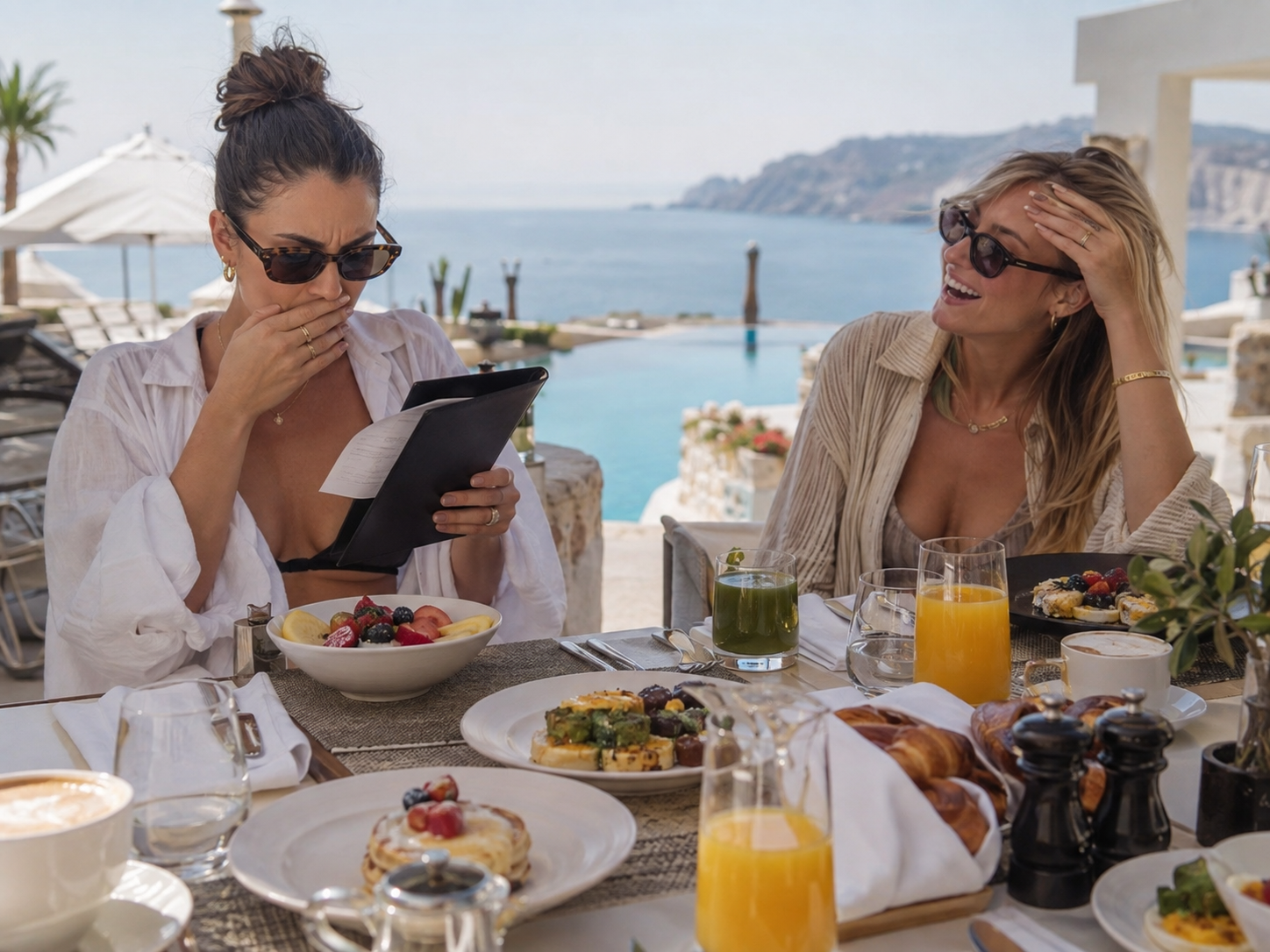
Now the other side, because just as often that buffet is a genuinely poor deal, and the clearest case is the light eater. If your idea of breakfast is a coffee and a pastry, paying €18 for a spread you will barely touch is simply a waste, when the same coffee and croissant at the cafe on the corner would cost you a quarter of that. You would be paying restaurant prices for the privilege of eating like a bird, which is the worst possible way to combine the two. Paying buffet prices to eat continental-breakfast quantities is the single most common way travelers overpay in the morning, and it happens because they said yes without doing the sum. The hotel is quietly banking on exactly this, that most guests will pay a flat buffet price and then eat a light breakfast worth only a fraction of it, which is precisely why the add-on is priced the way it is.
The buffet also robs you when the alternative is not just cheaper but better. In France and Italy especially, the local morning ritual, an espresso and a fresh pastry standing at the bar, or a cappuccino and a cornetto at an outdoor table, is not only a fraction of the price but part of the very experience you came for, and trading it for a beige international hotel buffet is a poor swap in every sense. If there are good, cheap cafes and bakeries within a short walk, and you actually want to taste the place rather than eat the same buffet you would find in any airport hotel on earth, the paid breakfast is robbing you of both money and the trip itself. And if you are a late sleeper who tends to miss the breakfast window anyway, paying for it is pure waste, since a breakfast you sleep straight through is the most expensive croissant you will never eat.
The Overeating Trap to Avoid
There is one more trap worth naming, because it quietly undoes the buffet’s value even when the price was fair, and it is the urge to overeat simply to get your money’s worth. Faced with an all-you-can-eat spread you have paid a fixed price for, the instinct is to pile the plate high and keep going, on the logic that more food means better value, and it is an easy way to start the day heavy, sluggish, and faintly unwell rather than fueled and ready.
The better way to think about it is that the buffet is worth what it saves you and what you actually enjoy, not how much you can physically consume. Eat a good, satisfying breakfast that sets you up for the day, by all means take advantage of the variety and the unlimited coffee, but there is no prize for leaving the table stuffed, and doing so tends to make for a slower, less pleasant morning of sightseeing.
The point of the buffet was never to test your capacity but to fuel your day, and a comfortable, well-chosen plate does that far better than a heaped one. The value is banked the moment you have eaten enough to skip lunch and enjoyed doing it; everything past that is just heaviness you carry around the museum all morning. The value was always in the convenience and the skipped lunch, not in punishing your stomach to justify the bill. A morning that starts with a comfortable, well-judged breakfast beats one that starts with a groaning, over-full plate, and it will make for far better sightseeing in the hours that follow. Take what genuinely serves you, leave the rest, and the buffet does its job.
It Changes From Country to Country
One thing that quietly shifts the math is where in Europe you are, because the value of a hotel breakfast varies enormously by country, and knowing the local pattern helps you decide before you even see the buffet. In France and Italy, the paid hotel breakfast is very often the worst value of all, because the local alternative is both cheap and wonderful. These are the countries where skipping the hotel breakfast is not a sacrifice but an upgrade, trading a bland buffet for one of the small daily pleasures the culture does best. A French bakery croissant or an Italian espresso and cornetto costs a couple of euros, tastes far better than any buffet, and is part of the culture you came to experience, so paying a hotel for a tray of the same pastries plus some cold cuts is usually a poor trade. In these countries the cafe is not a fallback but the whole point, and the hotel buffet is the thing you would only choose out of laziness or rain.
Head north and the picture flips entirely. In Scandinavia and Germany, hotel breakfasts tend to be genuinely generous spreads of breads, cheeses, cold cuts, eggs, fish, and more, and they are frequently included in the room rate rather than charged on top, which makes them well worth eating both for the value and for the experience of a proper northern European breakfast. The British full breakfast is its own case, a cooked plate of eggs, bacon, sausage, beans, and toast that can genuinely carry you through to dinner, so if it is offered at a fair price it can be a strong skip-lunch bargain. Many British bed and breakfasts include exactly this in the room rate, which is part of the point of the format, and a proper full English is one of the few breakfasts substantial enough to make lunch genuinely unnecessary. Learn the rough rule, that the cheap-and-glorious-cafe countries make the paid buffet a bad deal while the generous-buffet countries make it a good one, and you are halfway to the right answer before you look at the price. It is a broad generalization with plenty of exceptions, but as a starting instinct for a new country it steers you right far more often than not, and you can always adjust once you have scouted what is actually around your hotel.
The Quick Way to Decide

Boil it all down and the morning decision takes seconds. First, if breakfast is included in your rate, eat it, the question is already answered. If it is a paid add-on, ask yourself three quick things: will I eat enough to skip a later meal, is there anything good and affordable within easy reach, and does convenience matter especially this morning, because of an early start, bad weather, kids, or a remote location. Two yeses out of three, and the buffet is almost certainly worth it; two nos, and you should be out the door.
If the buffet lets you skip lunch, or there is nothing decent nearby, or convenience is worth a lot today, pay the €18 and enjoy it without a second thought, and eat it as the good-value meal it is. The times it genuinely earns its price are real and common enough that skipping it on blanket principle is just as much a mistake as always paying. If you are a light eater with a great cafe around the corner and a relaxed morning ahead, save your money and go taste the neighborhood. Those two profiles, the skip-lunch big eater and the light-eating cafe-goer, cover most travelers most mornings, and simply knowing which one you are today answers the question almost before you have asked it.
The hotel breakfast is neither a scam nor a must, but a decision that swings on your appetite, your morning, and what is out the door, and the travelers who do this quiet math eat better and spend less across a whole trip than those who simply always say yes or always say no. It is one of the smallest calculations in travel and one of the most quietly worthwhile, the kind of tiny, repeatable good decision that separates the traveler who comes home having eaten well and spent wisely from the one who did neither.

About the Author: Ruben, co-founder of Gamintraveler.com since 2014, is a seasoned traveler from Spain who has explored over 100 countries since 2009. Known for his extensive travel adventures across South America, Europe, the US, Australia, New Zealand, Asia, and Africa, Ruben combines his passion for adventurous yet sustainable living with his love for cycling, highlighted by his remarkable 5-month bicycle journey from Spain to Norway. He currently resides in Spain, where he continues sharing his travel experiences with his partner, Rachel, and their son, Han.