
For decades, the topless sunbather was one of the enduring images of the French Riviera, a symbol of a certain Gallic ease with the body that the more buttoned-up world found by turns scandalous and enviable. That image is fading fast. Survey after survey confirms that far fewer French women go topless on the beach than once did, and the decline has been steep and steady over the past forty years. What makes it genuinely interesting is not simply that it is happening but that France itself is openly puzzling over why, because the reasons turn out to touch on some of the most charged questions of the moment, about health, harassment, body image, social media, and what personal freedom even means anymore. The vanishing monokini has become an unlikely mirror of how a society is changing. A small matter of beachwear turns out to open onto some of the largest questions a culture can ask about itself.
What follows is what the numbers actually show, the freedom the practice once represented, and the tangle of reasons, some practical, some troubling, that France is debating as the bikini tops go back on.
The Numbers Behind the Decline
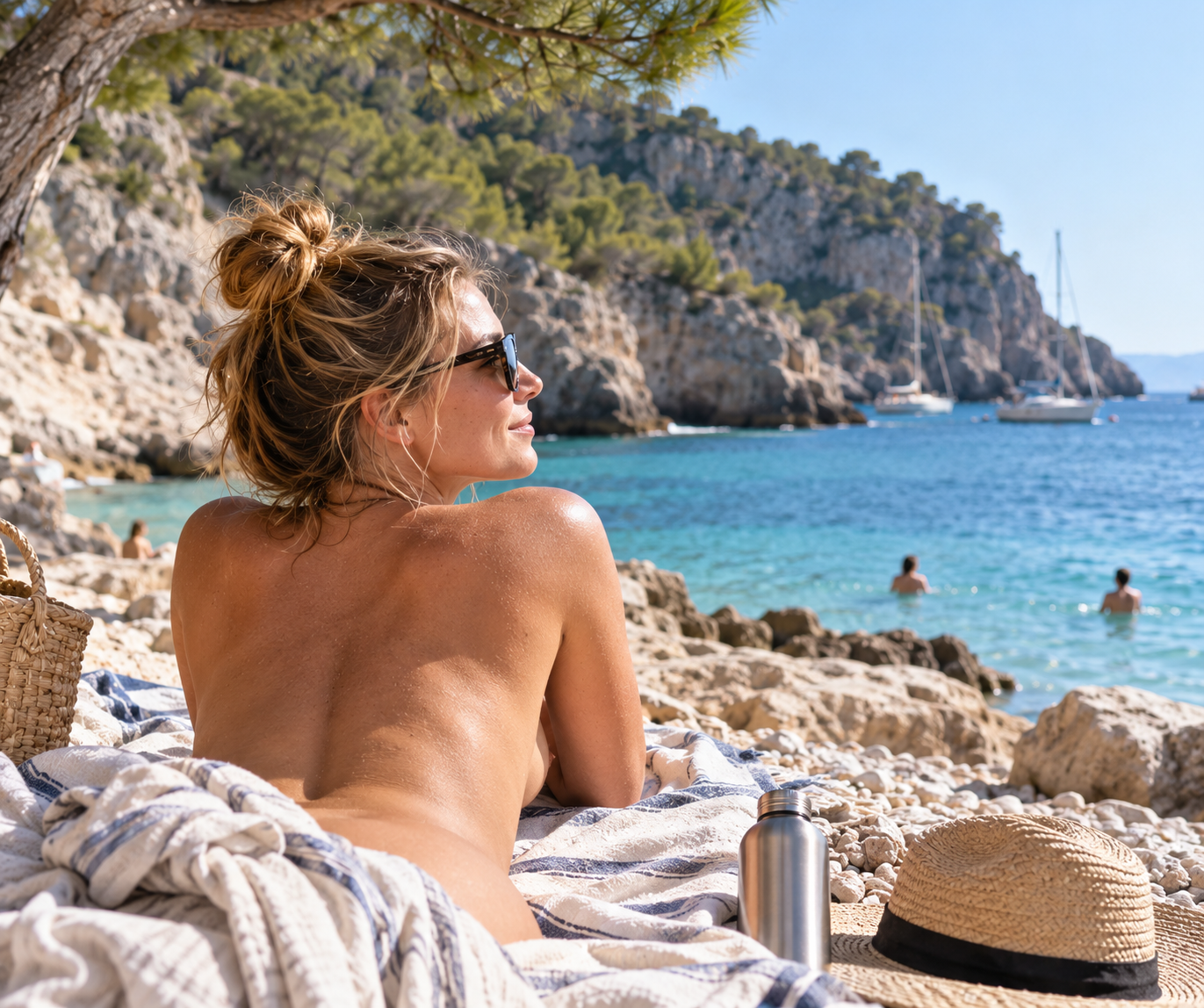
The decline is not anecdotal but clearly measured, most notably by the French polling institute IFOP, whose surveys have tracked the practice over decades. The trend line is genuinely striking: among French women under fifty, the share who said they regularly sunbathed topless stood at around 43 percent back in 1984, had fallen to about 28 percent by 2009, and dropped to roughly 19 percent by the end of the 2010s. In the space of a generation, in other words, the practice has more than halved, and among the very youngest women it is rarer still. The steepest drop has come precisely among those you might expect to be boldest, the teenagers and women in their early twenties, which is the first clue that something more than changing fashion is at work. What was once ordinary has become the exception. A French mother in her sixties and her daughter in her twenties may hold completely different assumptions about what is normal on a beach, the older woman shaped by the liberation of her youth, the younger by a very different set of pressures.
Perhaps the most surprising finding, given France’s reputation, is how it now compares to its neighbors. The same research found French women considerably more covered up than women in Spain, where close to half still go topless, and Germany, where roughly a third do. The country most associated in the popular imagination with beachside liberation has quietly become one of the more modest, at least by this measure, which is exactly the sort of reversal that makes the French sit up and ask what is going on. The image the world still holds of the carefree French beach, in other words, is increasingly a memory rather than a description of the present. A national habit that felt permanent has turned out to be anything but. Cultural practices that seem timeless are often only a few decades old and just as capable of fading, and the monokini, it turns out, was a creature of its particular moment rather than a fixed feature of French life.
The Freedom It Once Symbolized
To understand why the decline stirs such debate, you have to understand what the practice meant in the first place, because it was never really about tanning. The rise of topless sunbathing in the nineteen-sixties, seventies, and eighties was bound up with the women’s liberation movements of the era, an assertion of freedom over one’s own body and a rejection of the idea that the female form had to be hidden away as a matter of modesty or shame. To bare one’s chest on a public beach was, for a generation, a small but real act of emancipation, a claiming of the same easy relationship with the body that men took for granted. It sat alongside other freedoms won in the same era, and to the women who embraced it, going topless was less about being seen than about refusing to be told to cover up.
That is precisely why its disappearance feels loaded rather than trivial. If topless sunbathing was a symbol of hard-won freedom, then its fading raises an uncomfortable question: are women retreating from a liberation their mothers and grandmothers fought for, and if so, why? For some, the decline looks like a quiet loss, a freedom slipping away almost unnoticed. For others, it is more complicated than that, because the reasons women themselves give for covering up are not about modesty making a comeback but about a set of pressures that the freedom of the beach never fully protected them from. The debate, in other words, is really about what was gained and what is now being given back. And because it touches freedom, the female body, and who gets to feel safe in public, it is a debate that quickly becomes about far more than sunbathing.
Health and the Sun
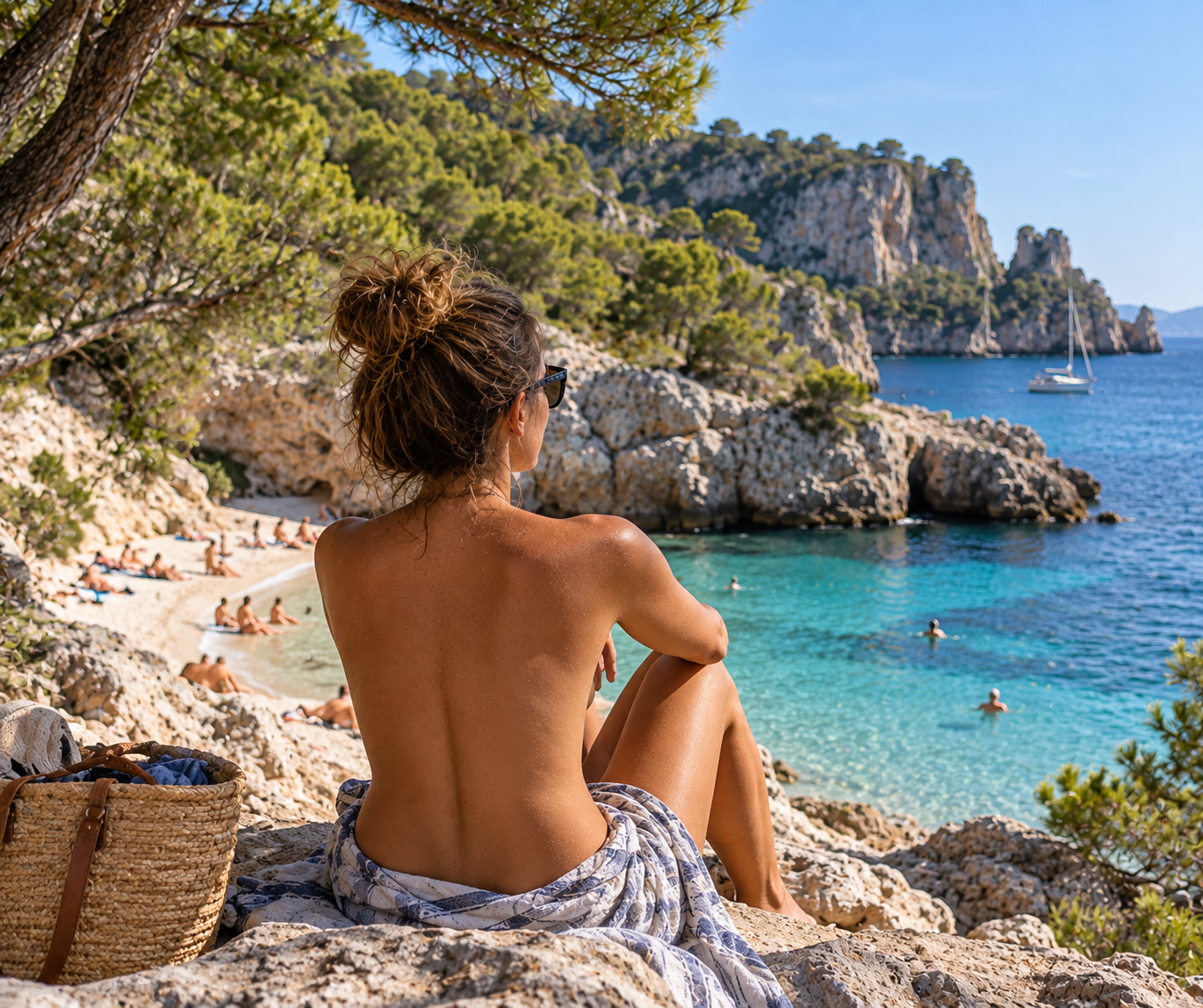
The most straightforward reason, and the one many French women cite first, has nothing to do with society at all and everything to do with skin. Decades of public-health campaigning about the dangers of sun exposure have landed, and awareness of skin cancer and premature aging has made many women simply more cautious about baring more skin than necessary to the midday sun. For this group, keeping the top on is less a social statement than a sensible health precaution, of a piece with sunscreen and hats and seeking the shade. The delicate skin of the chest is precisely the sort of area dermatologists warn about, so it is hardly surprising that health-conscious women would think twice about exposing it to hours of Mediterranean sun.
This is the least fraught of the explanations, and probably the least interesting to the national debate, precisely because it is so practical and uncontroversial. Nobody argues about sunscreen, and if the whole decline could be chalked up to skin-cancer awareness, there would be no soul-searching at all, just a sensible public-health success story. It reflects a broader, entirely sensible shift in how people across the Western world relate to the sun, from the deep-tan worship of earlier decades to a more careful, protective attitude today. The bronzed, oiled sunbather of the nineteen-seventies has given way to a generation that reaches for the factor fifty, and the chest has simply been folded into that same caution. But while sun safety clearly plays a real part, it is not the whole story, and it is certainly not what has made the decline a matter of soul-searching. The more revealing reasons lie elsewhere, in the changed experience of simply being a woman on a public beach.
Harassment and the Beach
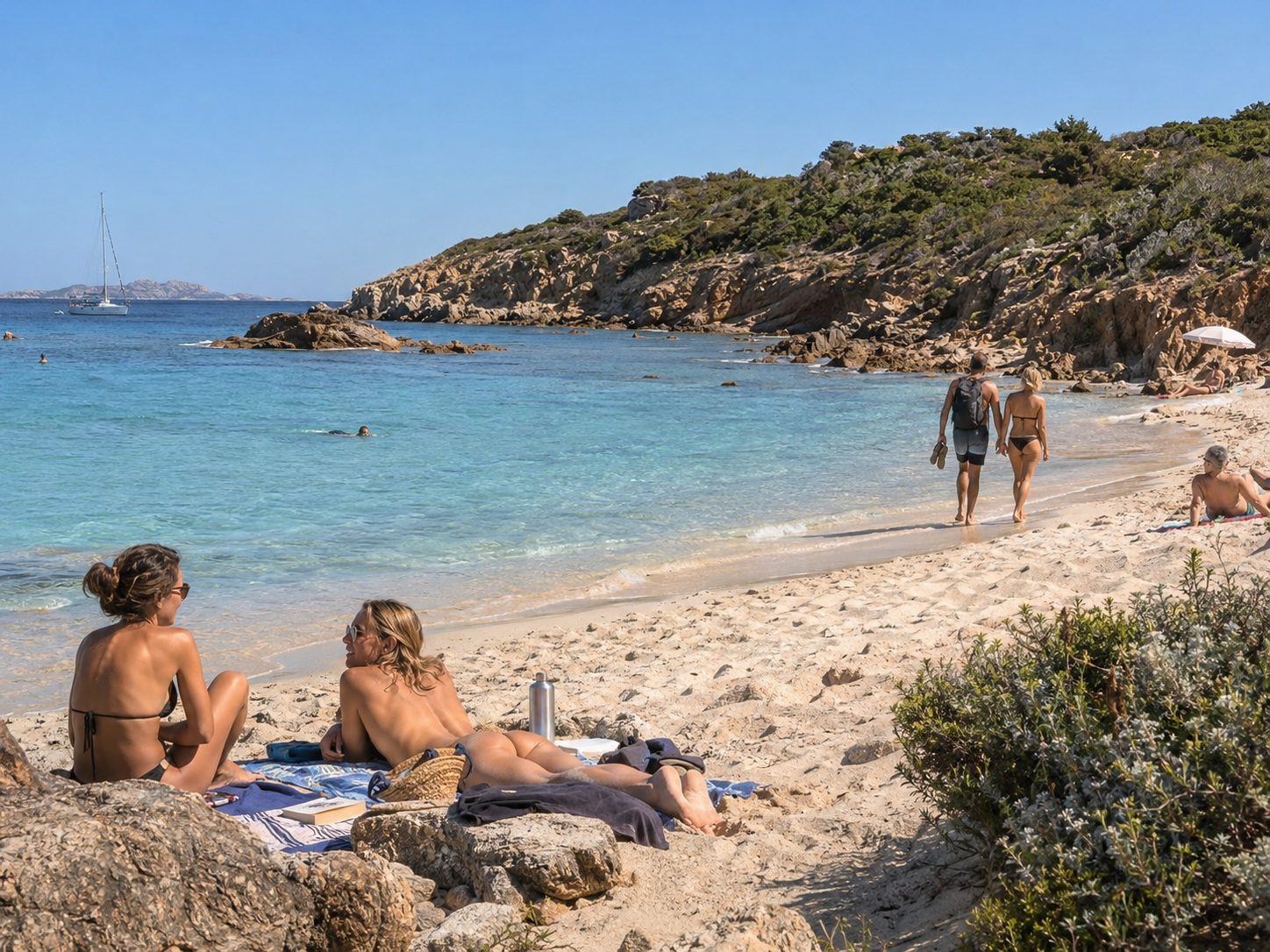
Here the debate turns serious, because when younger women in particular are asked why they keep their tops on, a great many point not to health or fashion but to a real fear of being harassed. Surveys have found that a large share of French women, close to half in some research, report having experienced some form of harassment or unwanted attention at a beach, pool, or lakeside, and among women in their late teens and twenties, the fear of being leered at, photographed, or worse ranks as a leading reason to stay covered. In the years since the wider reckoning over harassment and assault, this has crystallized into what some observers have called a MeToo effect on the beach itself.
It is a genuinely sobering finding, because it suggests that the retreat from topless sunbathing is, for many young women, less a free choice than a defensive one, a response to feeling watched and unsafe in a space that is supposed to be about relaxation. The beach, in this telling, has come to feel less like a place of freedom and more like a place of exposure in the worst sense, where a woman’s body invites unwanted scrutiny she has no way to control. When simply lying in the sun turns into an ordeal of managing other people’s stares, it is little wonder that many young women decide the top is not worth taking off. Whatever one concludes about the trend overall, this part of it is hard to read as anything but a loss, the sense that a public space has become less comfortable rather than more. A beach where women feel they must stay covered to avoid unwanted attention is not a freer beach than one where they felt safe to do as they pleased, whatever the raw numbers say. It is a reminder that a statistic about swimwear can carry, underneath it, a much heavier truth about how safe half the population feels in an ordinary public place.
Social Media and the Body
Alongside the fear of harassment runs a second, subtler pressure, and it comes from the screens in everyone’s pockets. Some who study the question argue that the biggest force behind the decline is not modesty or even safety but the relentless beauty standards amplified by social media, which have left many women feeling that their bodies are not good enough to display. In a world of filtered, curated, idealized images of how a body should look, the ordinary, unedited human form can come to feel like something to hide rather than to show, and the beach becomes another stage on which one might fall short.
There is a related and very modern fear woven through this, which is the fear of the photograph. In an age when any stranger might snap a picture and share it instantly with the world, the prospect of being caught topless in someone else’s photo, circulating forever online, is a real deterrent that simply did not exist a generation ago. It is worth being clear that this is a critique of the pressures, not of the women responding to them, since the problem here is not that women are insecure but that a commercial culture of impossible standards has made them feel that way. That a technology sold as connection has ended up making people more self-conscious about their own bodies is one of the quiet ironies of the age. The same phones that let us share everything have also made everyone a little more aware of being potentially photographed, judged, and compared, and the beach, where the body is most exposed, is where that awareness bites hardest.
A Wider European Shift

France may be the country debating it most loudly, but the trend is not confined to French beaches, and the wider European picture puts it in context. The same research that tracked France also looked across the continent and found the practice declining broadly, with the share of women regularly sunbathing topless dropping by around ten percentage points across the countries studied over roughly a decade and a half. Whatever is driving the change, it is clearly bigger than any one nation’s beaches, a shift felt from the Adriatic to the Atlantic wherever European women once sunbathed freely.
The interesting exception is Spain, which stands out for both the highest rate of topless sunbathing and the smallest decline, though even there a sharp generational split has appeared, with older women far more likely to go topless than the young. That pattern, of the practice surviving among older generations while the young cover up, repeats across Europe and is perhaps the single most telling detail in the whole story. It suggests that whatever is happening is not a return to some older modesty, since it is the older women who bare more, but something new and specific to the young, who have come of age in a world of smartphones, social platforms, and a heightened awareness of how women’s bodies get treated in public. The generation raised online is, strikingly, the most covered up. For all the talk of younger people being more liberated about bodies and identity, when it comes to this one very public exposure, they are markedly more guarded than the generation before them, which is a genuine puzzle worth sitting with.
A Debate About What Freedom Means
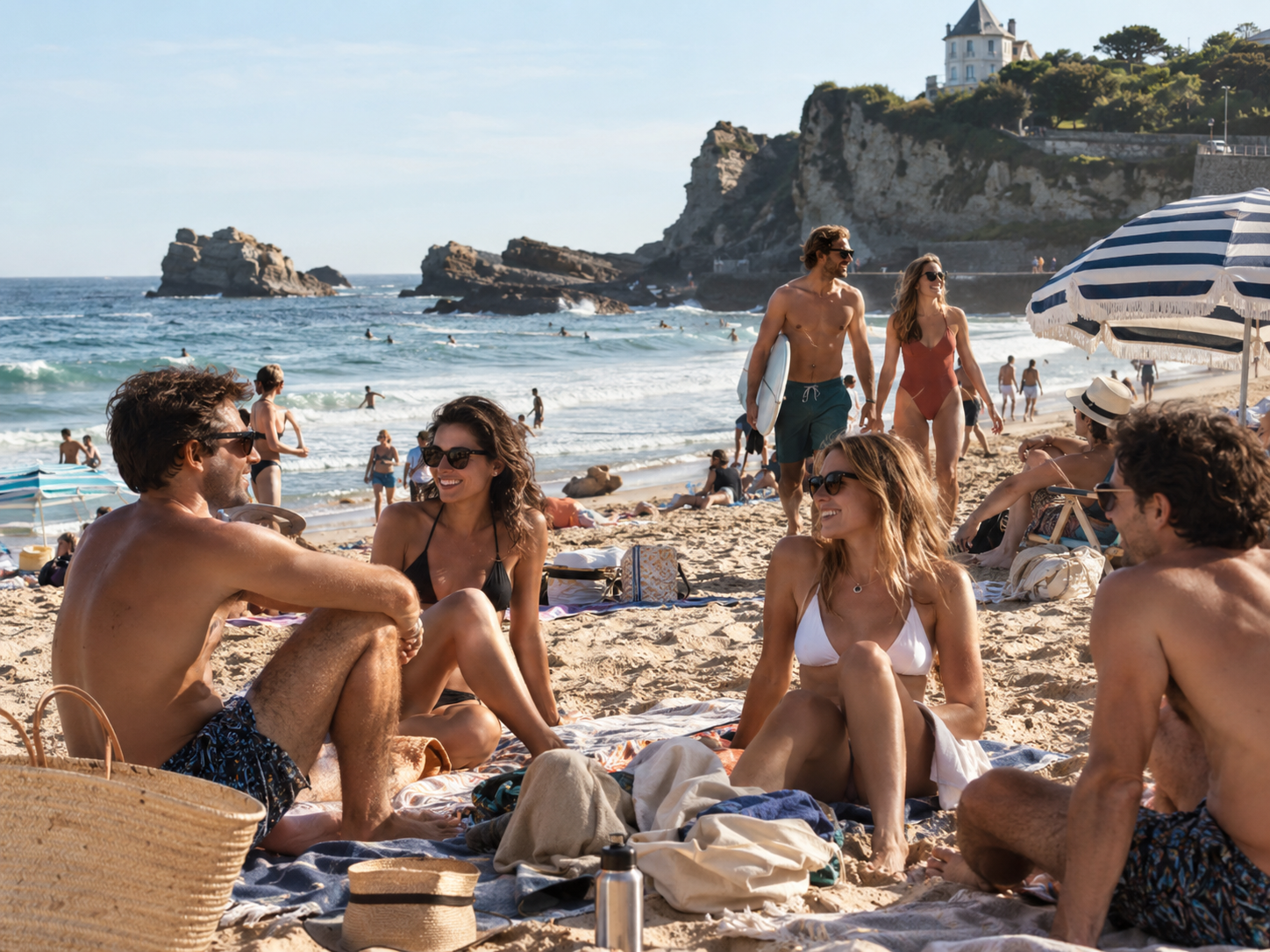
Put all this together and you can see why France cannot quite agree on what the decline means, because it genuinely can be read two opposite ways. One view holds it as a straightforward loss, a hard-won freedom being surrendered under pressure, a step backward for a generation that should be freer than its mothers, not more covered. In this reading, the disappearing monokini is something to mourn, evidence that harassment and impossible beauty standards have succeeded in policing women’s bodies where old-fashioned modesty once did. The mechanism has changed, from moral disapproval to the fear of the lens and the sting of comparison, but the result, women covering up, looks unsettlingly familiar.
But there is another, equally serious view, which holds that freedom means women getting to choose, and that choosing to cover up is no less valid than choosing to bare. If a woman keeps her top on because she genuinely prefers to, or because she has weighed the sun and the stares and decided it is not worth it, that is her call to make, and treating topless sunbathing as the only truly liberated option would be its own kind of pressure. Real freedom, on this view, is not about which choice a woman makes but about her being the one who makes it, free of both old-fashioned shaming and any newer insistence that she ought to bare more to prove a point.

About the Author: Ruben, co-founder of Gamintraveler.com since 2014, is a seasoned traveler from Spain who has explored over 100 countries since 2009. Known for his extensive travel adventures across South America, Europe, the US, Australia, New Zealand, Asia, and Africa, Ruben combines his passion for adventurous yet sustainable living with his love for cycling, highlighted by his remarkable 5-month bicycle journey from Spain to Norway. He currently resides in Spain, where he continues sharing his travel experiences with his partner, Rachel, and their son, Han.