
The Portuguese eat sardines the way other people eat bread, grilled over charcoal at summer festivals, tinned in olive oil for a lazy lunch, piled on grilled bread with nothing more than a squeeze of lemon. After enough time watching my neighbors work through them without a second thought, I got curious enough to run a small, slightly obsessive experiment: for thirty days straight, I ate sardines every single day, at least one serving, and then I had my blood drawn to see what a month of the humble little fish had done to my lipid panel.
This is not a balanced-diet plan or a piece of medical advice, just one person’s curious month and the numbers that came out the other end. What I found was genuinely interesting, mostly encouraging, and came with a couple of honest nuances that the breathless health headlines about omega-3 tend to skip. My account here is lightly composited, so read the numbers as the shape of what happened rather than a clinical record. The direction of things was real, though, and one line on the panel moved just as the science says it should.
What follows is why I chose sardines, what is actually packed inside one, why you can safely eat them daily, what thirty days of them was really like, and what the blood test showed.
Why Sardines, and Why Every Day
I picked sardines for the experiment for the same reasons the Portuguese have leaned on them for centuries, because they are cheap, humble, and quietly one of the most nutritious things you can put on a plate. Where a fashionable health food tends to be expensive and precious, the sardine is the opposite, a few coins for a tin, sold in every shop, unglamorous to the point of being a punchline in a way the more photogenic superfoods never are. And yet nutritionally it punches so far above its price that it feels almost like a trick, which is exactly the kind of paradox that makes for an interesting month of eating.
Eating them every day, rather than the sensible twice a week most guidelines suggest, was the deliberately extreme part of the experiment. I was not trying to model a balanced diet, which no single food can provide, but to push one variable hard enough to see whether it showed up in my blood, the way you might turn a dial all the way up just to learn what it does. Thirty days of a daily serving is a lot of one fish, more than anyone needs, and I would not hold it up as a template. But as a way of asking a clear question and getting a clear-ish answer, the daily dose had a certain crude logic, and it turned the vague idea that fish is good for you into something I could actually measure. There is a difference between believing a food is healthy and watching your own bloodwork respond to it, and I wanted to cross that line for once rather than take the health claims on faith.
What Is Actually in a Sardine

To understand why the little fish matters, it helps to look at what one contains, because the density of good things in a single can is genuinely startling. A small tin of sardines delivers well over twenty grams of protein, a large dose of the omega-3 fatty acids EPA and DHA, and a spectacular hit of vitamin B12, several times a full day’s requirement in one sitting. That protein alone makes a tin a legitimate meal rather than a snack, and the B12, which many people, especially older adults, struggle to absorb enough of, is a genuine bonus most would not think to look for in something so cheap. Because you eat sardines whole, soft bones and all, they are also one of the best non-dairy sources of calcium there is, and they carry a heavy load of selenium and a useful amount of vitamin D besides. For a food that costs almost nothing, that is an extraordinary nutritional resume.
The omega-3 content is the headline, and it matters more than most people realize, because the modern Western diet is badly short of these particular fats. The long-chain omega-3s EPA and DHA, found in oily fish, are the ones tied to heart and brain health, and yet surveys show the average person eats only a tiny fraction of the recommended amount, with the vast majority of people falling well short. A single tin of sardines contains several times a typical day’s intake for most people, which means that simply adding one to your day dramatically changes your omega-3 numbers, from deficient to abundant in one cheap, easy step. That gap between how little most people get and how much a sardine provides is the whole reason the experiment seemed worth running. If simply adding one cheap tin a day could close a deficiency that most of the population walks around with, that seemed like a thing worth seeing proven in my own blood.
Why You Can Eat Them Daily

An obvious worry with eating any fish every day is mercury, the heavy metal that accumulates in seafood and leads health authorities to warn against too much of certain species. Here sardines have a decisive advantage, because they are one of the lowest-mercury fish in the sea, and it comes down to their size and their place in the food chain. Mercury concentrates as it moves up the chain, so the big, long-lived predator fish like tuna, swordfish, and shark carry the heaviest loads, while sardines are tiny, short-lived, and feed low on plankton, so they simply never accumulate much of it.
This is what makes the daily-sardine experiment reasonable rather than reckless, since the same month of eating tuna every day would be genuinely inadvisable on mercury grounds alone. It is one of the quiet ironies of seafood, that the cheap little fish at the bottom of the price ladder is also the cleanest and safest to eat often, while the expensive predators come with a warning label. Sardines sit at the opposite end, safe enough that eating them daily raises no real mercury concern for a healthy adult, which is a large part of why they are such a smart choice among oily fish. Add to that the fact that they are among the most sustainable and least overfished seafood, a small, fast-reproducing species rather than a threatened giant, and the humble sardine starts to look like the rare food that is cheap, healthy, safe to eat often, and easy on the planet all at once. It is hard to think of another food that ticks every one of those boxes without a single serious drawback, which is what elevated the whole experiment from a gimmick into something I actually took seriously.
What Thirty Days of Sardines Was Really Like

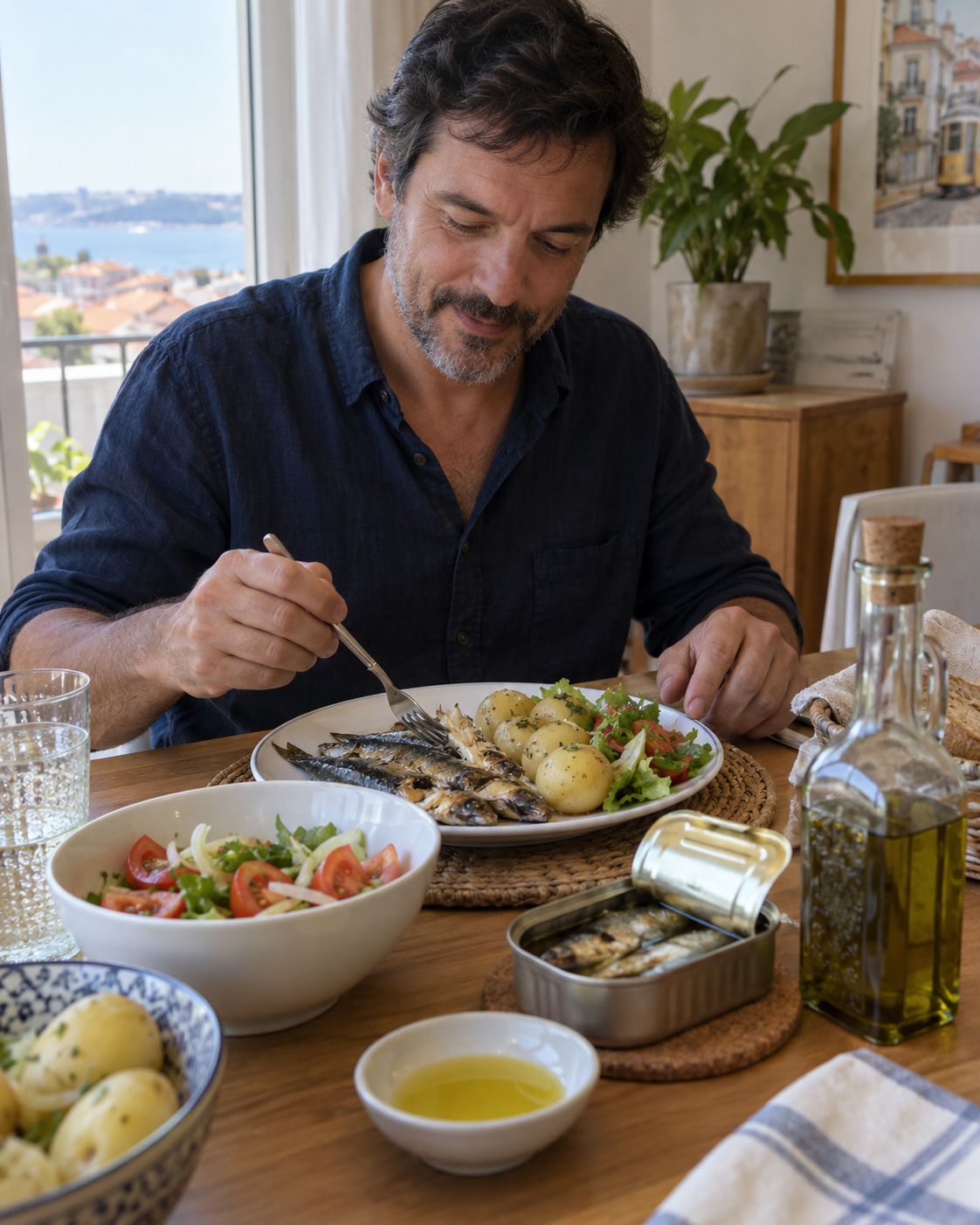
The lived experience of the experiment was, honestly, more pleasant than it sounds, though not without its moments. For the first week or so the novelty carried me happily along, and I discovered how genuinely versatile the little fish is, mashed onto toast with lemon and chili, tossed through pasta with garlic and olive oil, laid over a salad, or simply eaten grilled with boiled potatoes in the plain Portuguese way. Prepared with a bit of imagination, a sardine is a far more interesting thing than the sad, smelly tin of stereotype, and the variety kept it from becoming a chore. The trick, I learned, is acid and heat, a good squeeze of lemon, a hit of chili, a moment under the grill, all of which lift the fish and cut any oiliness, turning a humble tin into something you actually look forward to.
By the middle stretch, I will admit, a certain sameness set in, and there were evenings I eyed the tin with less enthusiasm and reached harder for the lemon and the hot sauce to keep things lively. This is the honest downside of pushing any single food to a daily habit, that even a good thing wears thin without variety, which is precisely why real diets are varied and why I would never suggest anyone actually eat this way forever. Still, I finished the thirty days without ever truly dreading a sardine, which says something about how adaptable the fish is, and by the end I had a small repertoire of quick, cheap, genuinely tasty ways to eat them that have outlasted the experiment. A food you can still stand after thirty straight days is a food with real staying power, and the sardine passed that test more comfortably than most things in my kitchen would have.
What the Lipid Panel Showed

Now the part I had done the whole thing for, the blood test, and here the results were encouraging with one honest wrinkle. The clearest and most expected change was in my triglycerides, the blood fats that omega-3s are well documented to lower, which came down noticeably over the month. Of all the numbers on a lipid panel, this is the one omega-3s move most reliably, and mine obliged, dropping enough that the effect was unmistakable rather than something you have to squint at. This is the most reliable, best-established effect of EPA and DHA, since they reduce the liver’s production of the particles that carry triglycerides, and my numbers moved exactly the way the science predicts, which was satisfying to see in my own blood rather than just a study.
The cholesterol picture was more mixed and more interesting, and this is the nuance the cheerful headlines usually omit. My total and HDL numbers shifted only modestly, and my LDL, the so-called bad cholesterol, did not fall and may have ticked very slightly up, which sounds alarming until you know that this is a recognized quirk of the DHA in oily fish, which can nudge LDL upward even as it improves triglycerides and overall cardiovascular risk. In other words, the lipid panel did not deliver a clean sweep of every number improving, but rather the specific, expected pattern of omega-3s: a clear triglyceride win alongside modest, mixed movement elsewhere. It was a useful reminder that real physiology is messier than a marketing claim, and that a single number rising is not the same as a bad result. A slightly higher LDL alongside sharply lower triglycerides and a raft of anti-inflammatory benefits is, on the whole, a picture most cardiologists would be pleased with, which is exactly why you read the whole panel and talk to a doctor rather than fixating on one line.
The Honest Caveats
Before anyone runs off to eat sardines by the case, the honest framing matters, because this was an experiment, not a prescription. Thirty days of a single food daily is not how anyone should actually eat, since real nutritional health comes from variety, and no one fish, however mighty, is a complete diet or a substitute for one. The sensible, evidence-backed version of what I did is simply to eat oily fish like sardines a couple of times a week as part of a varied diet, which delivers the benefits without the monotony or the excess. That is the version worth actually adopting, and it asks almost nothing of you, a tin or two a week folded into meals you already eat, for a genuine and well-supported payoff. Treat my month as a curiosity that makes a point, not a plan to copy.
Two more honest notes. First, blood lipids are deeply individual, shaped by genetics, weight, activity, sleep, and much more, so my results tell you about me and not about you, and your own body might respond quite differently. Second, and most importantly, this is emphatically not medical advice, and anyone with real questions about their cholesterol, their triglycerides, or their heart health should take them to a doctor rather than to a blog and a tin of fish. A single month of one person’s numbers proves nothing about your body, and the only responsible way to make decisions about your own heart health is with a professional who can see your full picture. One small practical caveat too, that tinned sardines can be high in sodium, so those watching their salt should choose lower-salt versions or fresh fish. With all that firmly said, the humble sardine came out of my month looking very good indeed.
What I Took From It

Stripped of the extremes, what the experiment left me with is a simple, quiet appreciation for a food I had underrated my whole life. The sardine is cheap, safe to eat often, kind to the planet, absurdly nutritious, and, prepared with a little care, genuinely good to eat, which is a rare combination of virtues in anything, let alone something you can buy for pocket change. The Portuguese, who have built a whole cheerful food culture around the little fish, turn out to have been onto something their grandparents knew without needing a lipid panel to prove it.
I no longer eat sardines every single day, because that was the experiment and not real life, but they have earned a permanent, frequent place on my plate that they never had before, a couple of times a week without fail. If there is a takeaway worth passing on, it is not the extreme version I ran but the gentle one underneath it: that adding a bit more oily fish to an ordinary varied diet is one of the cheapest, easiest, best-supported things a person can do for their body, and that the least glamorous option in the shop is very often the wisest. The month of sardines confirmed what the Portuguese never doubted, that the humble fish deserves far more respect than it gets. There is a lesson in that beyond fish, really, that we tend to chase expensive, novel health foods while overlooking the cheap, ordinary, time-tested ones sitting on the bottom shelf, and the sardine is the patron saint of everything we underrate.

About the Author: Ruben, co-founder of Gamintraveler.com since 2014, is a seasoned traveler from Spain who has explored over 100 countries since 2009. Known for his extensive travel adventures across South America, Europe, the US, Australia, New Zealand, Asia, and Africa, Ruben combines his passion for adventurous yet sustainable living with his love for cycling, highlighted by his remarkable 5-month bicycle journey from Spain to Norway. He currently resides in Spain, where he continues sharing his travel experiences with his partner, Rachel, and their son, Han.