
Arrive at a lake outside Berlin on a warm afternoon, or wander into a German sauna for the first time, and you may encounter something that stops an American in their tracks: people, whole families, entirely comfortable and entirely naked, sunbathing and swimming and relaxing as though it were the most ordinary thing in the world. To them, it is.
No giggling, no leering, no self-consciousness, just people going about an afternoon with rather less on than a visitor might expect. Germany has a word for this, FKK, short for Freikorperkultur, or free body culture, and it is not a fringe curiosity but a genuine, organized, deeply rooted cultural tradition with more than a century of history behind it. It has designated beaches and parks, its own well-understood etiquette, and a whole philosophy that treats the naked body as natural rather than shameful or sexual. For visitors from more buttoned-up cultures, understanding FKK is one of the more surprising and revealing windows into the German character. It is the kind of thing that can make an American deeply uncomfortable at first and, oddly, a little envious by the end.
What follows is what FKK actually is, why Germans insist it has nothing to do with sex, where it came from, and why this century-old tradition is quietly fading today. It is a subject easy to giggle at from a distance and far more interesting up close.
What FKK Actually Is
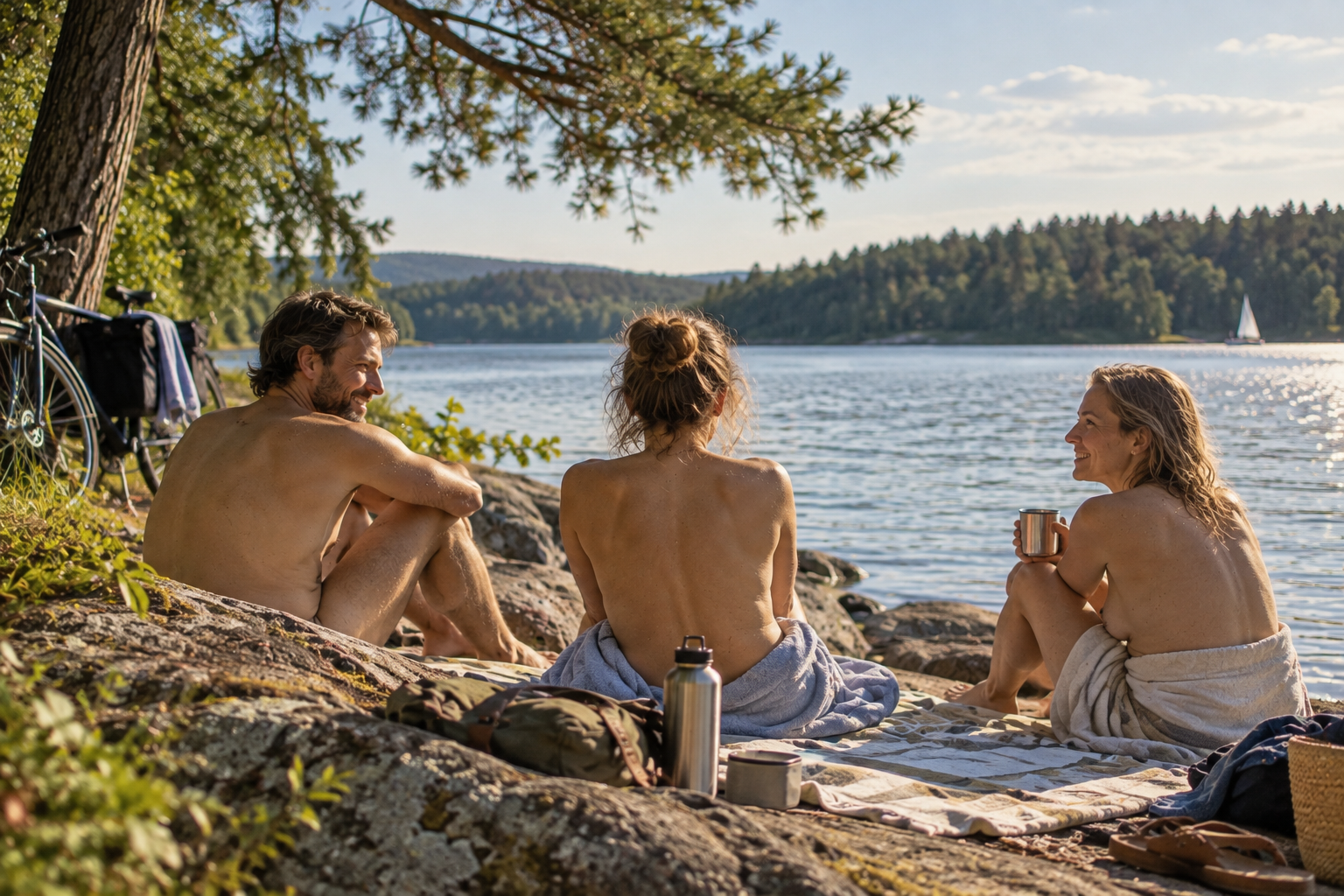
At its simplest, FKK is the German practice of social nudity in everyday, non-sexual settings, most often in nature. It translates literally as free body culture, and that is a good description of the spirit of it, the idea that the human body in its natural state is nothing to hide or be ashamed of, and that being unclothed outdoors, among others doing the same, is a healthy and pleasant thing rather than a scandalous one. People swim, sunbathe, walk, and relax without clothes, treating nudity as simply the absence of an unnecessary layer rather than as anything charged or provocative.
What makes Germany genuinely distinctive is not that some people practice naturism, which happens all over the world, but that FKK is so openly woven into public life. In many countries nudism is tucked away in private resorts or fenced-off clubs, but in Germany you find designated FKK areas in ordinary public parks, along popular lakes, and on long stretches of coastline, sitting comfortably alongside the clothed world rather than hidden from it. It is entirely possible to be strolling a German lakeshore and pass, without any fanfare, from a clothed stretch of beach to a nude one and back again, the transition marked by nothing more than a small sign. It is normal enough to have its own signage, its own well-understood rules, and its own place in the rhythm of German life, which is exactly what turns it from a niche hobby into a genuine culture. The word itself, given its own tidy acronym like any other institution, tells you how thoroughly Germany has organized and accepted something other countries can barely bring themselves to discuss.
A Health Idea, Not a Fetish
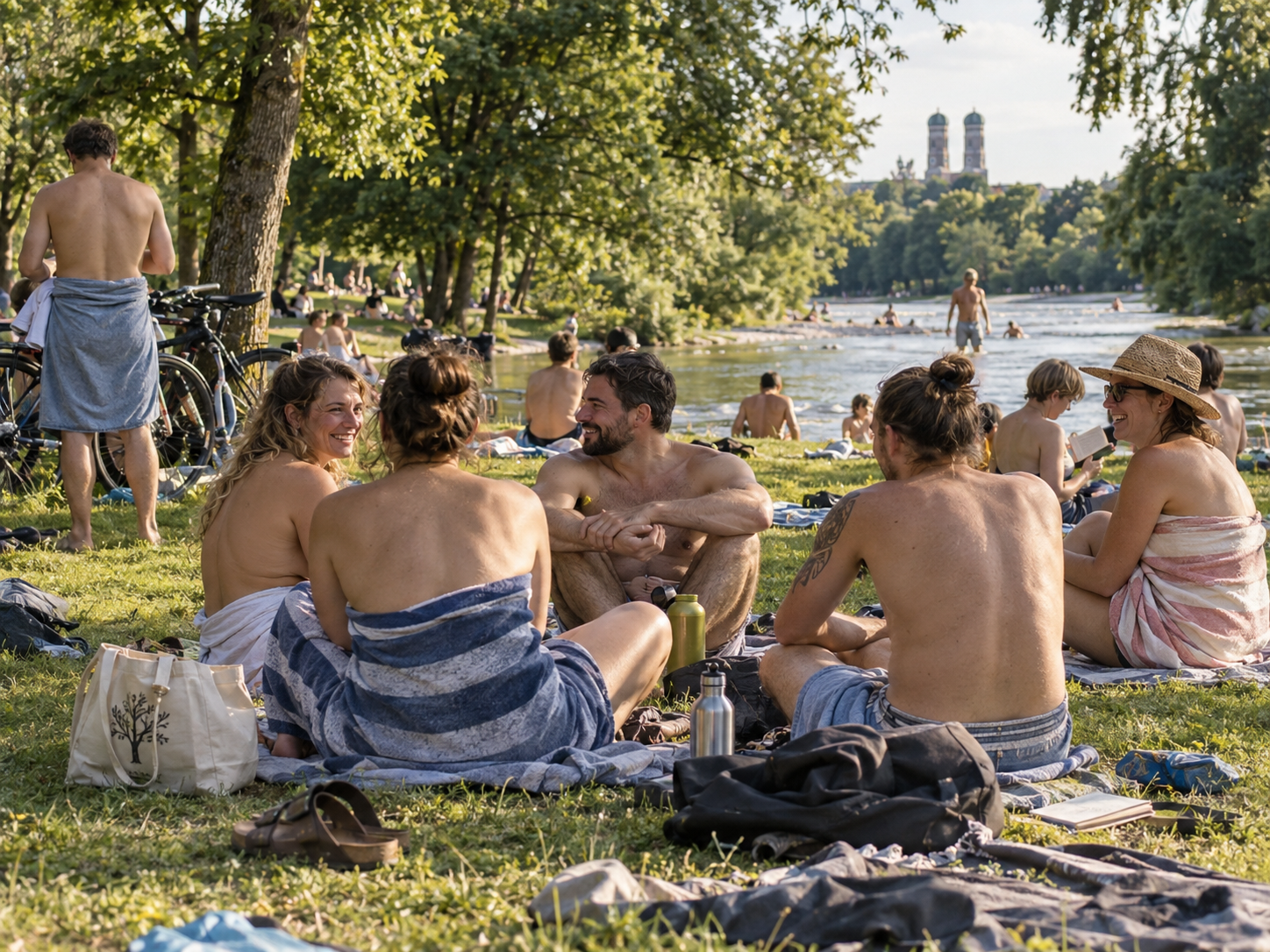
The single most important thing to understand about FKK, and the thing most likely to trip up an outsider, is that it is emphatically not about sex. This is the point Germans make first and most insistently, because it runs so counter to how cultures that treat nudity as inherently sexual tend to assume. FKK draws a firm and deliberate line between nudity and sexuality, holding that a naked body is simply a body, and that removing clothes in this context carries no more erotic charge than removing a hat. The whole philosophy rests on separating the unclothed human form from any sexual meaning at all. To a German steeped in FKK, the assumption that nudity must be sexual can seem faintly absurd, like insisting that a bare arm or a bare foot is scandalous, since the logic is simply extended to the rest of the body. It is the watching mind, not the body itself, that supplies any charge, and FKK is really an agreement among everyone present to set that watching mind aside.
This is why families take part together, why mixed-gender nude swimming is entirely standard, and why the atmosphere at an FKK beach or sauna is relaxed and matter-of-fact rather than titillating.
Children grow up seeing bodies of all ages and shapes treated as unremarkable, which practitioners argue fosters exactly the healthy, shame-free relationship with one’s own body that the whole movement is built around. In a world where young people are bombarded with idealized, edited images of how bodies should look, there is an argument that seeing ordinary, un-airbrushed human variety treated as perfectly normal is quietly good for a person. For the newcomer, the surprise is rarely the nudity itself but how quickly it stops feeling like anything, how completely the sexual charge an outsider expects simply fails to materialize. That absence is not an accident, it is the entire point. Practitioners will tell you that the sexualization of nudity is the learned thing, the cultural overlay, and that FKK simply peels it back to reveal how neutral a naked body can be once you stop insisting it must mean something.
Where It Came From
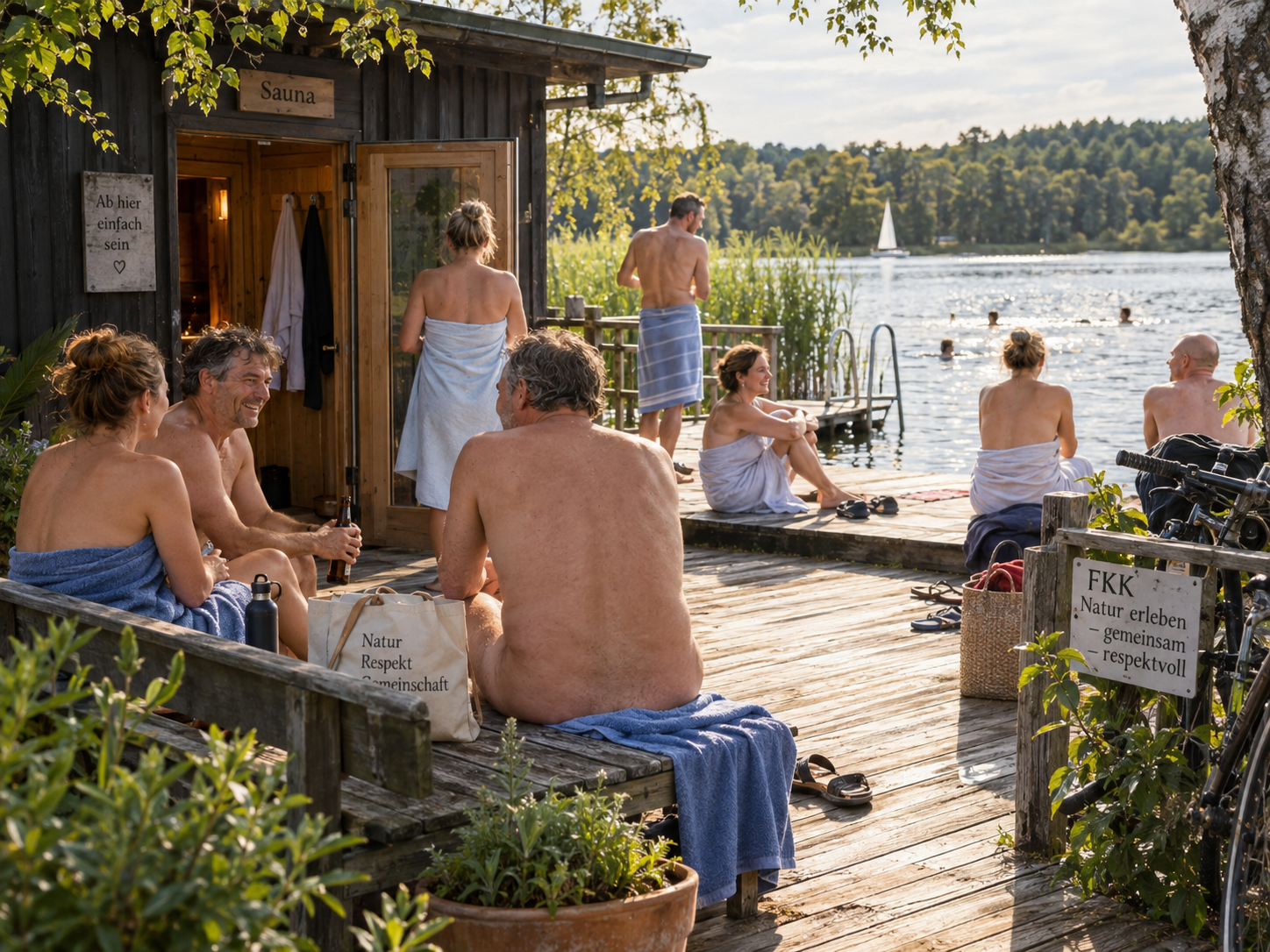
FKK did not appear from nowhere, but grew out of a broad German health-and-nature movement of the late nineteenth century known as Lebensreform, or life reform. This was a reaction against the grime, crowding, and unhealthiness of rapid industrialization, a yearning to return to something more natural and wholesome, and it promoted things like vegetarianism, gymnastics, fresh air, and sunlight as antidotes to the sickliness of crowded, modern city life. Within that movement, the idea took hold that exposing the body to air, water, and sun without clothing was genuinely good for one’s health and vitality. It was of a piece with the era’s enthusiasm for sunbathing, cold-water swimming, and open-air exercise, all part of a conviction that modern city life had cut people off from the natural conditions their bodies needed.
From that seed the practice grew. Germany’s first nude beach opened on the northern island of Sylt in 1920, and a Berlin schoolteacher named Adolf Koch became an early champion, opening schools devoted to nude gymnastics and athletics after the First World War. The movement had a real following until the Nazi regime, suspicious of its progressive and socialist associations, shut much of it down. But the impulse did not die, and after the Second World War, FKK came roaring back, and in one half of the divided country it would become something more powerful than its founders ever imagined. What had begun as a health fad among reformers was about to be adopted by an entire society and turned into something close to a quiet act of political defiance.
How East Germany Made It Its Own
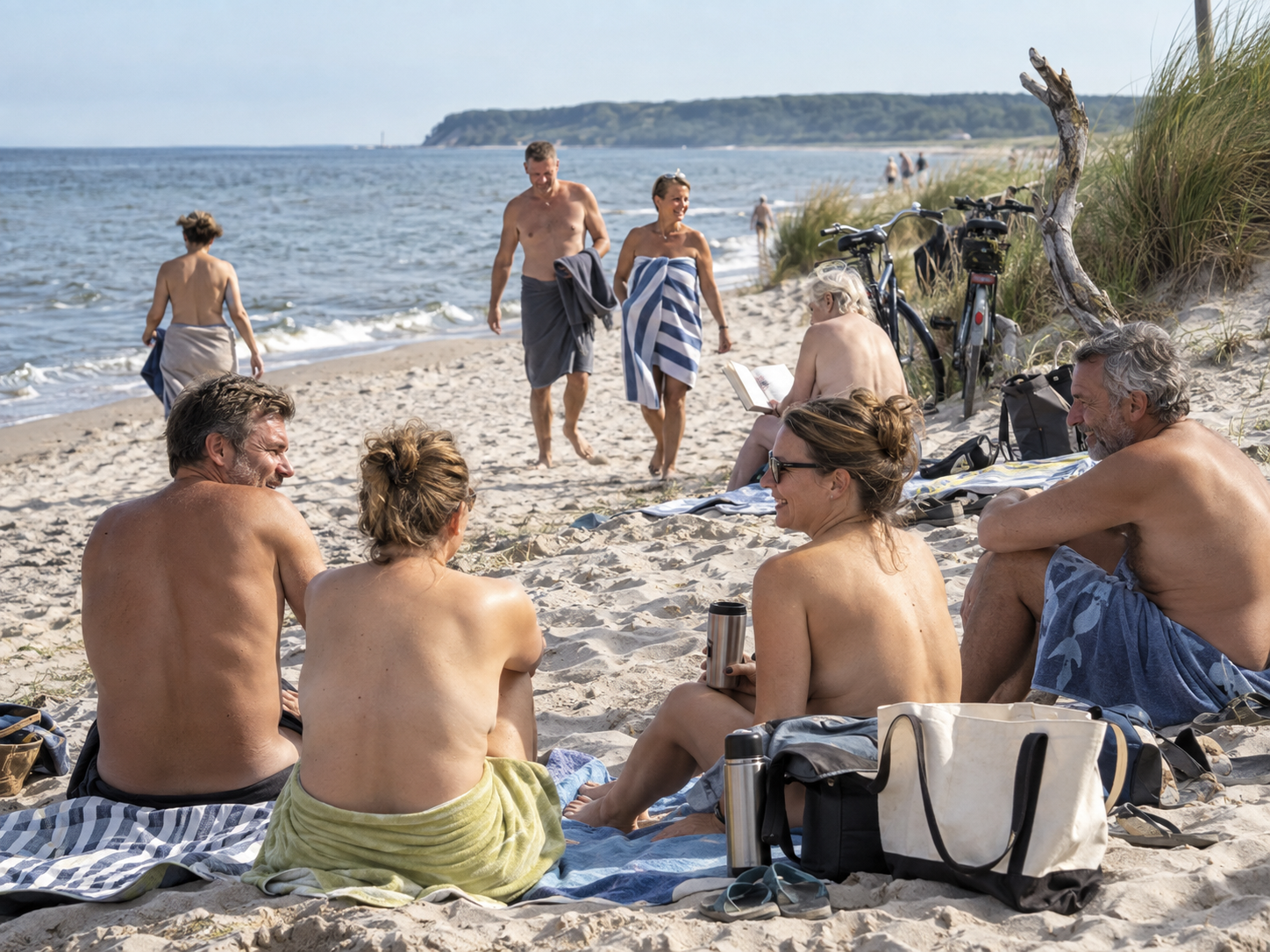
The most fascinating chapter of the FKK story unfolded in East Germany, where the practice took on a meaning far beyond health and nature. In the repressive, tightly controlled society of the communist GDR, where so much of life was monitored and constrained, stripping off on a beach became a rare taste of genuine freedom, a small rebellion of the body against a state that sought to regulate everything else. Casting off the drab, mass-produced clothing of the socialist economy to lie naked in the sun was, for many East Germans, one of the few unfiltered pleasures available to them. There is a striking irony in it, that in a state built on collective conformity, the act of collective undressing became a genuine expression of individual freedom, a place where the citizen was, for a few hours, simply a person in the sun rather than a subject of the regime.
The state, after initially trying to suppress it, eventually embraced FKK as a wholesome, collective, socialist form of recreation, and it became astonishingly popular, with hundreds of thousands of participants flocking to the beaches of the Baltic coast and the shores of inland lakes. By some counts well over half a million East Germans took part by the 1970s, which for a country that size made it a genuinely mainstream way to spend a summer’s day rather than any kind of fringe pursuit. Nude bathing was formally legalized again in the 1950s, and FKK wove itself so deeply into everyday East German life that it comfortably outlasted the regime that had promoted it. Even after the Berlin Wall fell and the two Germanys reunited, the eastern habit of comfortable public nudity persisted, a small, enduring cultural marker of a country that no longer exists.
Where You’ll Find It Today
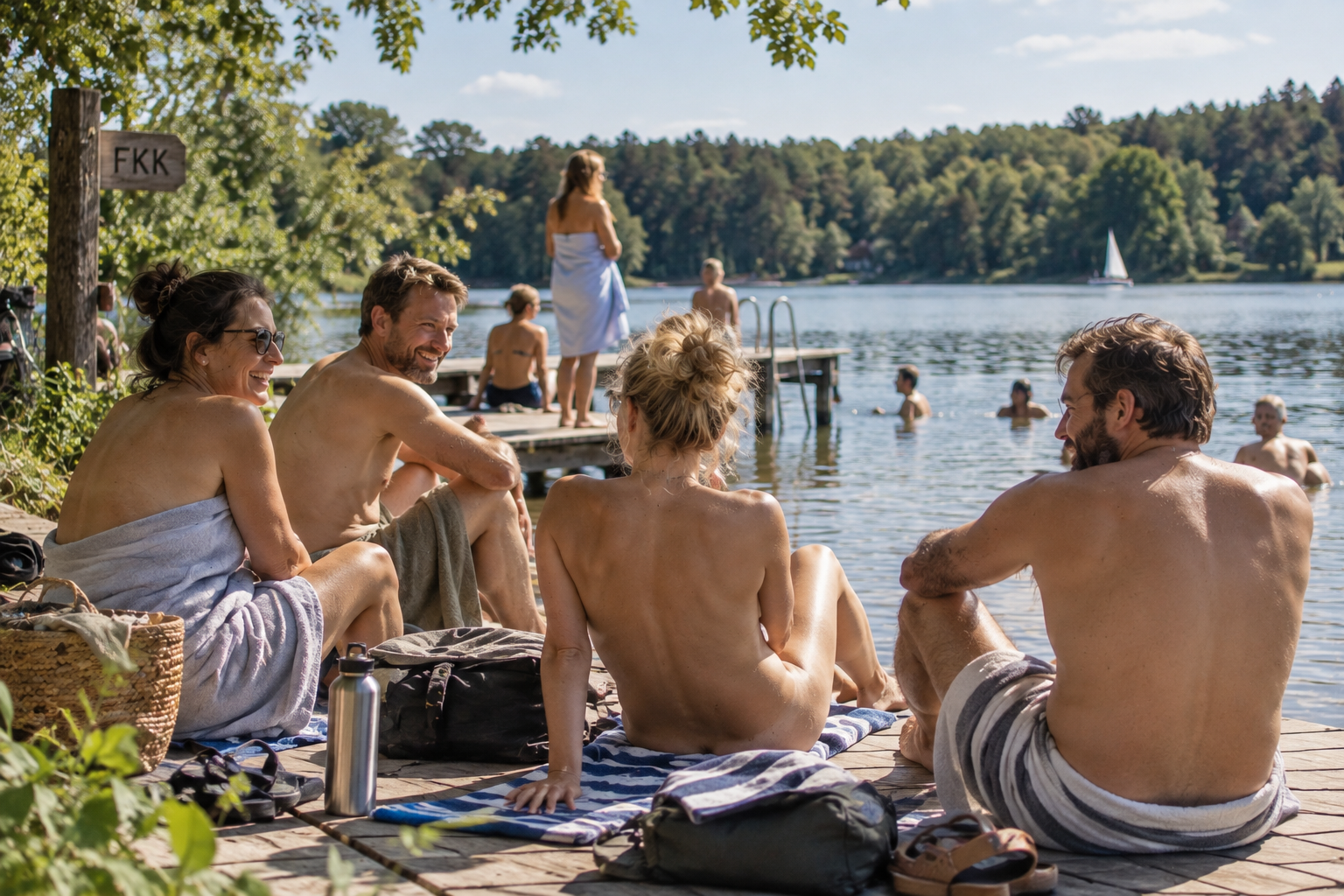
For the curious traveler, FKK remains easy to encounter across Germany, provided you know where to look and how to behave. The beaches of the Baltic Sea and North Sea coasts, particularly in the former East, have long stretches designated for FKK, and inland you will find nude-friendly lakes and even sections of major city parks, most famously in Munich, where sunbathers strip off in the great English Garden in the heart of the city. German sauna culture is a world of its own, and it is almost always nude, mixed-gender, and strictly non-sexual, a place where wearing a swimsuit is often the real faux pas. Turning up to a German spa in your trunks, expecting to blend in, is the surest way to mark yourself as the confused foreigner, since the locals will be uniformly and unbothered-ly bare.
The etiquette in these spaces is simple but firmly enforced, and it comes down to respect. You keep your eyes to yourself, since staring or gawking is the cardinal sin of FKK, and photography is absolutely forbidden, for obvious reasons of privacy and dignity. The whole thing works precisely because everyone treats it as normal and no one treats it as a spectacle, so the one way to genuinely offend is to behave as though it were one. Approach an FKK space with that respect, and you will find it exactly as unremarkable and pleasant as the Germans do. The awkwardness a newcomer expects tends to evaporate within minutes, replaced by the simple realization that nobody is paying you the slightest attention, which is precisely how it should be.
What It Says About Germany
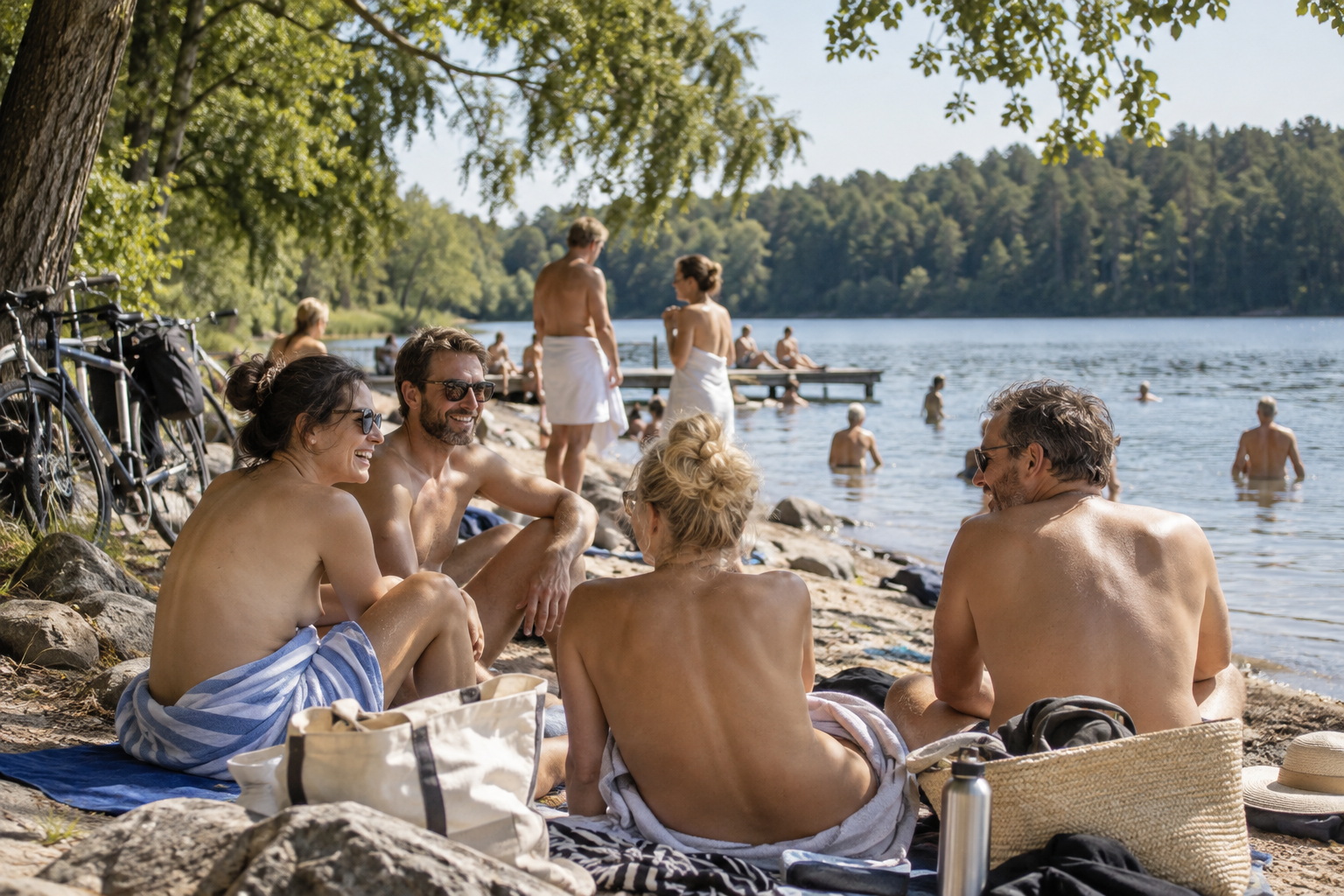
Step back from the beaches and the saunas and FKK reveals something about the German character more broadly, which is part of why it is worth understanding rather than just gawking at. Germans are famous for a certain directness and a lack of fuss, a preference for treating things plainly as they are rather than wrapping them in embarrassment or euphemism, and FKK is that instinct applied to the human body. Where other cultures have layered the naked form with shame, sin, and sexual meaning, the German tradition strips all of that away and simply says that a body is a body, no more remarkable unclothed than clothed.
There is a real philosophy underneath it, one that connects the body to health, to nature, and to a kind of honest equality. When everyone is naked, the usual markers of status and wealth that clothing provides simply vanish, and people meet each other stripped, quite literally, of those signals, which practitioners have long seen as a quietly democratic and humbling thing. There is no designer label on a bare body, no way to read a person’s income from their outfit, only people as people, which is a surprisingly levelling experience. Whether or not you would ever join in, there is something to admire in a culture confident and unfussy enough to have made peace with the body in this way, and it stands as a gentle rebuke to the anxiety and shame that so many other societies attach to the most natural thing in the world.
A Tradition Quietly Fading
For all its history and cultural weight, FKK is, honestly, in gentle decline, and that is worth acknowledging. Membership in the naturist clubs that once organized much of the movement has been falling for years, and younger Germans, raised in a more globalized, image-conscious, social-media age, show markedly less interest in stripping off than their parents and grandparents did. The comfortable, unselfconscious nudity that defined a generation is slowly becoming a thing associated with older people, and some worry the tradition may not survive another generation intact. It is a curious reversal, since the young are usually the ones who shock their elders, yet here it is the older Germans who strip off without a thought while their grandchildren, raised on filtered selfies and body comparison, feel far more self-conscious about being seen unclothed.
The response in some places has been protective, even a little poignant, the sort of measure a community takes when it senses something it treasures beginning to slip away. Certain coastal towns have taken to employing wardens to keep clothed onlookers out of the FKK beaches, precisely to preserve the nude-only atmosphere against a rising tide of the merely curious, a sign of a tradition anxiously guarding itself. Whether FKK endures as a living practice or slowly fades into cultural memory, it remains a genuinely distinctive thing, a whole society’s decision to treat the naked body as natural, healthy, and free of shame. Traditions like this rarely vanish all at once, but thin out slowly, kept alive by the committed few even as the crowds drift away, so FKK will likely persist in some form long after it stops being the mass phenomenon it once was. For a visitor from a culture that has never quite managed that, it is worth understanding not as an oddity to snicker at but as a window into a different, and in its way admirable, way of being at home in one’s own skin. You do not have to join in to appreciate what it represents, a small, stubborn insistence that the body is nothing to apologize for, which is a gentler and healthier idea than the shame most of us were handed instead.

About the Author: Ruben, co-founder of Gamintraveler.com since 2014, is a seasoned traveler from Spain who has explored over 100 countries since 2009. Known for his extensive travel adventures across South America, Europe, the US, Australia, New Zealand, Asia, and Africa, Ruben combines his passion for adventurous yet sustainable living with his love for cycling, highlighted by his remarkable 5-month bicycle journey from Spain to Norway. He currently resides in Spain, where he continues sharing his travel experiences with his partner, Rachel, and their son, Han.