For thirty days straight, I wore a small sensor on the back of my arm that measured my blood sugar every few minutes and beamed the numbers to my phone. It is called a continuous glucose monitor, and while it was invented to help people with diabetes manage a serious condition, a growing number of curious, healthy people now wear them simply to see what their bodies are doing, and I became one of them for a month of eating the Spanish way, all the olive oil and bread and late dinners and long lunches. I wanted to see, out of pure curiosity, what the curve would do after every meal, whether the famously healthy Mediterranean way of eating would show up on the graph the way its reputation suggests. What I learned was genuinely interesting, and also came with a big honest caveat that I want to put right at the front, because the most important thing this experiment taught me was not which foods to fear but, quite the opposite, how easy it is to start fearing food at all, and why you should be careful not to.
What follows is what the monitor is, the honest caveat that shapes everything, what Spanish eating actually did to the curve, and the trap I had to be careful not to fall into. It turned out to be less a story about food than a story about how we relate to our own bodies.
What the Monitor Actually Is
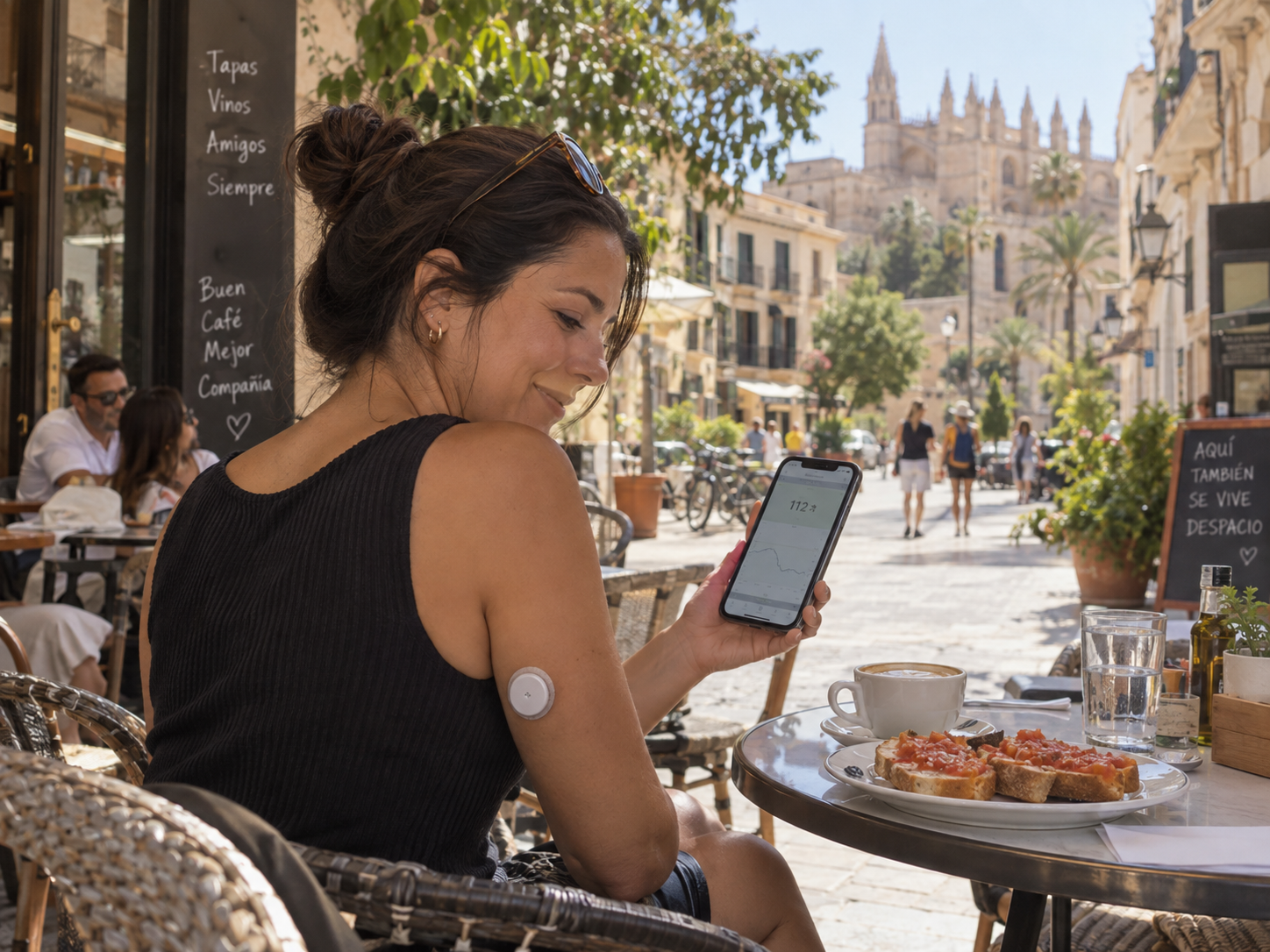
A continuous glucose monitor, or CGM, is a small device with a tiny filament that sits just under the skin and reads the sugar level in your fluid around the clock, sending a live graph to an app. For a person with diabetes, this is genuinely life-changing technology for diabetes, replacing painful finger-pricks and catching dangerous highs and lows in real time. For the rest of us, it has become a kind of curiosity gadget, a way to peek at something the body normally keeps completely hidden from us, the constant rise and fall of blood sugar through an ordinary day of eating, moving, sleeping, and stressing.
That is the appeal, and it is a real one: for thirty days I could see, in a live line on my phone, exactly how my body responded to everything I ate. A plate of paella, a slice of tortilla, a late dinner of grilled fish, a mid-afternoon pastry, every one of them left its own distinct signature on the graph, a gentle swell here, a sharper climb there.
Watching it in real time was oddly compelling, like seeing the weather of my own body, and I understood immediately why people become fascinated by these devices. It felt a little like being handed a secret readout of my own inner workings, a window into a process I had never been able to watch before. Every apple, every glass of wine, every bowl of lentils registered as a shape on the screen, and it was genuinely hard, at first, not to check the phone after every bite. But a window is not the same as a verdict, and before I tell you what I saw, I have to be honest about what all of it does and does not mean. A live graph feels authoritative, like hard truth about your body, and that feeling is exactly what makes it so easy to over-read.
The Honest Caveat First
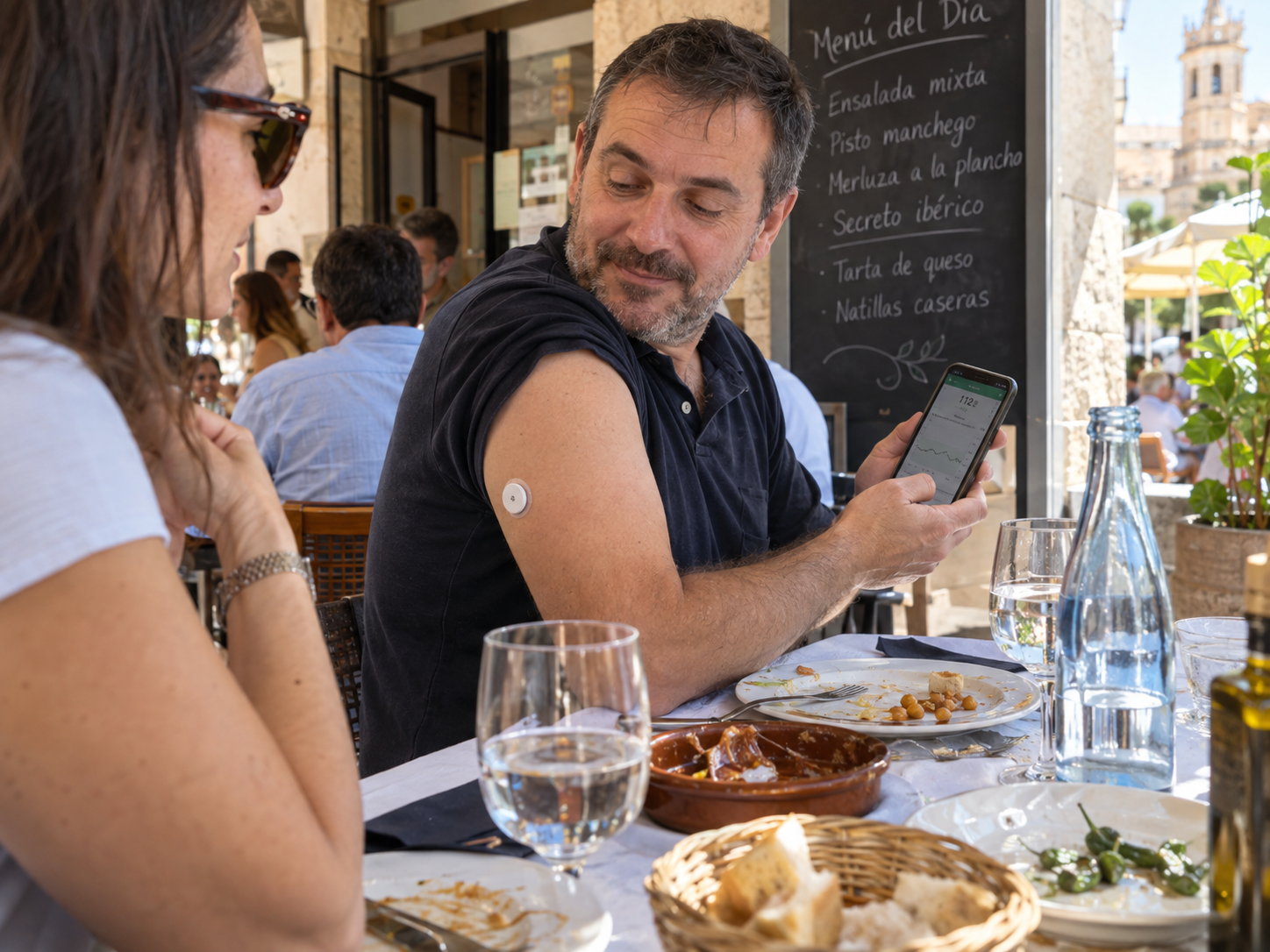
Here is the thing that has to come before any of the results, because it changes how you should read them. For people who do not have diabetes, the usefulness of wearing one of these monitors is genuinely debated, and the science is far from settled. Blood sugar rising after you eat is completely normal and healthy, not a problem to be eliminated, and transient spikes in a person without diabetes are simply how a working body handles food. There is, as yet, little solid evidence that the numbers a healthy person sees on a CGM predict anything meaningful about their long-term health.
Just as importantly, responses are intensely individual, so the same food can send one person’s line climbing and barely move another’s, which means my curve tells you about me and not about you. And there is a real risk that experts warn about openly, which is that watching these numbers can tip into anxiety and even disordered eating, with people coming to fear perfectly healthy foods or chasing a flat line as though any rise were a failure. So please read everything that follows as one curious person’s month of noticing, not as medical advice or a set of rules, and if you have real concerns about your blood sugar or metabolic health, that is a conversation for a doctor, not a gadget from the internet. With that firmly established, here is what the month actually showed.
Why These Monitors Are Everywhere Now
It is worth pausing on how a piece of medical equipment became a wellness trend, because the context matters for how seriously to take the whole thing. In the last few years, continuous glucose monitors have gone from the pharmacy to the wellness aisle, marketed to perfectly healthy people as a tool for optimizing your metabolism, and wrapped in the language of biohacking and self-improvement. Apps and subscription services now pair the sensors with slick dashboards and personalized tips, and a certain kind of health-conscious person wears one the way an earlier generation wore a step counter. It has become, in some circles, almost a status symbol of the wellness-minded, the little white disc on the upper arm a quiet signal that its wearer takes their metabolism seriously.
Some of that enthusiasm is understandable, since the data really is fascinating and can genuinely reveal, for instance, that a walk after dinner helps or that a bad night’s sleep shows up in the morning numbers. But a good deal of it runs ahead of the evidence, promising insights about long-term health that the science does not yet support for people without diabetes. Knowing that this is as much a marketed lifestyle product as a proven health tool is the right frame of mind to wear one in, curious rather than credulous, interested in what it shows without treating every number as gospel. I went in wanting to satisfy my curiosity about Spanish food, not to optimize myself, and I think that turned out to be the healthiest possible reason to try it.
What the Spanish Plate Actually Did
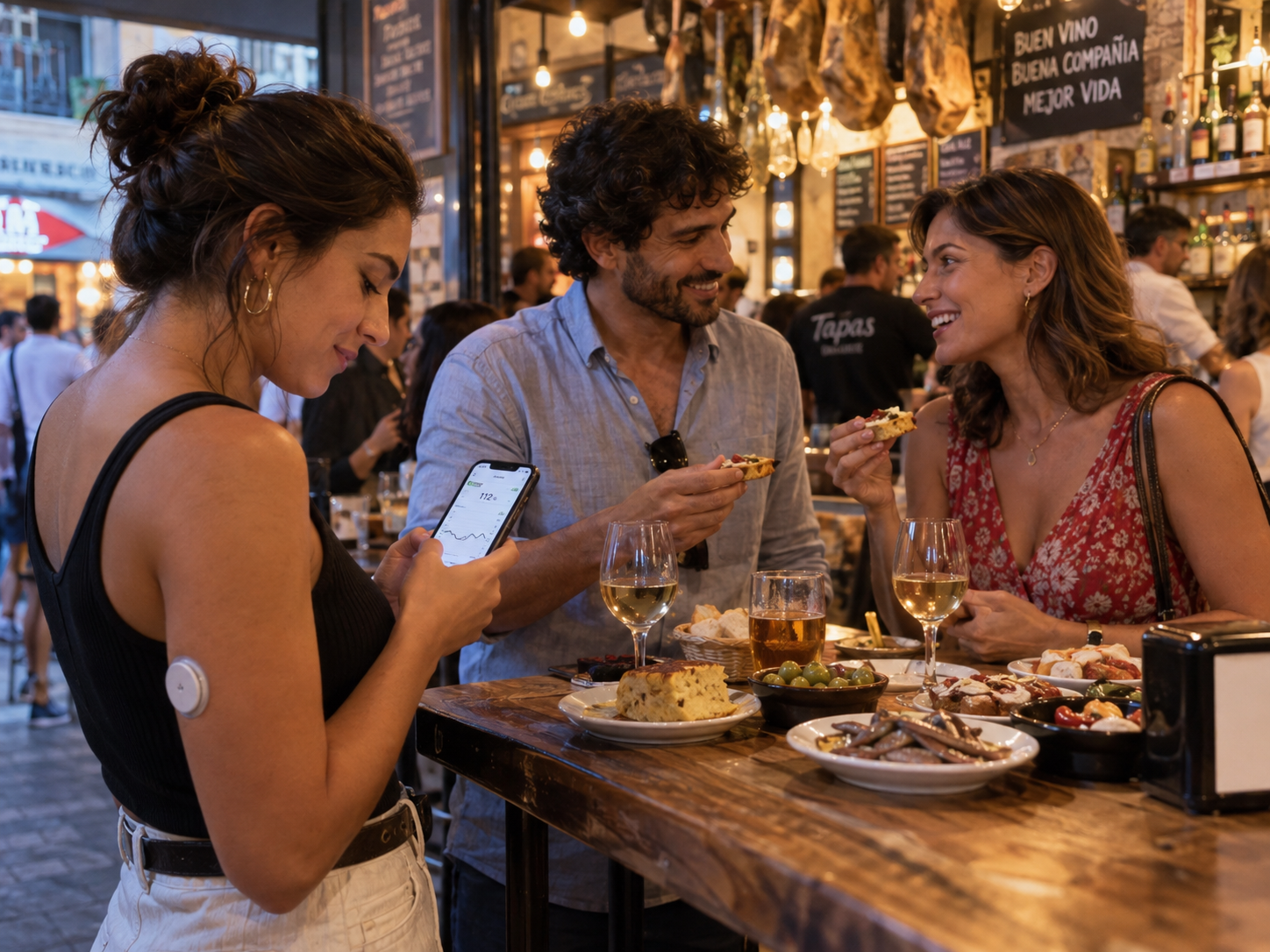
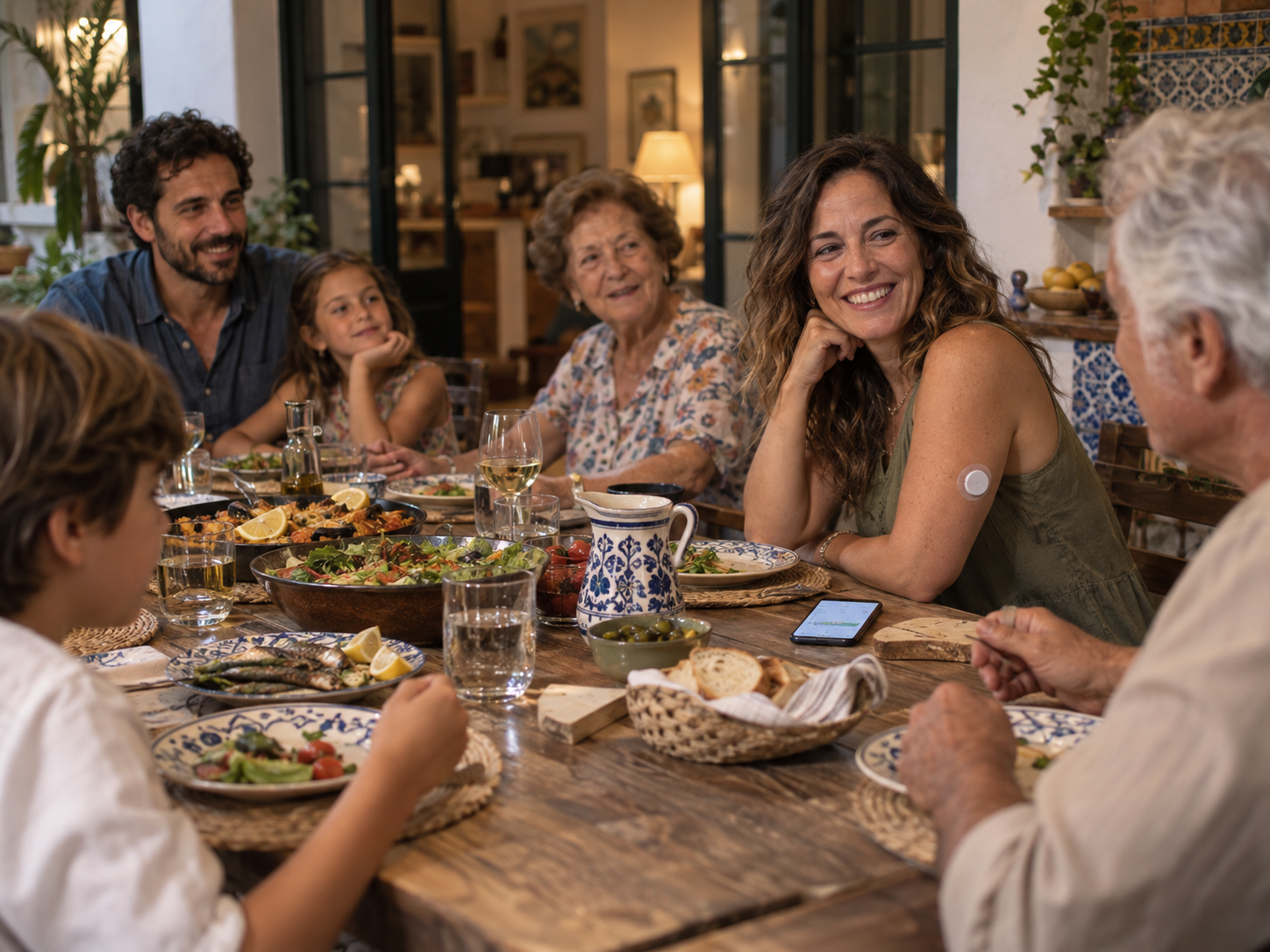
With all that firmly in mind, the single most striking thing I noticed was how gentle the curve stayed on a genuinely Spanish, Mediterranean way of eating. Meals built around the things this cuisine does naturally, olive oil poured with abandon, vegetables and legumes, fish and good bread eaten slowly as part of a long, unhurried meal, tended to produce soft, rounded rises rather than dramatic peaks. The olive oil and the fiber and the protein all seemed to cushion the effect of the carbohydrates, so a plate that an anxious dieter might fear turned out to move my line only gently.
The most reassuring discovery, honestly, was how many foods I had vaguely worried about turned out to be completely fine. So much modern eating comes wrapped in low-grade guilt, a running mental commentary about carbs and sugar and what we should not be having, and it was a relief to watch that anxiety turn out to be largely unfounded for the everyday foods of a good Spanish table. Bread eaten with olive oil and alongside other things, fruit eaten after a meal rather than alone, even a modest dessert at the end of a proper lunch, none of them did anything alarming to the graph. If anything, the experiment quietly dismantled a lot of low-level food worry rather than creating it, showing me that the traditional Spanish plate, eaten the traditional Spanish way, is already about as kind to blood sugar as everyday eating gets. The lesson was less avoid these foods and more the way people have eaten here for centuries works beautifully. There is something quietly moving in watching a graph confirm the wisdom of a traditional cuisine, as if the sensor were nodding along to what every Spanish grandmother already knew.
What Actually Moved the Needle
The more interesting surprises had little to do with the food itself, which is part of why the whole thing was worth doing. The clearest of all was movement: a short walk after a meal, the kind Spaniards take as a matter of course in the evening paseo, noticeably softened the rise every single time, often more than any change to the meal itself. Sitting still after eating produced a higher climb than the identical meal followed by a gentle stroll, which was a genuinely useful thing to see with my own eyes rather than just read.
It gave a new appreciation for the Spanish habit of the after-dinner walk, which turns out to be doing quiet good for the body while it does obvious good for the evening.
The other revelations were about everything that is not on the plate. On nights when I slept badly, my morning readings ran higher before I had eaten a thing, and on days I was stressed, the line drifted up even without food, which drove home how much sleep and stress shape the body quite apart from diet. Eating order mattered too, with the same components producing a gentler curve when the vegetables and protein came before the starch. None of this is a prescription, and all of it is individual, but it broadened the whole experiment beyond food, reminding me that a walk, a good night’s sleep, and a calmer day do as much for the body as anything on the fork. It was a useful correction to the narrow, food-obsessed way these gadgets are usually pitched, since the graph kept insisting that how I lived mattered at least as much as what I ate.
The Trap I Had to Avoid
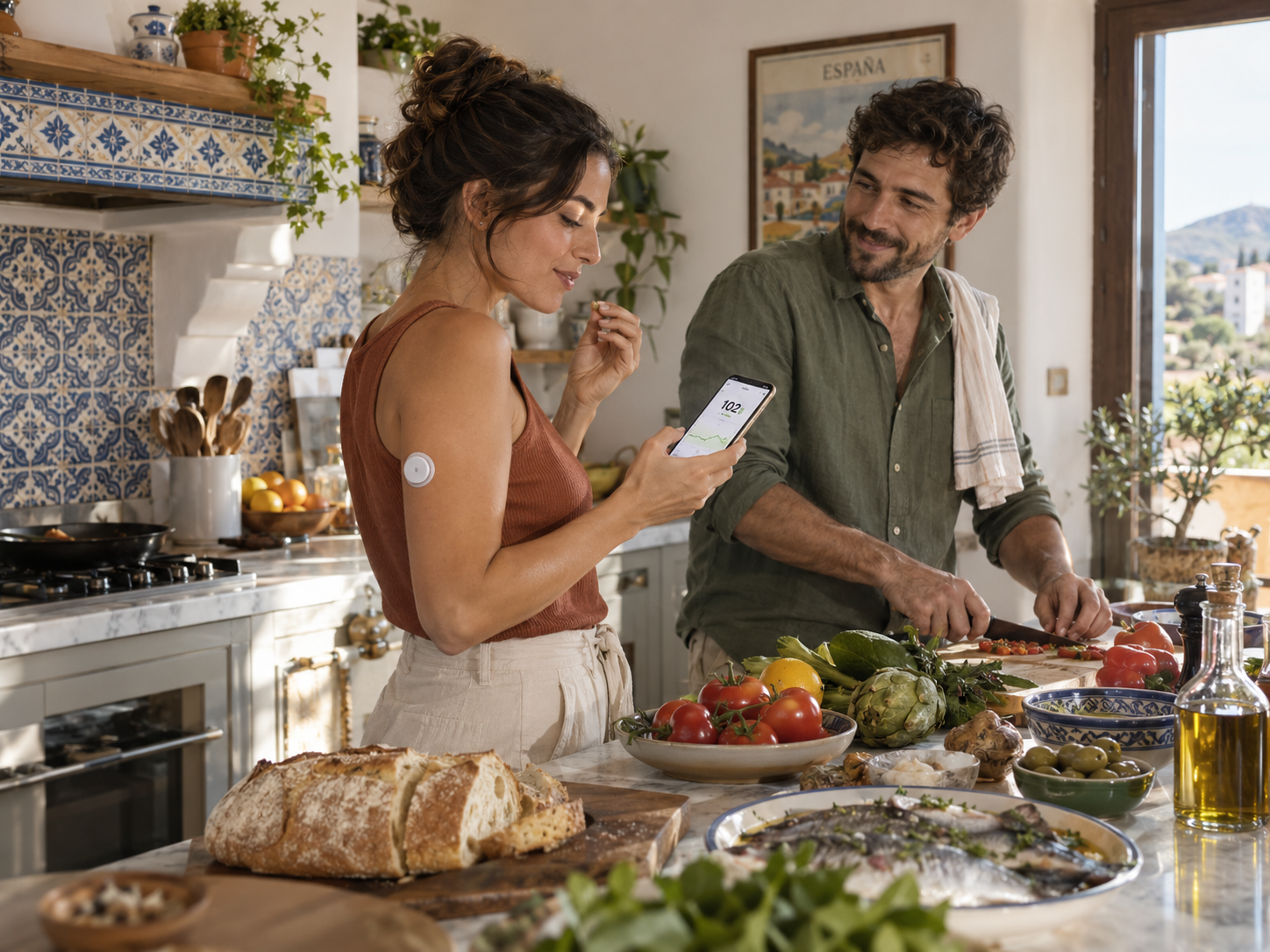
Now the most important part, the reason I put the caveat up front. Somewhere around week two, I noticed myself starting to change in a way I did not like. I caught myself hesitating over a piece of fruit, mentally bracing for the spike, and feeling a small flush of something like guilt when the line climbed, as though I had failed a test. I found myself wanting to eat in whatever way kept the graph flattest rather than in the way that fed me well and made me happy, and that is exactly the trap the experts warn about, the slow slide from curiosity into anxiety. It is a strange thing to feel judged by a number on your own phone, but that is precisely what began to happen, and I could see how easily it might harden into a genuine problem for someone more vulnerable than me.
I had to consciously step back and remember what I actually knew, that a rise after eating is normal and healthy, that a flat line is not the goal of a human body, and that letting a gadget teach me to fear an apple would be a genuinely bad trade. The moment a tool meant to inform starts making you anxious about food, or nudging you toward cutting out perfectly good things to please a number, it has stopped helping and started harming. That realization was probably the single most valuable thing the whole month gave me, and it is the reason I would urge real caution on anyone tempted to try this, especially anyone who has ever had a fraught relationship with food. For someone with any history of disordered eating, a device that turns every meal into a scored test is very much the wrong tool, and no amount of interesting data is worth reawakening that.
What I Actually Took From It
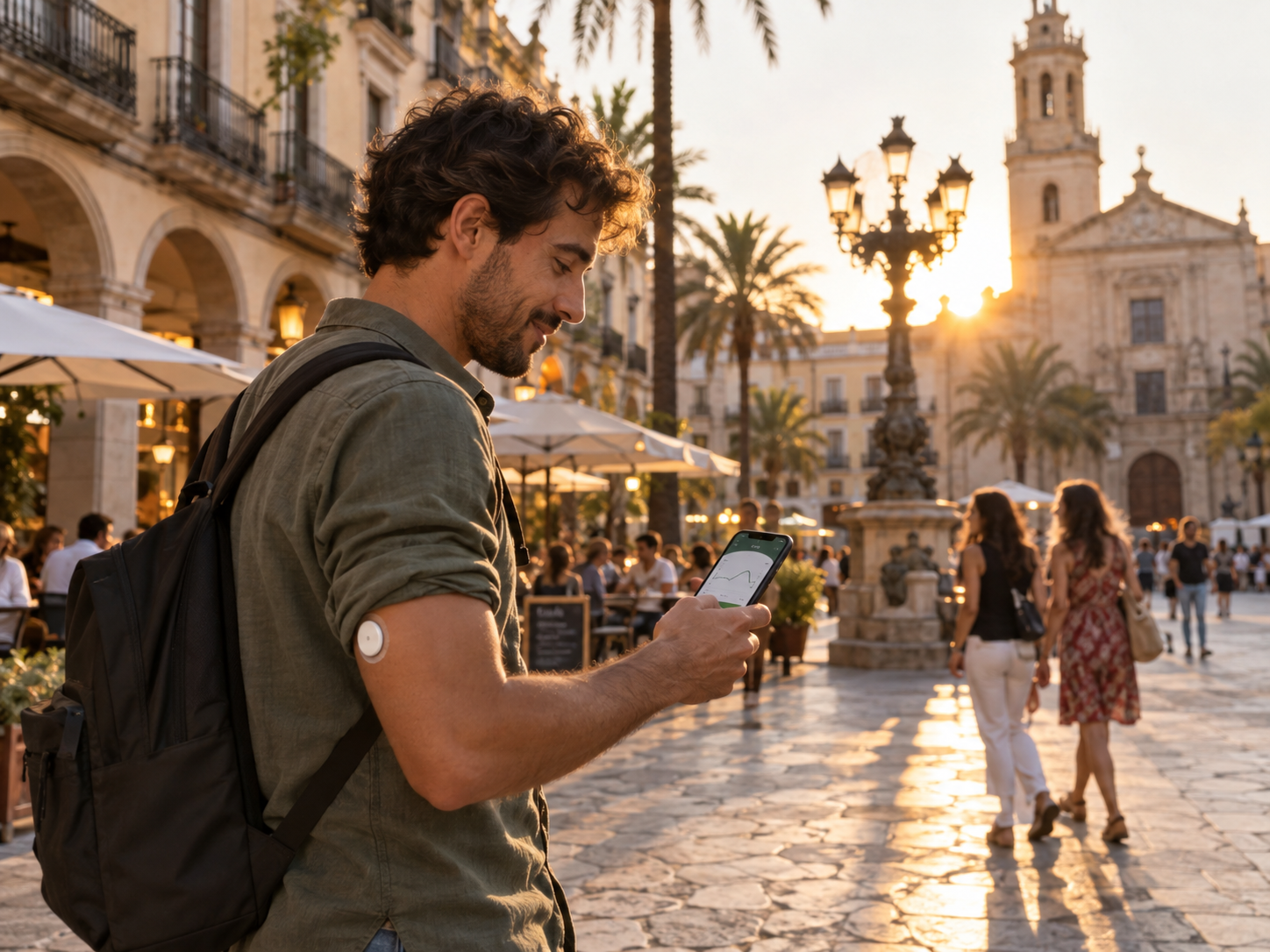
So what did thirty days of watching my own blood sugar actually leave me with, once the sensor came off? Not a list of forbidden foods, not a diet, not a new anxiety, but something much simpler and gentler: a quiet confirmation that eating balanced, whole-food, Mediterranean-style meals, moving a little after eating, sleeping well, and not stressing myself into knots is the whole of it. The Spanish way of eating I spent the month copying turned out to need no correction at all, which is a lovely thing to have confirmed and a slightly funny result for an experiment that set out looking for problems. I had half-expected the monitor to catch the olive oil and the bread and the late dinners red-handed, and instead it gently vindicated all of them.
If there is a single takeaway, it is almost the opposite of what these gadgets are usually sold to deliver. The best thing you can do for your body is not to monitor it obsessively but to eat well, walk after dinner, rest, and then stop thinking about it, which is roughly what people around the Mediterranean have always done without a sensor on their arm. Their good health has never come from data but from a way of life, and no gadget can hand you that; it can only, at best, point you back toward it, before you set it down and get on with living. The monitor was a fascinating window for a month, and I am glad I looked through it, but the view only confirmed that the simplest, least anxious approach is also the best one. I took the sensor off at the end of the thirty days and felt, more than anything, relief, the relief of no longer being scored, and I have eaten happily and without a graph ever since. As a final and genuine note, this was one person’s curious experiment and nothing more, blood sugar and metabolic health are individual and sometimes serious matters, and anyone with real questions about their own should take them to a doctor rather than to a month of graphs on a phone.

About the Author: Ruben, co-founder of Gamintraveler.com since 2014, is a seasoned traveler from Spain who has explored over 100 countries since 2009. Known for his extensive travel adventures across South America, Europe, the US, Australia, New Zealand, Asia, and Africa, Ruben combines his passion for adventurous yet sustainable living with his love for cycling, highlighted by his remarkable 5-month bicycle journey from Spain to Norway. He currently resides in Spain, where he continues sharing his travel experiences with his partner, Rachel, and their son, Han.