
On the evening of the twenty-fourth of December, all across Portugal, families gather for the meal that is the true heart of the Portuguese Christmas. It is called the Consoada, and at its center you will not find a roast turkey or a goose or a glistening ham, but something far humbler and, to the Portuguese, far more sacred: a great platter of salt cod. The cod, bacalhau, is boiled with potatoes, cabbage, carrots, and hard-boiled eggs, the whole plate then drenched in warm, golden, garlicky olive oil, and it is this simple, ancient dish that gathers every Portuguese family around the same table on the most important night of the year.
For a people who treat cod almost as a member of the family, there could be no more fitting centerpiece for Christmas Eve. Here is what the Consoada is, what its name means, the faithful friend at its heart, why such a humble dish holds pride of place, the rituals that surround it, and how to make it yourself. It is one of the most quietly moving food traditions in Europe, and the season to learn it begins now. The season begins now, so there is no better time to learn it.
What follows is the heart of the Portuguese Christmas, bacalhau the faithful friend, the humblest way to eat cod, the rituals around the table, and how to make it yourself.
The Heart of the Portuguese Christmas
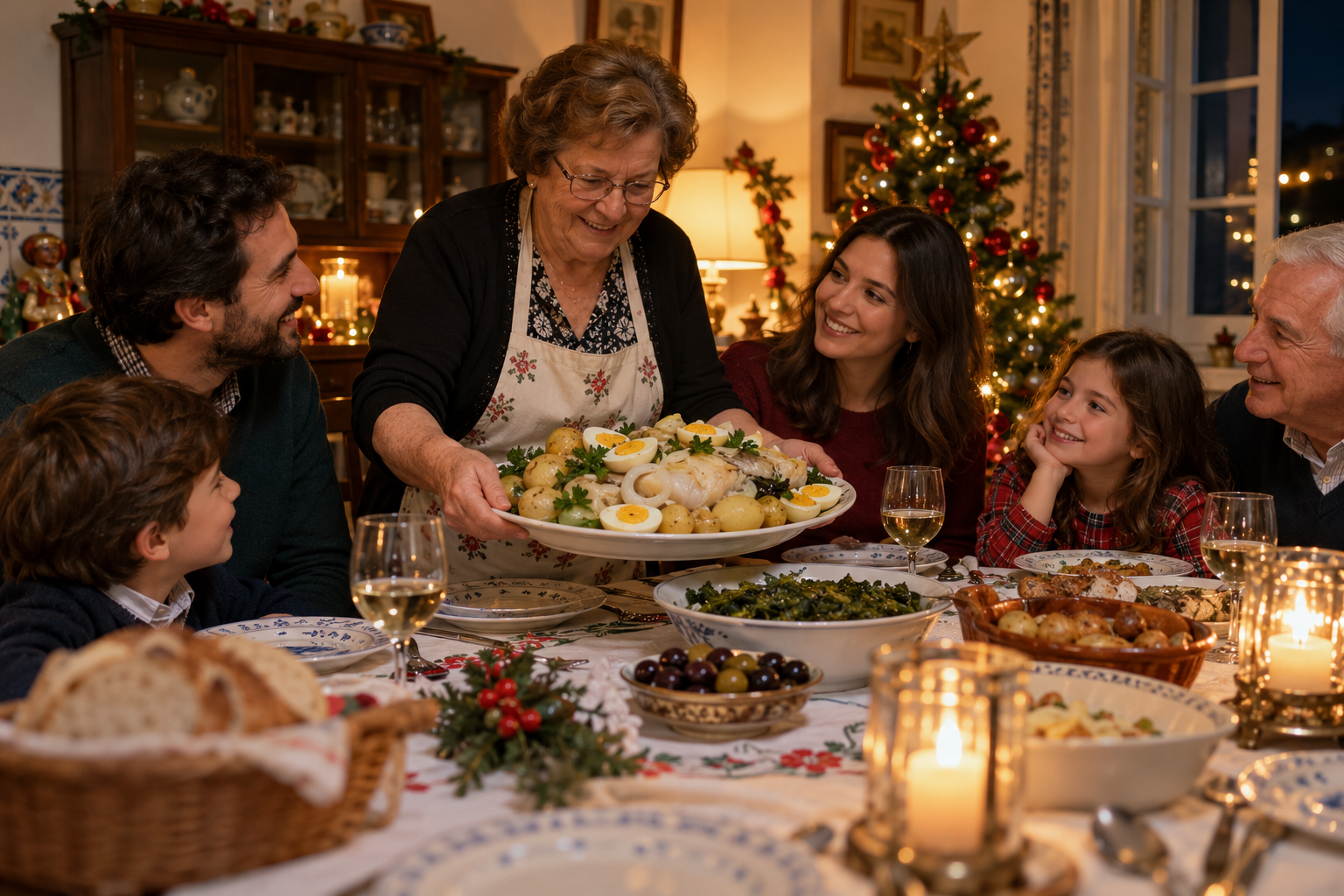
The Consoada is the Christmas Eve supper, and it is not merely a meal but the emotional center of the entire Portuguese Christmas, the gathering around which everything else revolves. On the twenty-fourth of December, Portugal winds down early, with much of the country closing by midday so that everyone can get home, because the evening belongs to family and to the table. The Consoada is when the family comes together, often the whole extended family across generations, to share this one particular supper, and the gathering matters as much as the food. It is a night of togetherness, warmth, and quiet reflection, the still, shared heart of the holiday.
That the dish at the center of it is so plain only deepens its meaning. The bacalhau da consoada, the Christmas Eve cod, is not a show of wealth or culinary ambition; it is a humble dish that symbolizes family unity and continuity, the same meal shared in the same way by generations before. There is something powerful in a whole nation sitting down, on the same night, to essentially the same simple plate of cod and potatoes and cabbage, each family in its own home but all joined by the shared ritual. The Consoada is, in that sense, a thread that ties every Portuguese household together and ties the present generation to all the ones that came before, which is exactly what a great holiday tradition is meant to do. It is comfort and continuity served on a single, unassuming plate, the taste of home and family and generations past all carried in boiled cod and good olive oil. Few holiday dishes anywhere do so much emotional work with so little culinary fuss.
What the Word Means
Even the name of the meal carries meaning worth pausing on, because Consoada is not just a label but a word that tells you something about the spirit of the night. The term comes down from Latin roots tied to comfort and consolation, and in older usage it referred to a light meal taken in the evening, a gentle supper rather than a heavy feast. That is fitting, because the Consoada is traditionally a simpler, lighter meal than the lavish lunch that follows on Christmas Day; its humility is built right into its name. The word carries a sense of a soft, comforting evening meal that soothes and gathers, which is exactly what the Christmas Eve cod supper is meant to be.
There are older, deeper layers too. In some tellings, the Consoada has ancient roots that reach back beyond Christianity to customs of honoring and feeding the dead on this night, which is why in certain homes and regions there lingers a quiet tradition of remembering absent and departed loved ones at the Christmas Eve table, sometimes even leaving something out for the souls of those who have passed. Whether or not a given family keeps such customs, the word Consoada carries that weight of consolation and remembrance within it, a reminder that this is a night not only of celebration but of gathering in the fullest sense, the living together at the table and the departed held in memory. It is a richer, more reflective holiday than the bright commercial Christmas many are used to, and the quiet, comforting name of its central meal reflects that depth.
Bacalhau, Portugal’s Faithful Friend
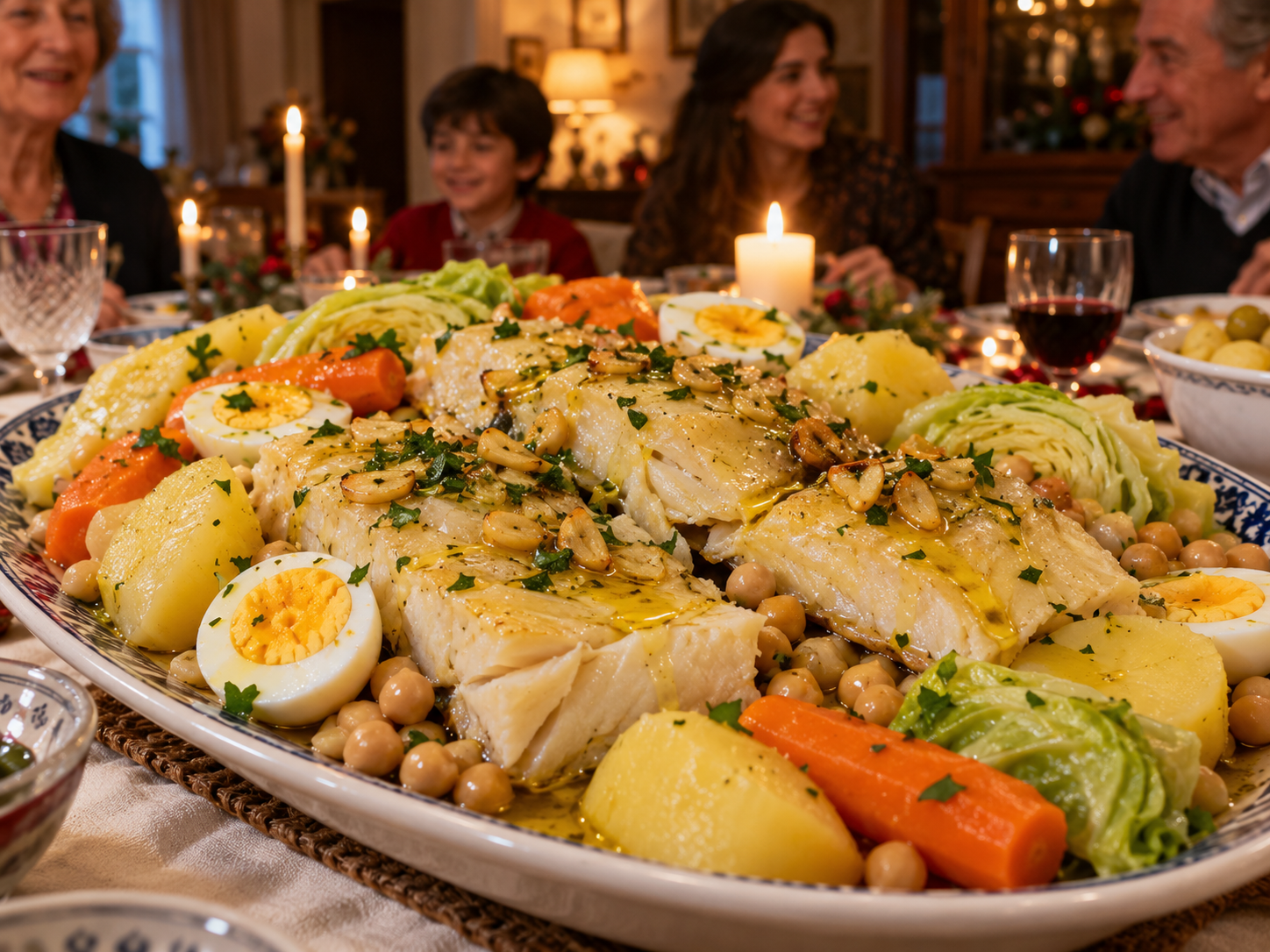
To understand why cod sits at the center of the Portuguese Christmas, you have to understand the extraordinary place that bacalhau holds in Portuguese life, because it is no ordinary ingredient. Bacalhau is salted, dried codfish, and the Portuguese adore it so completely that they call it their fiel amigo, their faithful friend. It is often said that there is a different way to prepare bacalhau for every day of the year, and indeed Portuguese cooking boasts hundreds of distinct cod dishes, a whole universe of preparations built around this one preserved fish. Remarkably, in Portugal cod almost always means this salted, dried form rather than fresh, so central is the preserved version to the national palate.
This love affair is centuries old, rooted in history. Salted cod could be preserved for long periods and transported across oceans, and it fed the Portuguese through the great age of seafaring and well beyond, becoming woven so deeply into the national diet and identity that it transcended mere food and became a cultural icon. To cook with bacalhau is to participate in something quintessentially Portuguese.
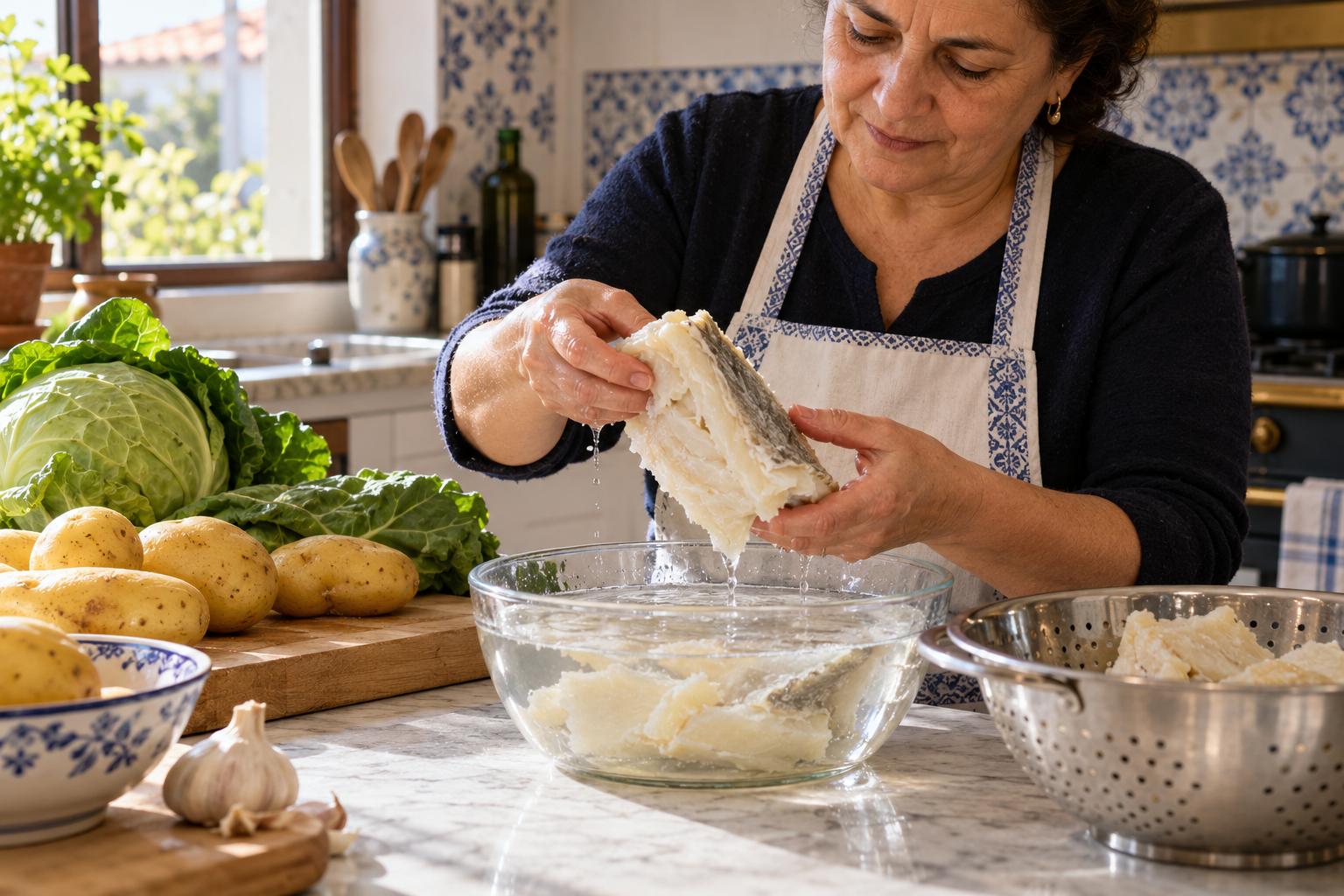
And because it must be salted to be preserved, bacalhau carries one non-negotiable step: it has to be soaked in cold water over one to three days to draw out the salt and rehydrate the fish before it can be cooked. That patient soaking is the price of the faithful friend, and every Portuguese cook knows it by heart. When bacalhau appears at the Consoada, it is this beloved national treasure, this faithful friend of a thousand years of Portuguese tables, taking its rightful place of honor on the single most important night of the year, which is precisely why no other fish, and certainly no fancy meat, could ever replace it. To serve anything else on Christmas Eve would feel, to a Portuguese family, like Christmas Eve itself had gone missing.
The Humblest Way to Eat Cod
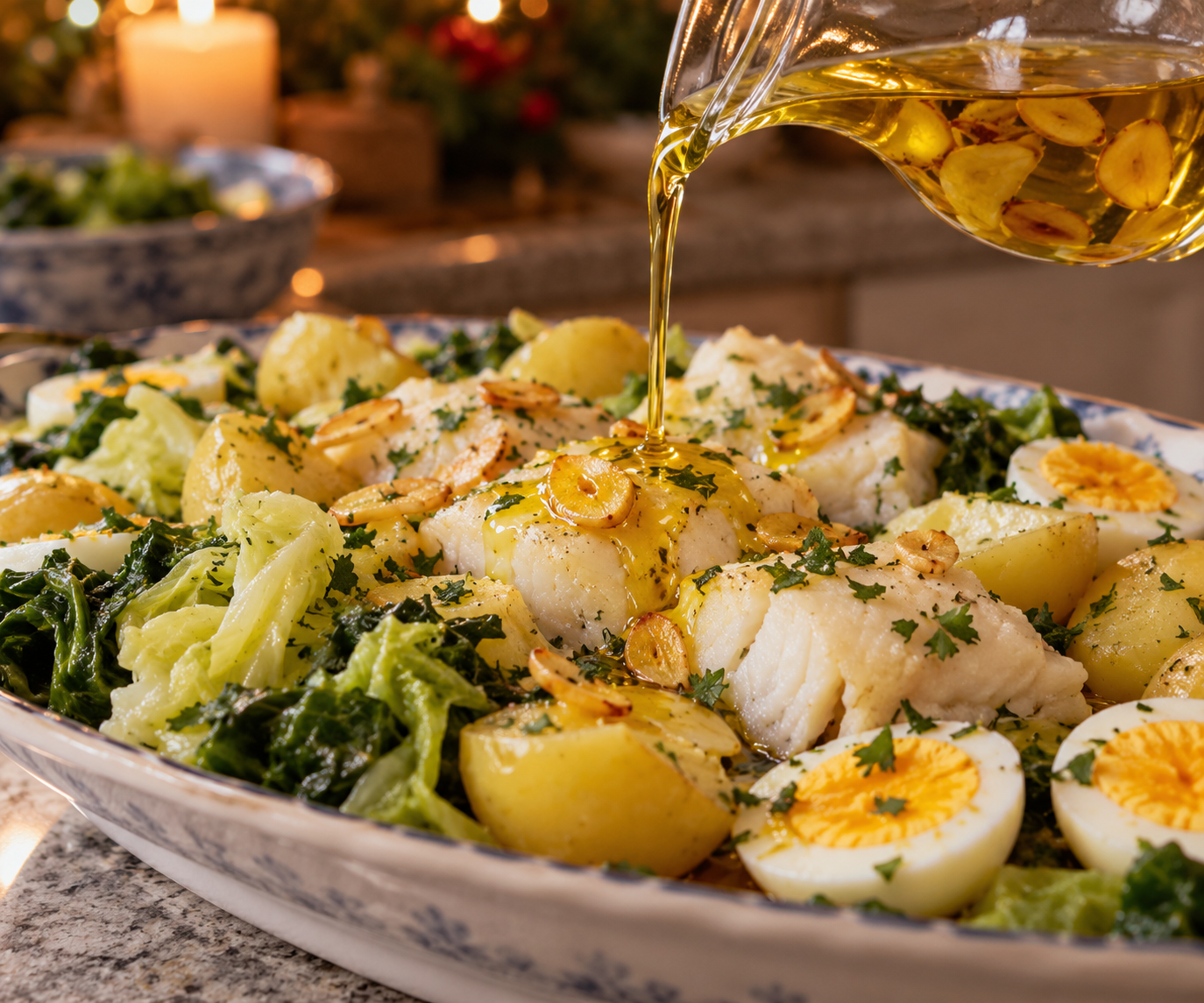
What makes the bacalhau da consoada so striking is that, of all the hundreds of ways the Portuguese cook their beloved cod, many of them rich and elaborate, the Christmas Eve version is the very simplest and most humble of them all. There is no cream, no casserole, no clever technique. The cod is simply boiled, and served alongside boiled potatoes, boiled cabbage, often carrots and chickpeas, and hard-boiled eggs, with everything then generously anointed with warm, good-quality Portuguese olive oil infused with garlic. That olive oil and garlic, poured over the plain boiled components, is the soul of the dish, and in many homes a little white wine vinegar goes on too. That is the whole of it: boiled cod and vegetables, dressed in excellent oil.
This humility is not an accident but the point, rooted in the old Catholic tradition of abstaining from meat on Christmas Eve, which turned the holiest supper of the year toward fish and simplicity rather than feasting. The genius of the dish is that, from such plain components, it produces something genuinely delicious, provided the two things that matter are good: the quality of the cod and the quality of the olive oil, which should be the best you have. When those two elements are right, the simplicity becomes a virtue, letting the clean flavor of the cod, the sweetness of the vegetables, and the fruity richness of the oil speak for themselves, unmasked by any sauce. It is a dish that proves, as the best peasant cooking always does, that you do not need richness or complexity to make something profound, only good ingredients treated with respect. The humblest, plainest way in all of Portugal to eat cod turns out, on this one night of the year, to be by far the most meaningful, which is a lovely paradox and a very Portuguese one. The nation that invented hundreds of elaborate ways to dress its faithful friend chooses, for its holiest supper, to serve it almost naked, trusting the quality of the thing itself.
The Rituals Around the Table
The Consoada is not just a dish but a whole evening of ritual, and the cod sits at the center of a web of traditions that surround it. After the supper, many families head out to attend the Missa do Galo, the Mass of the Rooster, the Catholic midnight mass that celebrates the birth of Christ and gives the Christmas Eve its sacred shape. The meal and the mass together form the rhythm of the night, the gathering at the table flowing into the gathering at the church.
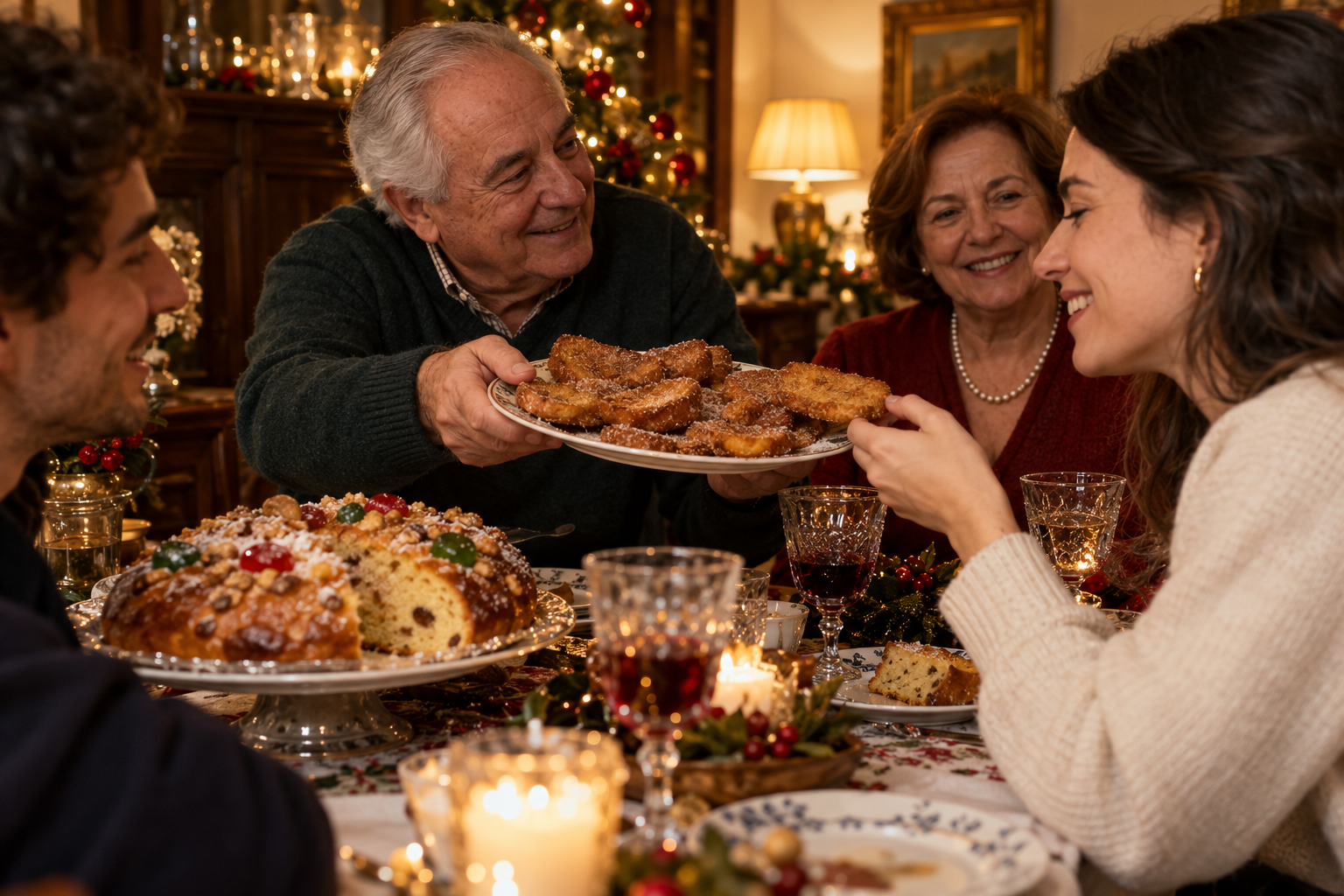
And then there are the sweets, which are not an afterthought in Portugal but a glory of the season in their own right. After the humble cod come the rich, fried, sugary treats that define a Portuguese Christmas: rabanadas, the Portuguese answer to French toast, bread soaked in milk or wine syrup, dipped in egg, fried, and dusted with cinnamon sugar; filhos, fried dough; sonhos, literally dreams, light fried dough balls; bolo rei, the crown-shaped king cake studded with fruit and nuts; and arroz doce, cinnamon-dusted rice pudding. The table groans with them. There is even a thrifty coda the next day, because the leftovers are transformed on Christmas Day into roupa velha, meaning old clothes, a dish of the shredded leftovers fried up with onions and egg, so that nothing of the precious cod goes to waste. In some homes, older customs linger too, a sense of the Consoada as a night that remembers absent and departed loved ones as well as the living gathered at the table. All of it, the cod, the mass, the sweets, the leftovers, the remembering, makes the Consoada far more than a meal; it is the beating ritual heart of the Portuguese Christmas.
Make It: Bacalhau da Consoada
Here is the traditional Christmas Eve version, serving about six. The one essential thing to plan for is the soaking: the salt cod must be soaked ahead of time, so begin one to three days before you want to serve it.
Ingredients
- about 1.5 kg (3 lbs) salt cod (bacalhau), cut into portions
- 1.5 kg potatoes
- 1 large head cabbage, or a bunch of kale (couve)
- 4 to 5 carrots
- 6 eggs
- 1 tin cooked chickpeas, optional
- a generous amount of good extra virgin olive oil, for the dressing
- 4 to 5 garlic cloves
- a little white wine vinegar, optional
- salt
Instructions
- Soak the cod: place the salt cod in a large bowl of cold water in the fridge and soak for 1 to 3 days depending on thickness, changing the water several times a day, until rehydrated and most of the salt is drawn out. This step cannot be rushed.
- When ready to cook, bring a large pot of water to a gentle simmer. Add the soaked cod and poach gently until just cooked and tender, then lift it out carefully and keep it warm. Do not let it boil hard, which toughens the fish.
- In the same water, boil the potatoes, carrots, and cabbage or kale until each is tender. Hard-boil the eggs separately, then peel and halve them, and warm the chickpeas if using.
- Make the dressing: gently warm the olive oil in a small pan with the sliced or minced garlic, just until fragrant and golden, not browned, and stir in a little vinegar if you like.
- Arrange the cod, potatoes, carrots, cabbage, chickpeas, and eggs together on a large warm platter, or on individual plates.
- Pour the warm garlicky olive oil generously over everything, season with a little salt, and serve hot with good bread. Save any leftovers for roupa velha the next day.

About the Author: Ruben, co-founder of Gamintraveler.com since 2014, is a seasoned traveler from Spain who has explored over 100 countries since 2009. Known for his extensive travel adventures across South America, Europe, the US, Australia, New Zealand, Asia, and Africa, Ruben combines his passion for adventurous yet sustainable living with his love for cycling, highlighted by his remarkable 5-month bicycle journey from Spain to Norway. He currently resides in Spain, where he continues sharing his travel experiences with his partner, Rachel, and their son, Han.