
For years, Hvar was the party island. The glamorous Croatian isle in the Adriatic, all yachts and nightclubs and sun, had become a magnet for a certain kind of holiday: loud, drunken, and spilling out into the streets at all hours. And then the island decided it had had enough.
Today, if you crack open a beer and wander through the town of Hvar with it, you can be fined up to seven hundred euros. And the warning signs telling you so are posted in English, because everyone on the island knows exactly who they are for.
It is one of the steepest public-drinking fines in Europe, and it is just one rule in a whole code of conduct that Hvar rolled out to drag its image away from the boozy free-for-all it had become. Here is what the rules actually are, why Hvar changed its mind so dramatically, how the crackdown keeps tightening, where it fits in Croatia’s wider reckoning with tourism, and how to enjoy one of the Adriatic’s most beautiful islands without handing over a fortune in fines. It is the story of a place deciding what kind of destination it wants to be.
The Seven Hundred Euro Rule
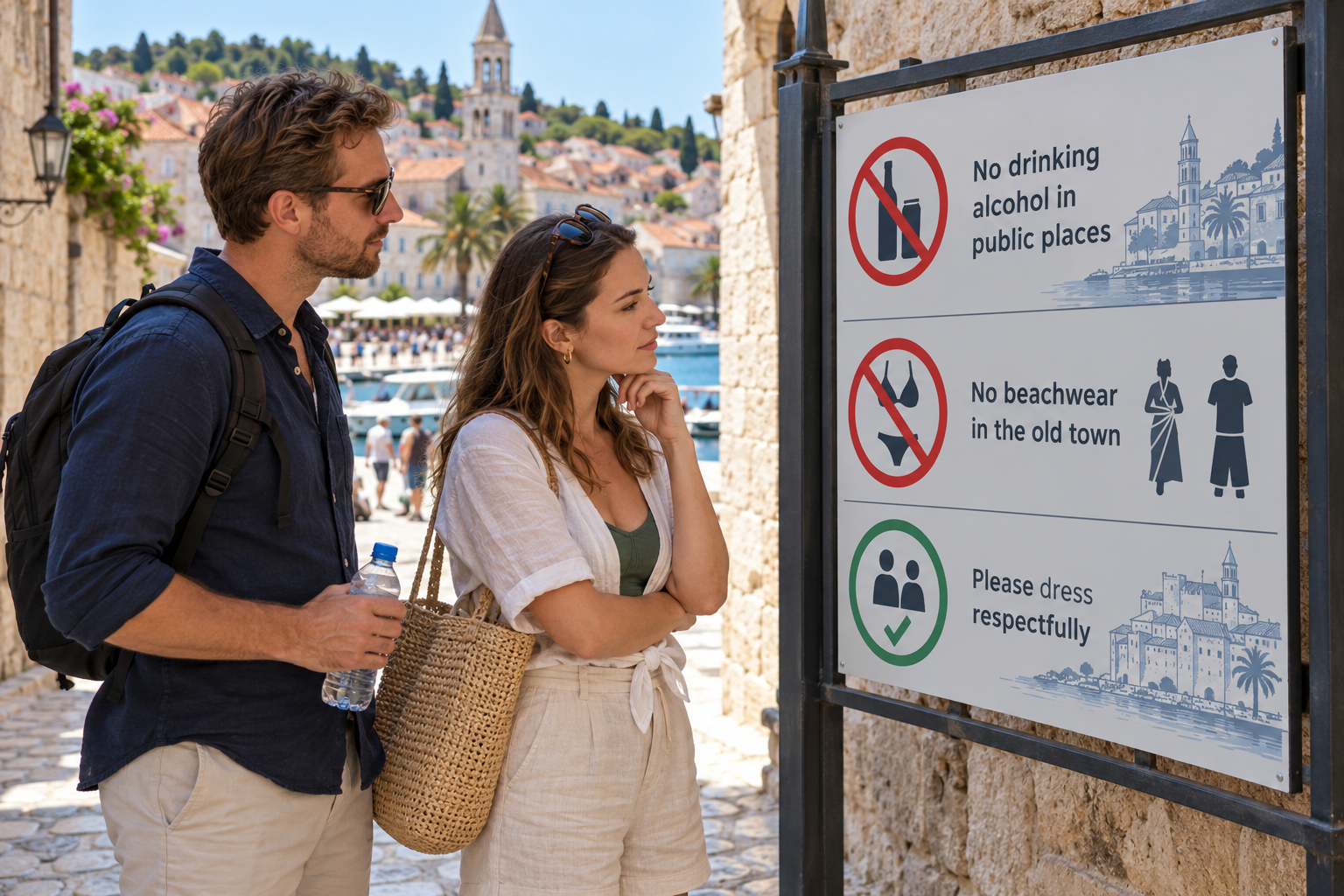
The headline rule is the one about drinking, and it is strict. Drinking alcohol in public spaces in the town of Hvar, meaning out on the streets and squares rather than inside a licensed bar or restaurant, can earn you an on-the-spot fine of up to seven hundred euros.
That is a genuinely large sum for the simple act of walking around with a drink, and it is meant to be. The whole point of setting the figure so high is to make people stop and think, and to make the casual street-drinking that fueled the island’s party reputation suddenly very expensive.
The key distinction is where you drink, not whether. Sitting with a beer or a cocktail at a licensed harbor bar or a restaurant terrace is completely fine, as it is anywhere. What Hvar has clamped down on is the open bottle in the street, the public drinking that turns a lovely old town into an open-air bar. Buy your drink, in other words, and enjoy it where drinks are meant to be enjoyed, not wandering the lanes with it in your hand.
This catches people out precisely because it is so normal elsewhere. In plenty of holiday spots, strolling with a beer or a takeaway cocktail is part of the fun, and visitors arrive assuming Hvar is the same. It is not, and the gap between what feels harmless and what is actually finable is exactly where the seven hundred euros lives.
And That Is Just the Start
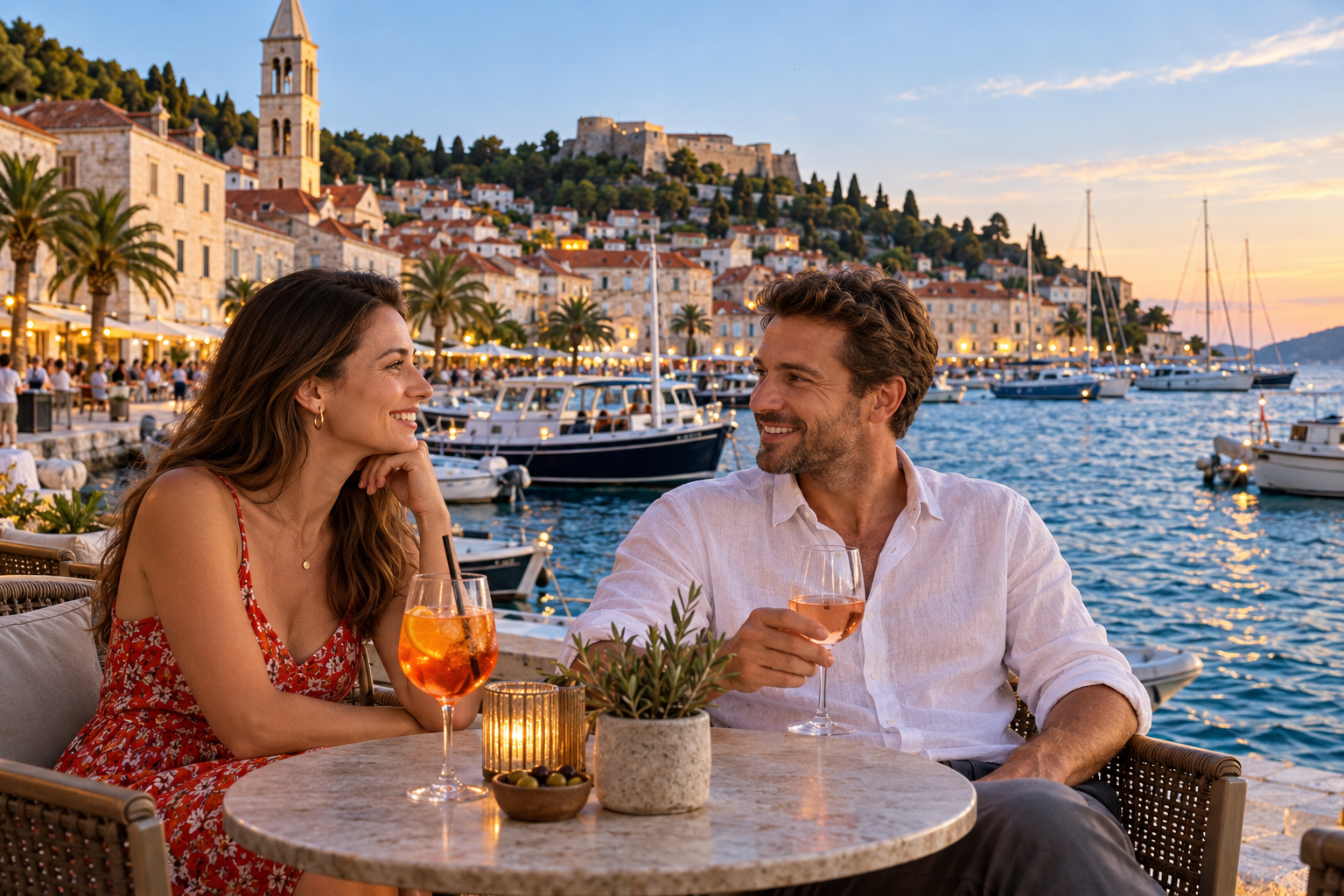
The drinking fine is only the most famous of a whole set of penalties Hvar introduced, and the others catch people out just as often. The island passed a genuine code of conduct for its town center, with real money attached to breaking it.
Walking through the town in a swimsuit or bikini, rather than covering up when you leave the beach, can cost you in the region of six hundred euros. Wandering around shirtless, bare-chested in the streets, carries a fine of around five hundred. These dress-code fines surprise visitors more than almost anything, because stripping down to beachwear in a seaside town feels so natural, and yet in Croatia it is treated as genuinely disrespectful.
There is a real cultural gap underneath it. Croatians tend to dress neatly and take pride in their appearance, and wandering through a town center half-undressed reads, to local eyes, as scruffy and disrespectful rather than carefree. The fine is the enforcement, but the disapproval behind it is genuine and widely shared.
The list goes on from there. There are fines for sleeping or passing out on public benches, for vomiting in public, and for climbing on the town’s monuments and public art for a photo. Taken together, the penalties run across a wide range, up to that seven hundred euro ceiling, and they add up to a clear message: the antisocial behavior that came with the party crowd is no longer welcome, and it now comes with a price tag.
The Signs Are in English on Purpose
One detail tells you everything about who these rules are aimed at: the warning signs went up in English. In a Croatian town, where the local language is Croatian, the authorities chose to post their behavior rules in the language of the tourists causing the problem.
This was not subtle, and it was not meant to be. The rowdy, drunken, strip-to-your-swimwear behavior that Hvar was trying to stamp out came overwhelmingly from young, English-speaking party tourists, and the island addressed its signs to them directly. Over time the signage expanded to several languages, and wardens were empowered to issue the tickets in English, so that no visitor could plead that they simply had not understood.
There is something bracingly honest about it. Rather than pretending the problem came from everyone equally, Hvar identified exactly who was turning its streets into a nightclub and spoke to them in their own language. If you are an English-speaking visitor, the signs are, quite literally, talking to you, and the island would like you to read them.
The Party Island That Changed Its Mind

To understand why a beautiful island would turn on the very tourists who filled its bars, you have to know what Hvar had become. For years it was one of the Mediterranean’s great party destinations, a place that marketed itself, and was marketed by others, as a nonstop celebration, and it drew exactly the crowd you would expect.
By some accounts it had tipped into a boozed-up free-for-all, with drunken tourists sleeping in the streets, wandering half-dressed through the old town, and generally treating a historic island as one large open-air club. For the eleven thousand or so people who actually live on Hvar, and for the island’s higher-end visitors, it had become too much.
So in 2017, the town’s new mayor decided to change course, and the fines were the instrument. The goal was openly stated: to transform Hvar from a party island into a calmer, more upscale, more family-friendly destination, and to shed the reputation that had come to define it. As the mayor put it, young people are still welcome, as long as they know how to behave.
That line captures the whole strategy. This was never about banning fun or shutting out the young; it was about setting a standard of behavior and pricing out the worst of it. Hvar wanted to keep the life and the visitors while losing the chaos, a difficult balance that the fines were designed to strike. Hvar did not want to stop having visitors; it wanted to change which visitors it attracted and how they acted, and it was willing to use its fine book to do it.
The Crackdown Keeps Tightening
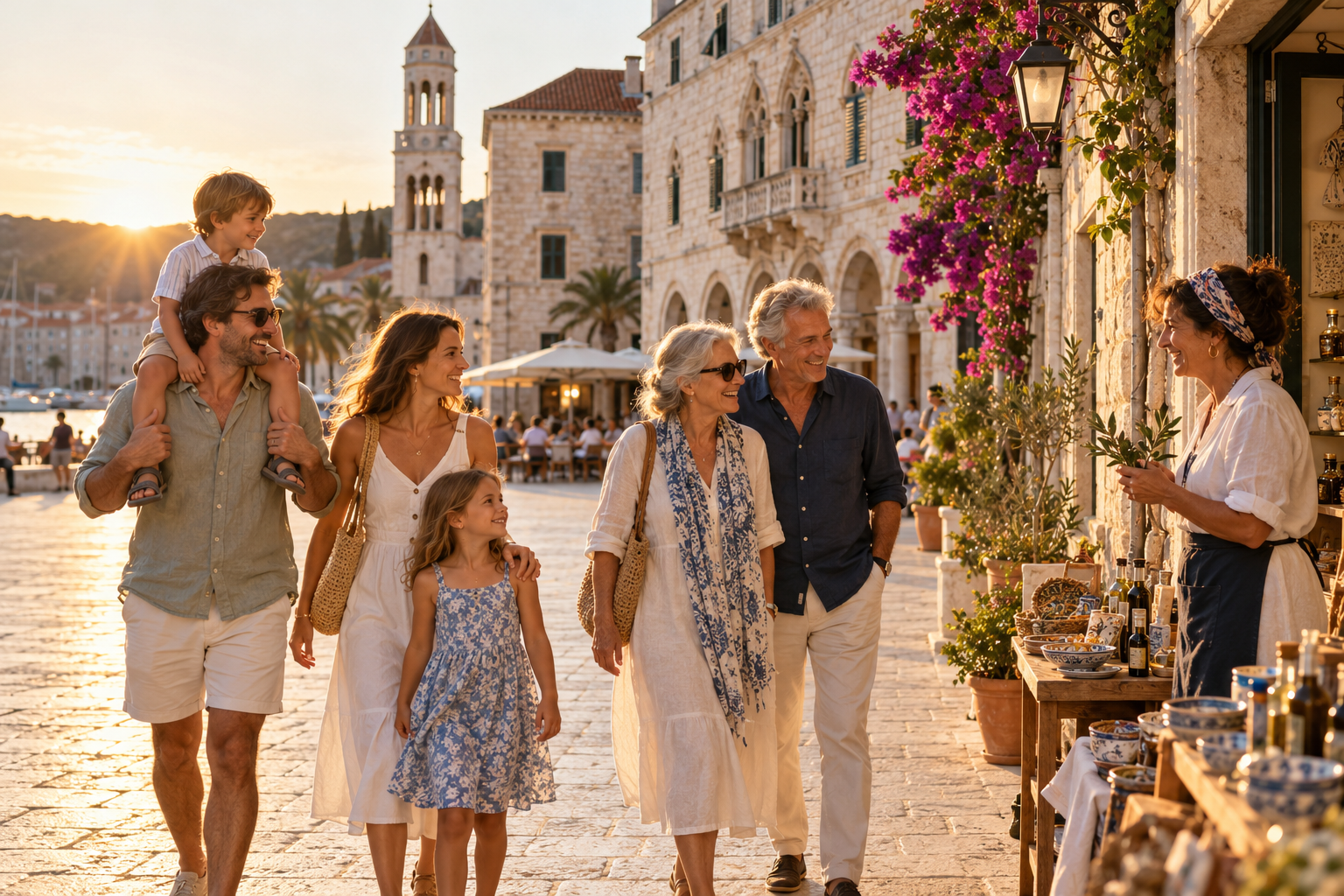
Far from easing off over time, Hvar has doubled down, and the rules have only grown stricter in recent years. The island has treated the transformation as a long-term project rather than a one-off gesture.
The more recent measures have sharpened the whole regime. Penalties were raised, noise has been capped with strict decibel limits that effectively rein in the loud amplified music the party scene depended on, and public drinking has been further restricted in the late-night hours when the trouble was worst. Revenue from the fines has been earmarked for keeping the town clean, turning the penalties into a tool for repair as well as deterrence.
The enforcement has grown more pointed, too. Signs now greet arriving cruise passengers with the rules before they even reach the town, and in some cases officers can hold visitors to account before they re-board, so that fines cannot simply be walked away from. The direction of travel is unmistakable. Hvar is not drifting back toward its party days; it is steadily, deliberately closing the door on them, year after year.
The effect has rippled through the island’s nightlife, too. Clubs that once spilled out into the streets have had to move their parties indoors and turn the volume down, and the whole character of a Hvar evening has shifted from a raucous outdoor free-for-all toward something more contained. The island is remaking its nights as surely as its days.
Croatia’s Wider Reckoning
Hvar is not acting alone, and its crackdown makes more sense seen as part of a broader Croatian reckoning with the downsides of its own popularity. Up and down the coast, the country’s most famous destinations have been drawing similar lines.
Split and Dubrovnik have passed their own versions of these rules, with fines for walking through town in swimwear or shirtless, for public drinking, and for other antisocial behavior, all under the same banner of restoring respect and order to crowded historic centers. Dubrovnik even fines visitors for the noise of rolling wheeled suitcases over its old stone streets. Across the Croatian coast, the message is converging: these are living, dignified places, not a stag-party backdrop.
The context that makes this delicate is money. Tourism is enormous for Croatia, accounting for a large share of the national economy, so these towns cannot simply turn visitors away. What they are trying to do instead is more precise: to keep the tourists while changing the behavior, to stay open and prosperous while refusing to be trampled. The fines are the blunt tool for threading that needle, an attempt to welcome the world and set some terms at the same time.
It is a bet, essentially, that the island loses more than it gains from the party crowd. The reasoning is that rowdy, budget party tourists bring noise and mess and little money, while scaring off the higher-spending families and couples who would rather holiday somewhere calm.
Price out the first group with fines, the thinking goes, and the second returns in their place. Whether it fully works is still playing out, but the strategy behind it is clear, deliberate, and increasingly common along this coast.
How Not to Get Caught

The reassuring thing is that staying on the right side of all this is genuinely easy, because the rules mostly just ask for ordinary consideration. None of it should cramp a good trip.
Drink in the bars and restaurants, not in the street, and the big fine simply cannot touch you; the single most common mistake is walking around with an open drink, so just do not. Cover up when you leave the beach, throwing on a shirt and some shorts before you head into town, since beachwear belongs on the sand and not in the old lanes.
Keep the noise down, especially late at night, and do not treat public benches or monuments as your personal furniture. That really is most of it. The rules are not a maze; they are a short list of don’ts that mostly amount to not behaving like you are at an all-night street party, which, since that is exactly what Hvar is trying to leave behind, is rather the point.
It is worth remembering, too, that behind the fines is a place genuinely worth behaving for. Hvar is stunningly beautiful, with its old Venetian town, its lavender fields, and its clear water and long light.
The rules exist precisely to protect the atmosphere that makes it special, the calm and the beauty that the party years were steadily eroding. Treat it as the elegant island it is rather than the party it used to be, and it will give you one of the loveliest stretches of the Adriatic in return. Read the signs, which are in your language for a reason, follow the simple rules, and the seven hundred euro fine becomes a story you tell about other people.

About the Author: Ruben, co-founder of Gamintraveler.com since 2014, is a seasoned traveler from Spain who has explored over 100 countries since 2009. Known for his extensive travel adventures across South America, Europe, the US, Australia, New Zealand, Asia, and Africa, Ruben combines his passion for adventurous yet sustainable living with his love for cycling, highlighted by his remarkable 5-month bicycle journey from Spain to Norway. He currently resides in Spain, where he continues sharing his travel experiences with his partner, Rachel, and their son, Han.