
If you grew up in a Filipino home, you know the smell. A pot of beef bones and water on the back of the stove, barely bubbling, filling the whole house for hours on a gray, wet afternoon. That smell means nilaga, and nilaga means comfort, the kind that comes from a pot your lola tended without ever once looking at a recipe.
Nilaga is the plainest of Filipino soups, and that is exactly its genius. It is beef, water, a few vegetables, and time, with no complicated sauce, no long list of spices, and nothing to hide behind.
Just good meat and bones simmered slowly until the broth turns rich and the meat falls apart, finished with honest vegetables and a splash of fish sauce. In a cuisine full of bold, sour, and salty flavors, nilaga is the gentle one, the plain and soothing cousin, and we love it precisely for that.
It is the soup we reach for when it is raining, when someone is sick, when the day has been hard and the body wants something warm and clean and restoring. Here is what nilaga is, why it is the ultimate rainy-day pot, how the lolas make it without measuring a single thing, and how to make it yourself, so the smell of it can fill your own kitchen the next time the rain comes down.
The Soup That Is All About the Broth
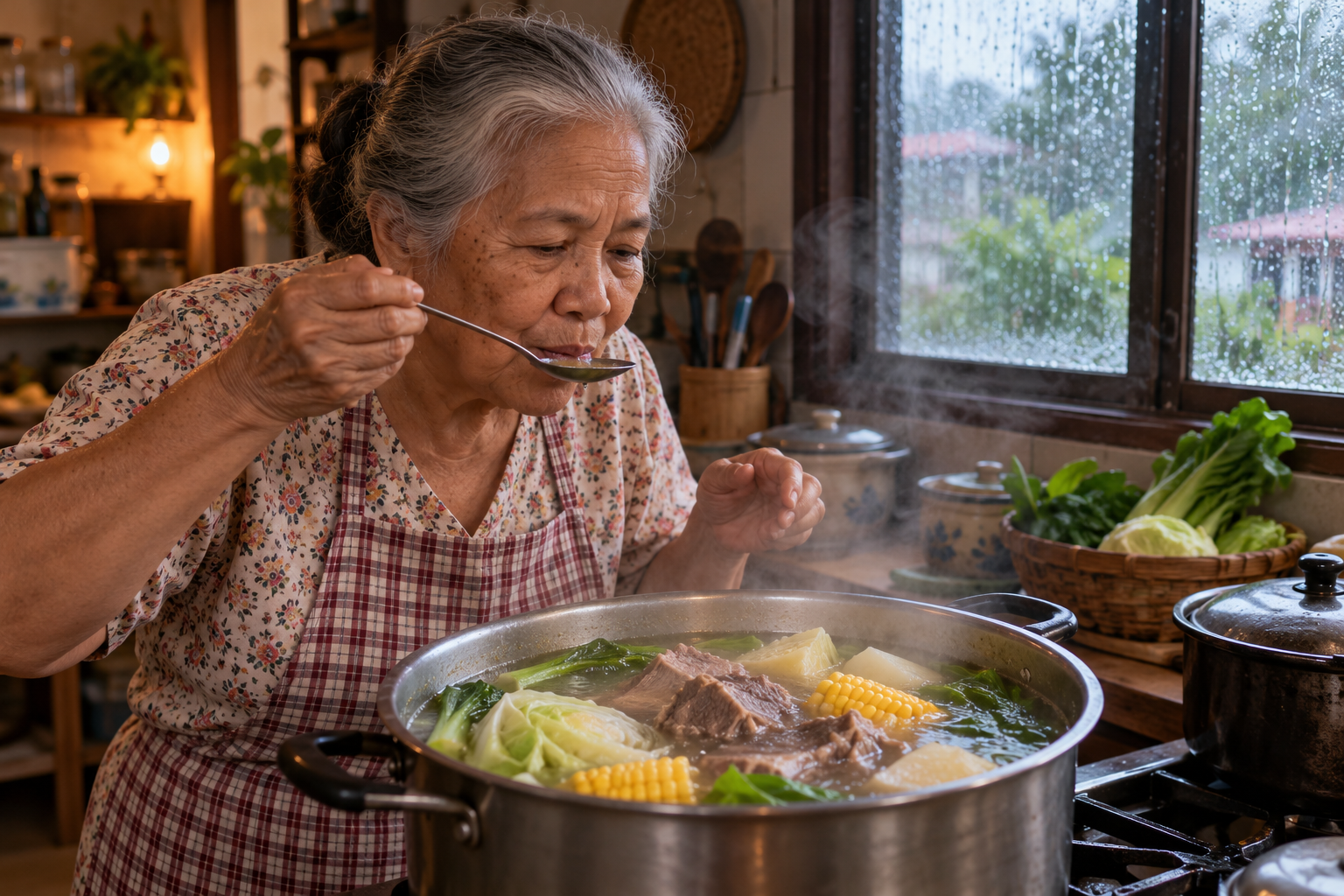
At its heart, nilagang baka, to give it its full name, is a clear boiled beef soup, and everything good about it comes from the broth. There is no browning, no frying, no thickening; you simply put beef and bones into water and coax a deep, savory broth out of them over a long, slow simmer.
The cut matters, because the best nilaga comes from the humble, bony, collagen-rich parts of the animal. Beef shanks with the marrow bone in the center, short ribs, or any cut with plenty of connective tissue and bone are what you want, because those are the pieces that give the broth its body and the meat its melting tenderness. The leaner, fancier cuts have no place here; nilaga rewards the cheap and the bony.
The seasoning is almost comically simple. An onion, a handful of whole peppercorns, and salt or, better, a splash of patis, the Filipino fish sauce, and that is essentially it. There is nothing to distract from the pure, clean, beefy taste of the broth itself, which is the whole point. A good nilaga tastes of beef and almost nothing else, and it tastes of hours.
That restraint is what separates nilaga from its richer relatives. Where a bulalo leans hard on the marrow and a nilagang baka with too heavy a hand becomes something else, the classic version stays clean and clear, trusting the beef to carry the whole bowl. It takes a little confidence to season so lightly, which is why it is a dish of grandmothers rather than beginners.
Simmers Until the Bones Give Up
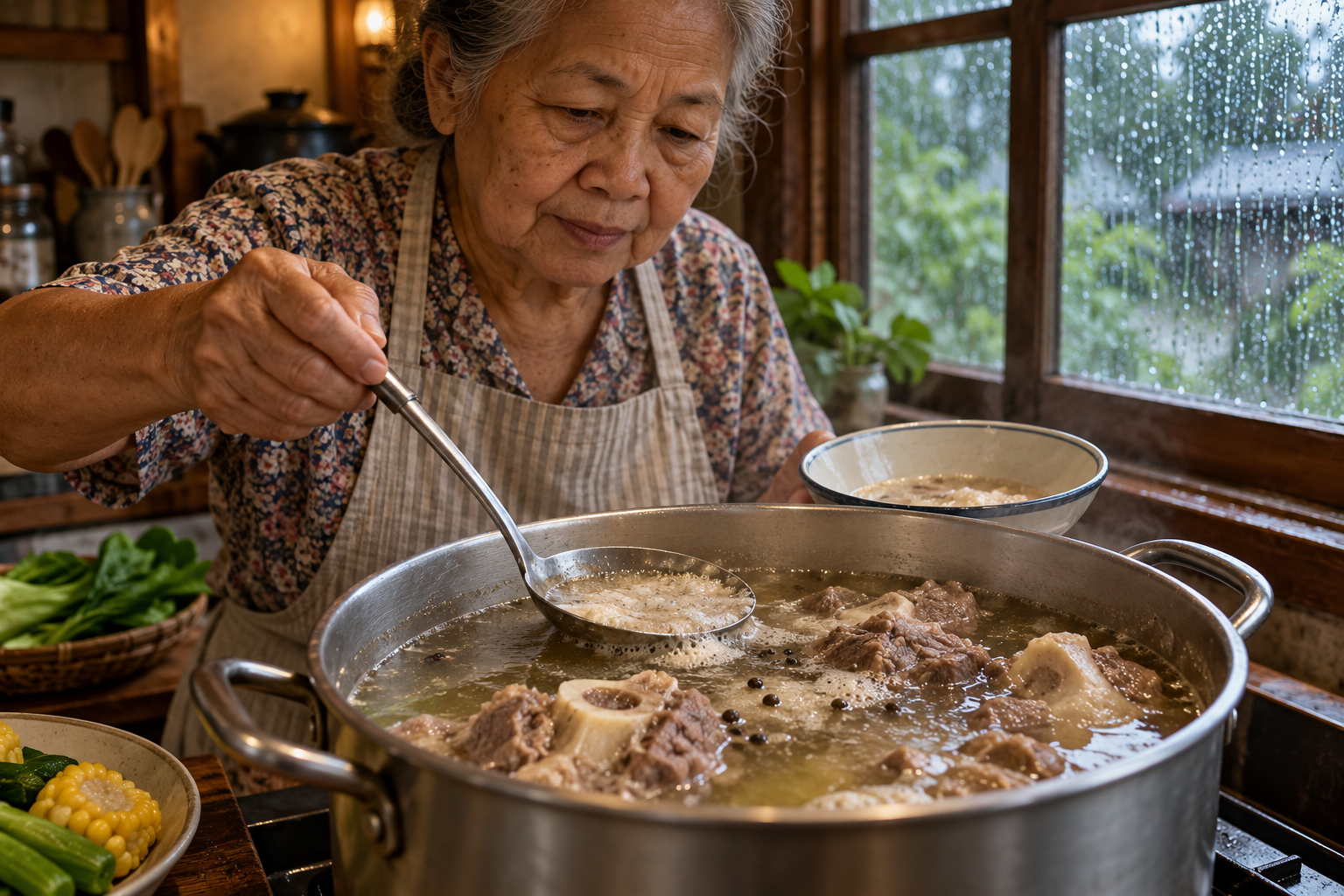
The one thing nilaga demands is patience, because the magic is entirely in the long, slow simmer. You cannot rush it, and any attempt to hurry it along only gives you tough meat and a thin, weak broth. This is a soup that takes its time, usually two to three hours of gentle bubbling, and it cannot be hurried.
What happens over those hours is a slow transformation. The collagen in the bones and connective tissue melts into the water, giving the broth its richness and body, while the tough muscle of the shank or the rib slowly surrenders until it is spoon-tender and falling off the bone. The marrow softens in its bone, ready to be scooped out and spread on rice, which for many of us is the best bite in the whole pot.
There is a small ritual early on that every lola knows: the skimming. As the pot first comes to a boil, a gray foam rises to the surface, and you patiently spoon it off to keep the broth clear and clean.
After that, you lower the heat, half-cover the pot, and simply let it go, checking now and then, topping up the water, and letting time do the work. The phrase we use, that it simmers until the bones give up, is only half a joke; you cook it until the meat has surrendered completely.
The Vegetables Go In at the End
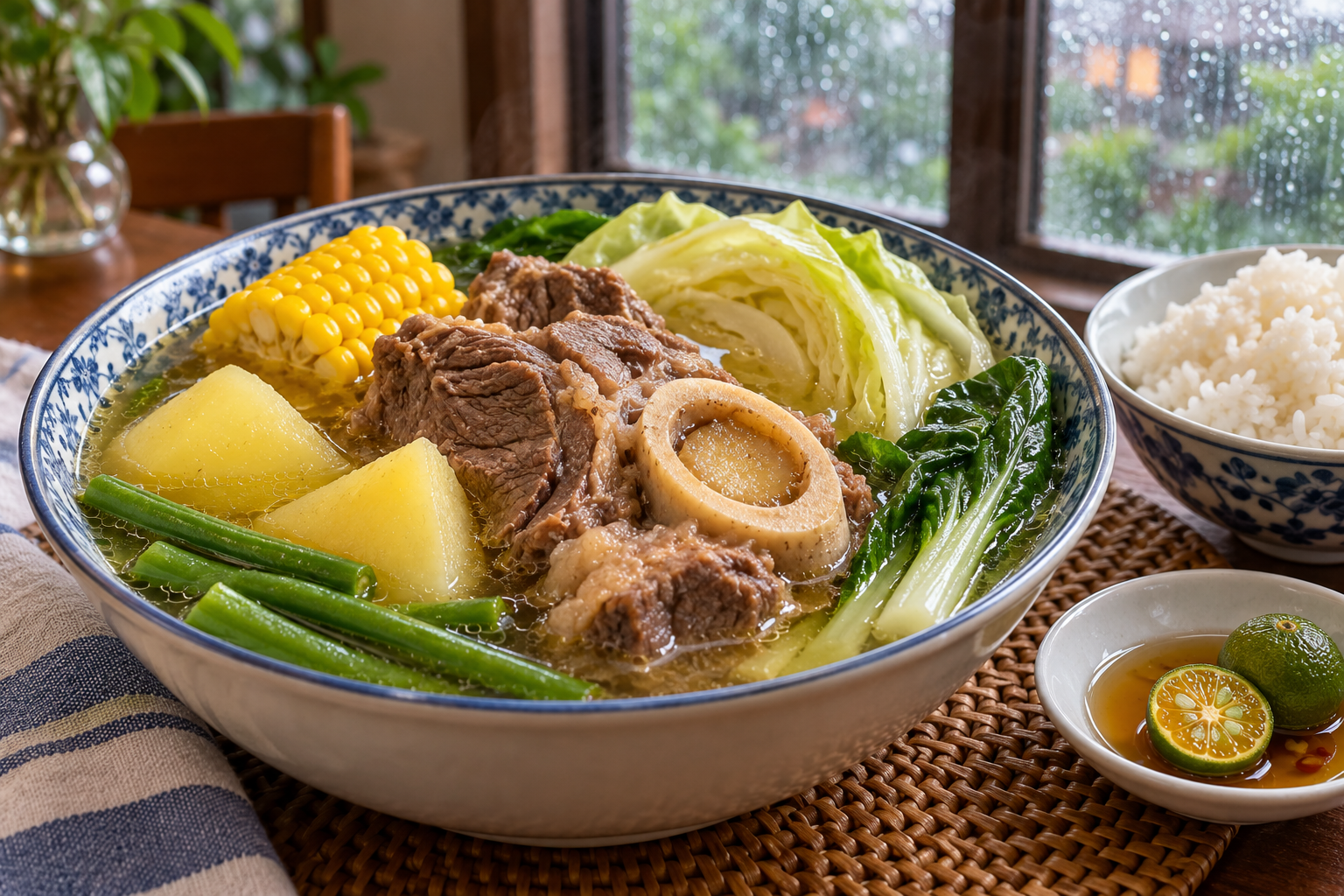
Only once the meat is tender do the vegetables join the pot, and they go in with a bit of timing, because nobody wants them boiled to mush. The vegetables of nilaga are simple, hearty, and homely, the opposite of fussy.
Potatoes go in first, since they take the longest, added while the broth finishes enriching so they turn soft and soak up the beefy flavor. Then come the others, in stages according to how long they need: wedges of cabbage, whole green beans, corn on the cob cut into rounds, and, right at the very end, a few leaves of pechay, the Filipino bok choy, which need only a minute to wilt. Some families add saba banana or sweet potato for a touch of sweetness, corn for the same reason, or swap in whatever hearty greens the market had that day, and every household has its own preferred lineup.
The art, such as it is, lies in adding each vegetable so that it finishes just cooked and no more, tender but still itself, holding its shape and color in the clear broth. Rush them in all at once and you get a dull, overcooked mush; stagger them with a little patience and you get a pot that looks as clean and fresh as it tastes. A good bowl of nilaga is a beautiful thing to look at, the pale broth, the dark pechay, the yellow corn, the chunks of meat and bone, all honest and recognizable. Nothing is disguised, and nothing needs to be.
The Rainy Day Pot
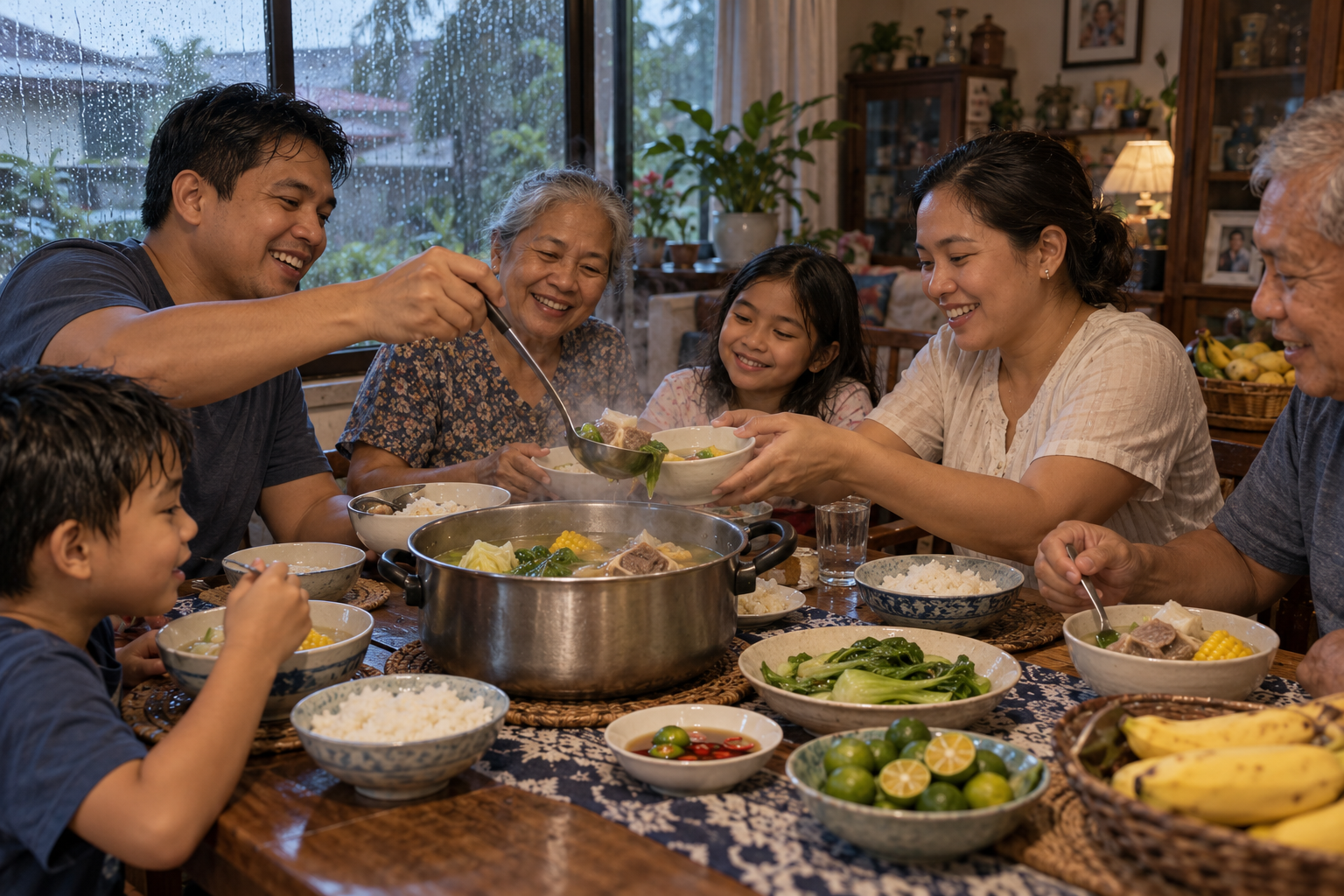
To understand nilaga’s place in Filipino life, you have to picture the rain. The Philippines has long, heavy rainy seasons, gray afternoons and cool wet evenings, and nilaga is the soup those days call for. There is a deep, instinctive link in the Filipino heart between a downpour outside and a pot of nilaga inside.
It is food for gathering around. The big pot sits in the middle of the table, and everyone helps themselves, ladling the broth and meat and vegetables over a mound of hot rice, because nilaga is almost always eaten with rice, never alone. Beside each person is a little saucer of patis brightened with a squeeze of calamansi and maybe a crushed chili, for dipping the meat and seasoning the soup to taste. It is humble, communal, unhurried eating, the whole family warmed by the same pot.
And it is the soup of care. When someone in a Filipino family is under the weather, or tired, or simply in need of comfort, nilaga is what gets made, because it is nourishing and gentle and tastes of being looked after. The clear, warm broth feels like it is healing you even as you drink it. More than almost any other dish, nilaga carries the feeling of home, of a mother or a grandmother at the stove, of being taken care of on a cold wet day.
For Filipinos living far from home, that association is powerful enough to cross oceans. A pot of nilaga simmering in a kitchen in some cold foreign city can summon the Philippines more completely than almost anything else, which is why so many of us learn, eventually, to make the soup our lolas made, if only to smell that smell again.
Lolas Make It Without a Recipe
Ask a Filipino grandmother for her nilaga recipe and she will look at you a little blankly, because there isn’t one. The lolas make nilaga entirely by feel, and that is not a failing but the truest thing about the dish.
They know by instinct how much water, by the look of the pot. They know the meat is ready not by a timer but by the way it yields to a fork. They season by tasting, adding patis a splash at a time until the broth is right, and they add the vegetables by eye, in the order a lifetime of cooking has taught them. There is no measuring because there is no need; the knowledge lives in the hands and the nose and the tongue, passed down by standing beside the stove and watching, not by reading anything written down.
This is why every family’s nilaga is a little different, and why each one tastes, to the people who grew up on it, like the only correct version. It is also why a written recipe for nilaga can only ever be a starting point, a rough map of something that is really learned by doing. The recipe below will make you a genuinely good pot. But the real recipe is the hours you spend making it, the tasting and adjusting, until one day you too make it without thinking, the way the lolas do.
Make It Your Own
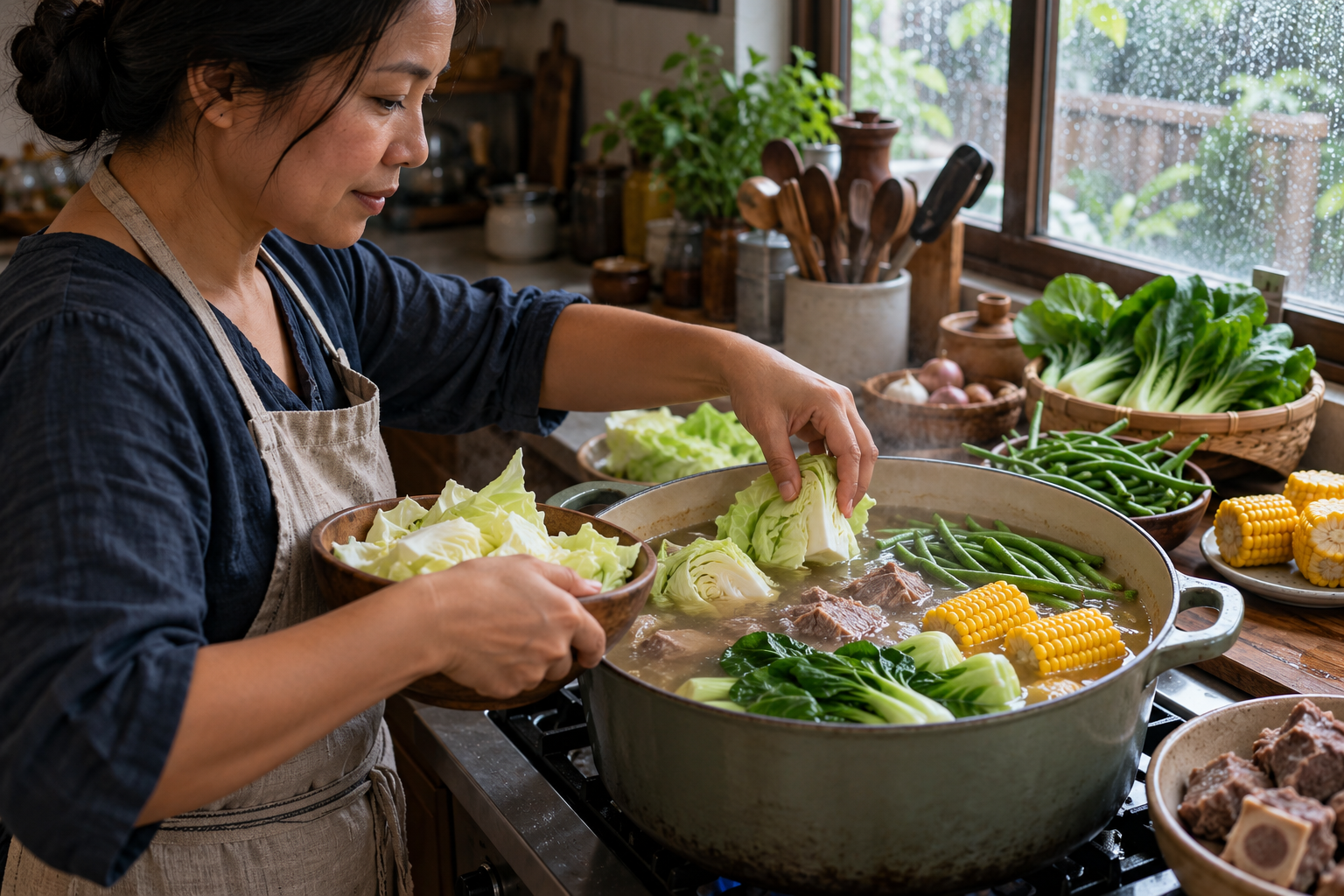
The beautiful thing about nilaga is how forgiving it is, which is part of why it has survived in every Filipino kitchen. There is no single right way, so you should feel free to make it yours. Use whatever good bony cut of beef you can find, and whatever hearty vegetables you have on hand, in whatever combination your family likes.
Keep only the essentials sacred: the long, patient simmer that builds the broth, the simple clean seasoning that lets the beef shine, and the vegetables added in stages at the end so each stays just itself. Get those right and the rest is yours to adjust. Make a big pot, because nilaga is better shared and arguably even better the next day, and eat it with rice and a saucer of patis and calamansi on a rainy afternoon, the way it is meant to be eaten. That is nilaga: not a recipe so much as a way of turning time, cheap beef, and a little care into the most comforting bowl in the Filipino kitchen.
Make it once on a rainy afternoon, with the windows fogging and the smell filling the house, and you will understand why it means what it means to us. Some dishes feed you; nilaga looks after you, and that is a different thing entirely.
Make It: Nilagang Baka
Here is a traditional pot that serves about six, the kind of nilaga a lola would recognize. The only real instruction that matters is to give it time.
Ingredients
- 1 kg beef shanks or short ribs, with the bone in (marrow bones are a bonus)
- 10 cups water
- 1 onion, peeled and quartered
- 1 tablespoon whole black peppercorns
- 2 to 3 tablespoons patis (fish sauce), plus more to taste
- salt, to taste
- 3 medium potatoes, peeled and halved
- 1 small cabbage, cut into wedges
- a handful of green beans, trimmed
- 2 ears of corn, cut into rounds (optional)
- 1 bunch pechay (or bok choy), leaves separated
Instructions
- Put the beef, bones, and water in a large pot and bring to a boil over high heat. As the gray foam rises to the surface, skim it off patiently with a spoon to keep the broth clear.
- Add the onion and peppercorns, lower the heat to a gentle simmer, and half-cover the pot. Let it simmer slowly for about 2 to 3 hours, topping up with a little hot water if needed, until the meat is very tender and falling off the bone and the broth is rich.
- Season the broth with the patis and a little salt, tasting as you go until it is savory and clean. Adjust to your liking.
- Add the potatoes and simmer until they are starting to soften, about 10 minutes.
- Add the corn, then the cabbage and green beans, and simmer for a few more minutes until the vegetables are just tender but still hold their shape and color.
- Turn off the heat and lay the pechay on top, letting it wilt in the residual heat for a minute or two. Serve hot in deep bowls over rice, with a saucer of patis and calamansi on the side for dipping.

About the Author: Ruben, co-founder of Gamintraveler.com since 2014, is a seasoned traveler from Spain who has explored over 100 countries since 2009. Known for his extensive travel adventures across South America, Europe, the US, Australia, New Zealand, Asia, and Africa, Ruben combines his passion for adventurous yet sustainable living with his love for cycling, highlighted by his remarkable 5-month bicycle journey from Spain to Norway. He currently resides in Spain, where he continues sharing his travel experiences with his partner, Rachel, and their son, Han.