
If your idea of minestrone comes from a can, forget it. That thin, orange-red broth with its few sad, mushy vegetables and its scattering of pasta is a distant, watered-down rumor of the real thing. It shares a name with actual minestrone and almost nothing else.
Real minestrone is a thick, generous, ever-changing pot of whatever vegetables happen to be in season, simmered with beans and good olive oil until it is less a soup than a meal. And here is the thing that surprises people most: there is no single recipe for it. No Italian grandmother makes it the same way twice, because minestrone was never meant to be made the same way twice.
It is one of the great improvised dishes of the world, a soup built on a method rather than a formula, shaped by the garden, the season, and the cook. Here is what real minestrone actually is, why there is no fixed recipe, why every nonna’s is different, and how to make your own, which is the only kind worth making.
There Is No Recipe, and That Is the Point
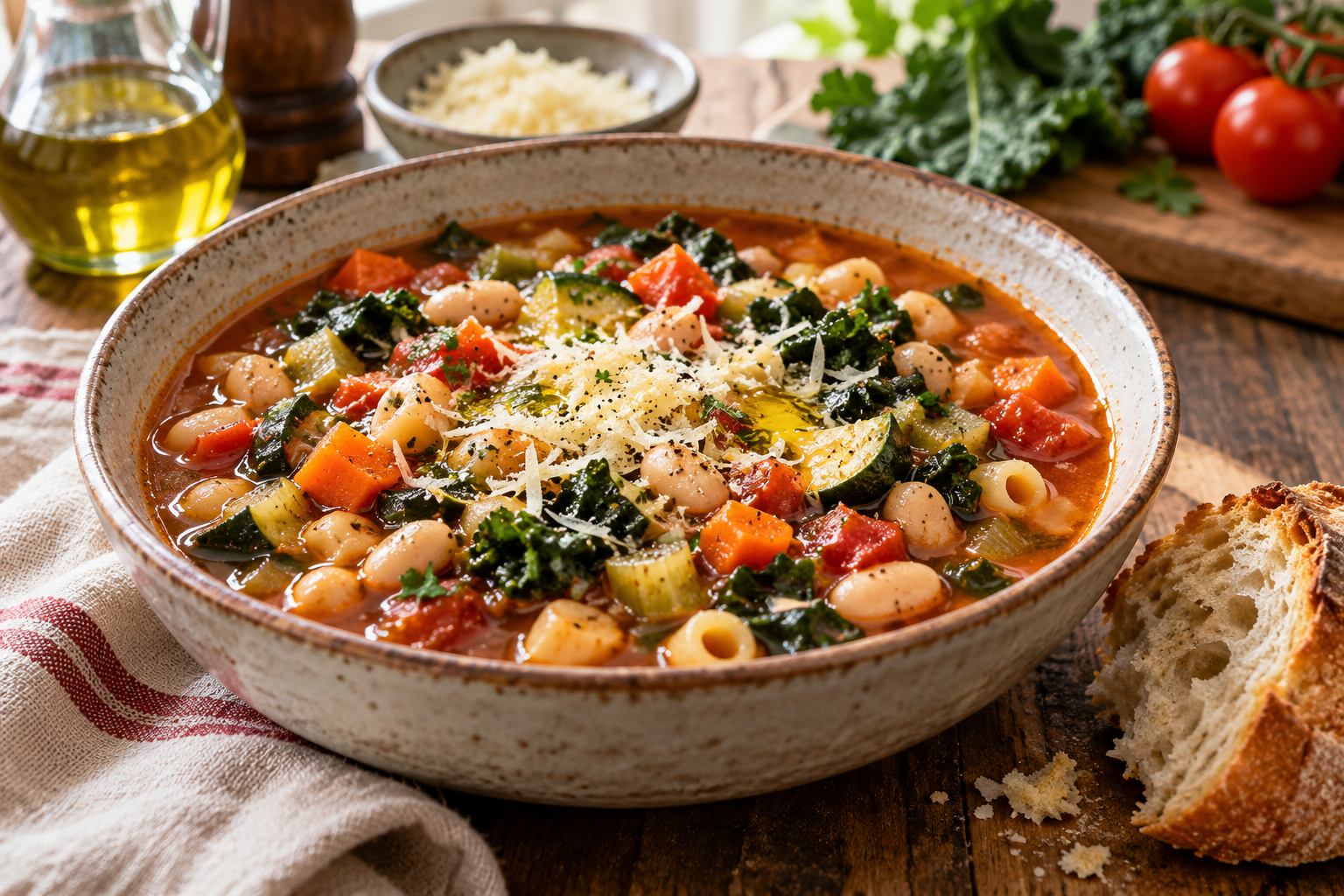
The first thing to understand about minestrone is that it is not really a dish in the way we usually mean. It is a method, a loose and flexible way of turning whatever vegetables you have into a hearty, satisfying soup, and the name itself tells you so: minestrone means, more or less, big soup, the grand version of a humble vegetable broth.
That flexibility is not a flaw or a sign of carelessness; it is the entire tradition. A minestrone is supposed to change with the season, the region, the household, and the week, because it was born as a way of using what was on hand rather than following a set list of ingredients. To ask for the authentic recipe for minestrone is to slightly miss the point, like asking for the authentic recipe for a salad.
This is why it frustrates people who want precise instructions and delights people who like to cook by feel. There is no canonical version to live up to and no way to get it wrong, only a general idea and a thousand legitimate expressions of it. Once you grasp that the improvisation is the tradition, minestrone stops being intimidating and becomes one of the most freeing things you can cook.
Whatever the Garden Gave That Week
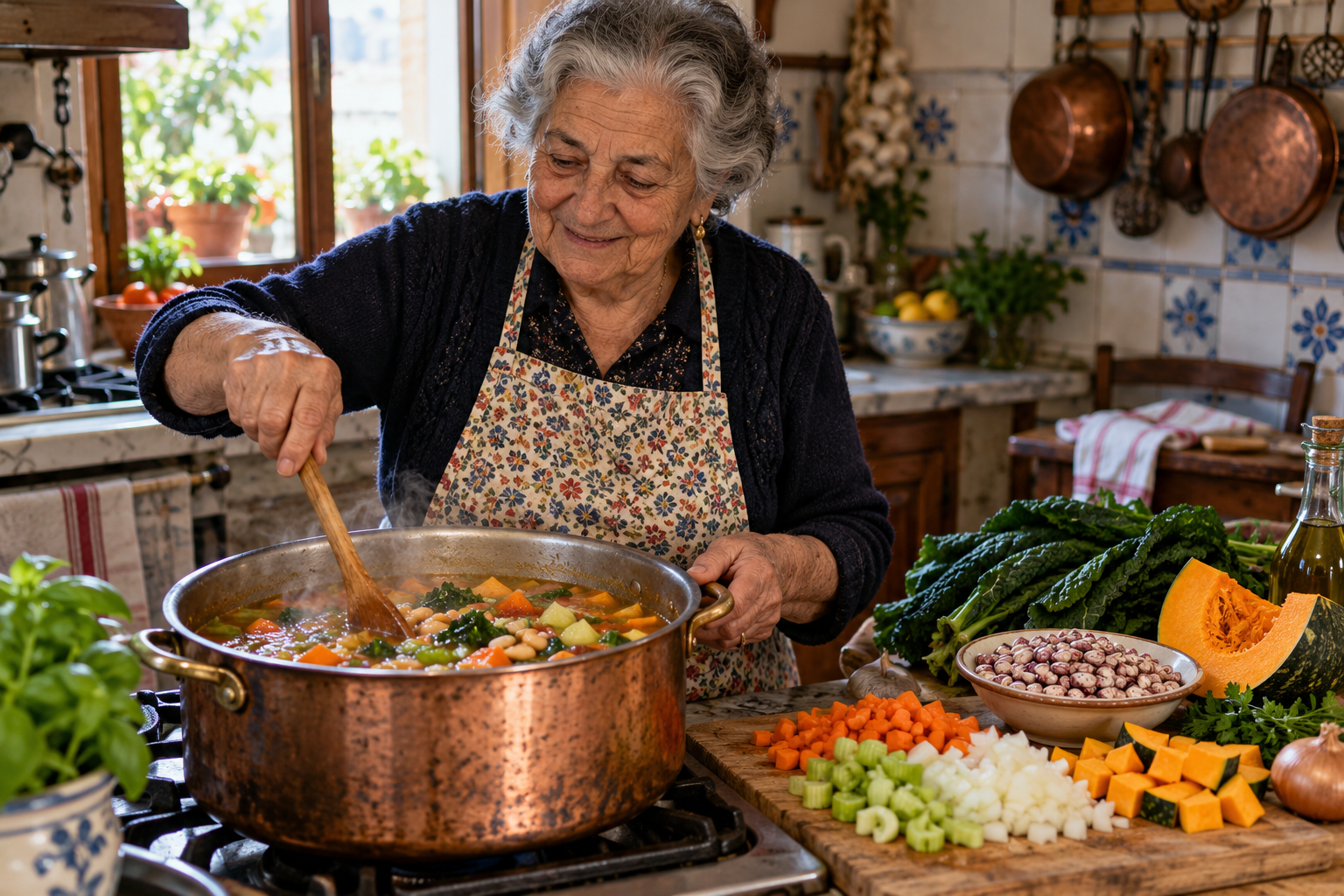
To understand why minestrone works this way, you have to know where it came from, and it came from the garden and the need to waste nothing. It is a dish of cucina povera, the frugal peasant cooking of Italy, invented not by chefs but by households making a filling meal out of whatever vegetables were ripe, plentiful, or about to go off.
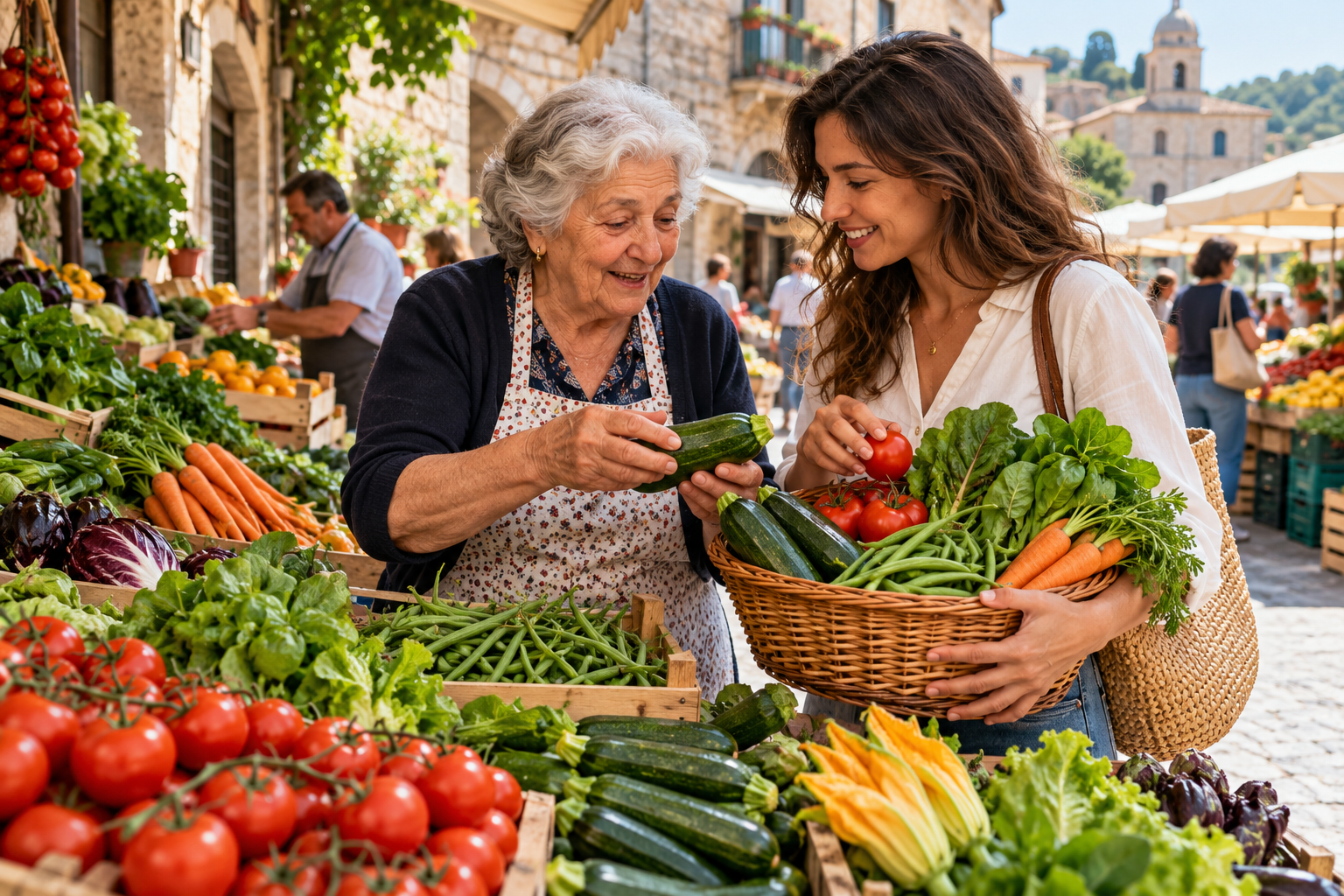
That origin is why it follows the seasons so faithfully. A spring minestrone is light and green, full of peas, asparagus, young greens, and new beans, while a summer one leans on zucchini, tomatoes, green beans, and fresh herbs.
An autumn and winter minestrone turns hearty and deep, built on squash, cabbage, kale, potatoes, and the sturdy root vegetables that carry a household through the cold. The soup is a mirror held up to the garden and the market, changing as they change.
So when an Italian cook makes minestrone, the real question is not what does the recipe call for but what do I have. You walk through the garden or the market, you see what is good and what is cheap and what needs using up, and that becomes the soup. This week’s minestrone is made of this week’s vegetables, which is exactly why it is never the same twice and never meant to be.
The Things That Make It Minestrone
Now, saying there is no recipe does not mean it is pure chaos, because certain elements recur and give minestrone its identity even as everything else shifts. There is a loose framework underneath the freedom, and knowing it is the key to making a good one from anything.
Most versions begin with a soffritto, the gentle Italian base of onion, carrot, and celery cooked slowly in olive oil until soft and sweet, which flavors the whole pot. Most include beans of some kind, usually cannellini or borlotti, which give the soup its heartiness and turn it from a light broth into a real meal. Many add a small pasta or a handful of rice toward the end for substance, and almost all are enriched by that great Italian secret, a leftover rind of parmesan dropped into the pot to melt slowly and lend a deep, savory richness.
Beyond those recurring elements, the vegetables are yours to choose. What makes a pot of soup minestrone is not a specific list but this shape: the soffritto base, a generous mix of seasonal vegetables, the beans, often the pasta or rice, the parmesan rind, good olive oil, and the patience to let it all simmer into something greater than its parts. Get that framework right and you can throw almost anything into the middle of it.
Every Nonna’s Is Different
Because minestrone belongs to households rather than to any official standard, it varies not just by season but by region and by family, and every Italian grandmother is quietly convinced that her way is the right one. The regional versions alone could fill a book.
In Genoa and Liguria, minestrone is often finished with a spoonful of pesto stirred in at the end, perfuming the whole bowl with basil. In Milan and the north, it might include rice and a little pancetta, richer and heartier for the colder climate. In Tuscany it shades toward the famous ribollita, so thick with beans, bread, and cavolo nero that a spoon can stand up in it. Each region made the soup its own using what grew there and what the local taste preferred.
Then, within every region, each family has its own version, handed down and subtly altered over generations, and each cook believes theirs is how minestrone is supposed to taste. This is the soup’s cousin relationship to dishes like Tuscan bean soup and pasta e fagioli, all of them members of the same big family of thrifty Italian vegetable-and-bean soups, overlapping and blurring at the edges. There is no settling the argument about whose is best, and the Italians would not want it settled; the glorious variety is the whole charm.
Better the Next Day
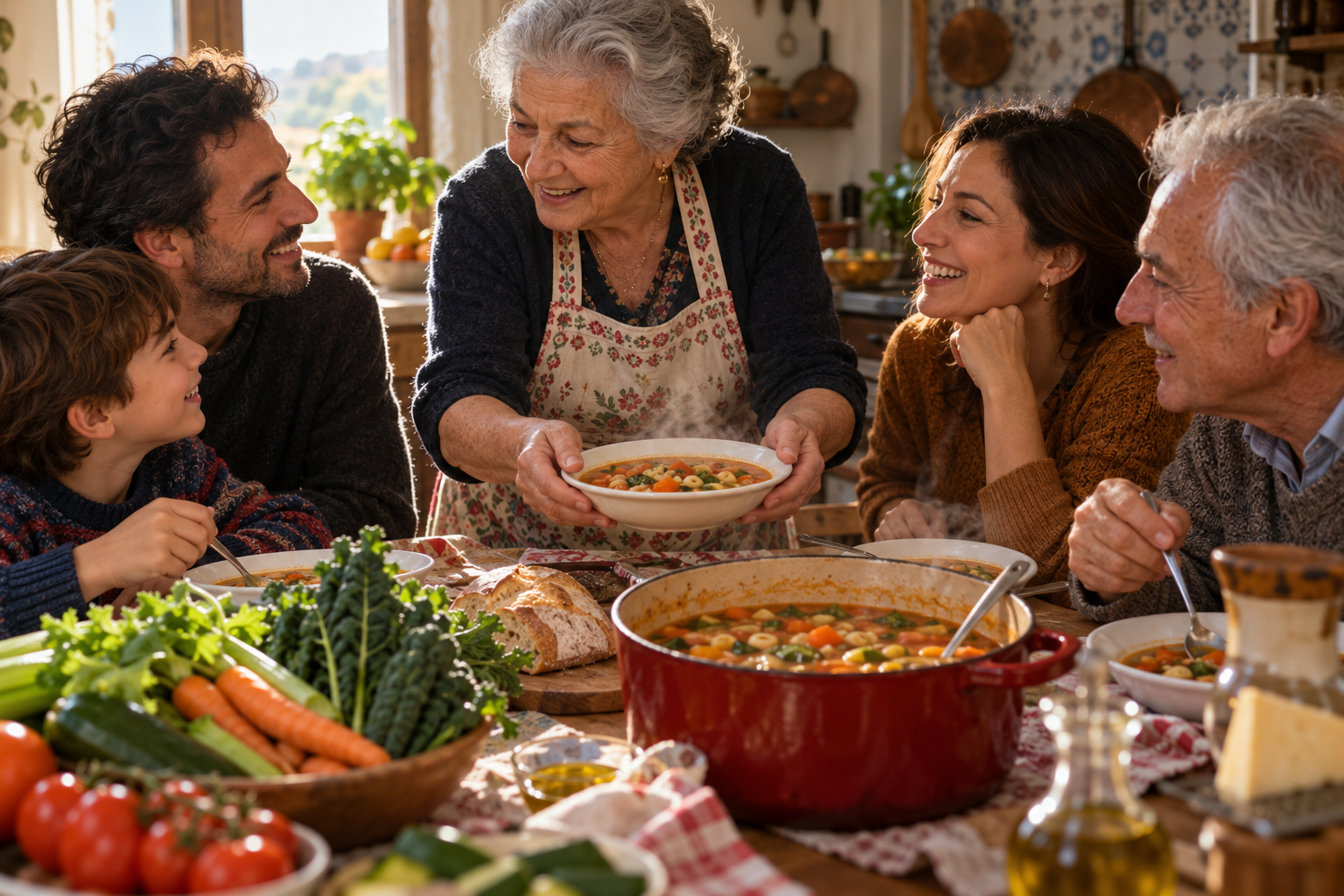
One more thing every minestrone has in common, whatever else is in it, is that it gets better. This is a soup that improves with a night’s rest in the fridge, as the flavors meld and deepen and the broth thickens, so the leftovers are often tastier than the first bowl.
This is partly why it is traditionally made in big, generous pots. A minestrone is not a quick single-serving affair but a batch meant to feed a family for days, growing richer each time it is reheated. The Tuscan ribollita takes this to its logical end: its name literally means reboiled, because it is made from the previous day’s minestrone, thickened with bread and cooked again into something even heartier. Nothing is wasted, and time is treated as an ingredient.
That make-ahead quality makes minestrone a genuinely practical thing to cook, not just a romantic one. Spend an afternoon on a big pot, and you have warm, nourishing, improving meals for most of a week, each bowl a little better than the last. In a world of fast food and single portions, there is something deeply satisfying about a dish that rewards making a lot and taking your time.
How to Make Your Own
So here is how to actually make minestrone, which means learning the method rather than memorizing a recipe, because once you have the method you can make it forever from anything. The steps are simple and the order is forgiving.
Start by softening a soffritto of onion, carrot, and celery in plenty of good olive oil, slowly, until sweet. Then add your vegetables in rough order of how long they take to cook, the firmer and slower ones first, the quick and leafy ones later, so everything finishes together. Add your beans, a tin of tomatoes if you like, enough water or broth to cover, and that precious parmesan rind, then let the whole thing simmer gently until the vegetables are tender and the flavors have married, which is to say until it tastes done. Near the end, stir in a handful of small pasta or rice if you want it, and finish each bowl with a generous drizzle of your best olive oil and a shower of grated parmesan.
That is the entire art of it. Use whatever vegetables you have and love, in whatever combination the season offers, and do not fret about getting it right, because there is no right. The recipe below is a solid, flexible starting point, a good autumn-and-winter version, but treat it as a suggestion rather than a rule. Change the vegetables with the season, make it your own, and never make it quite the same way twice, because that, in the end, is what minestrone has always been.
Make It: Minestrone
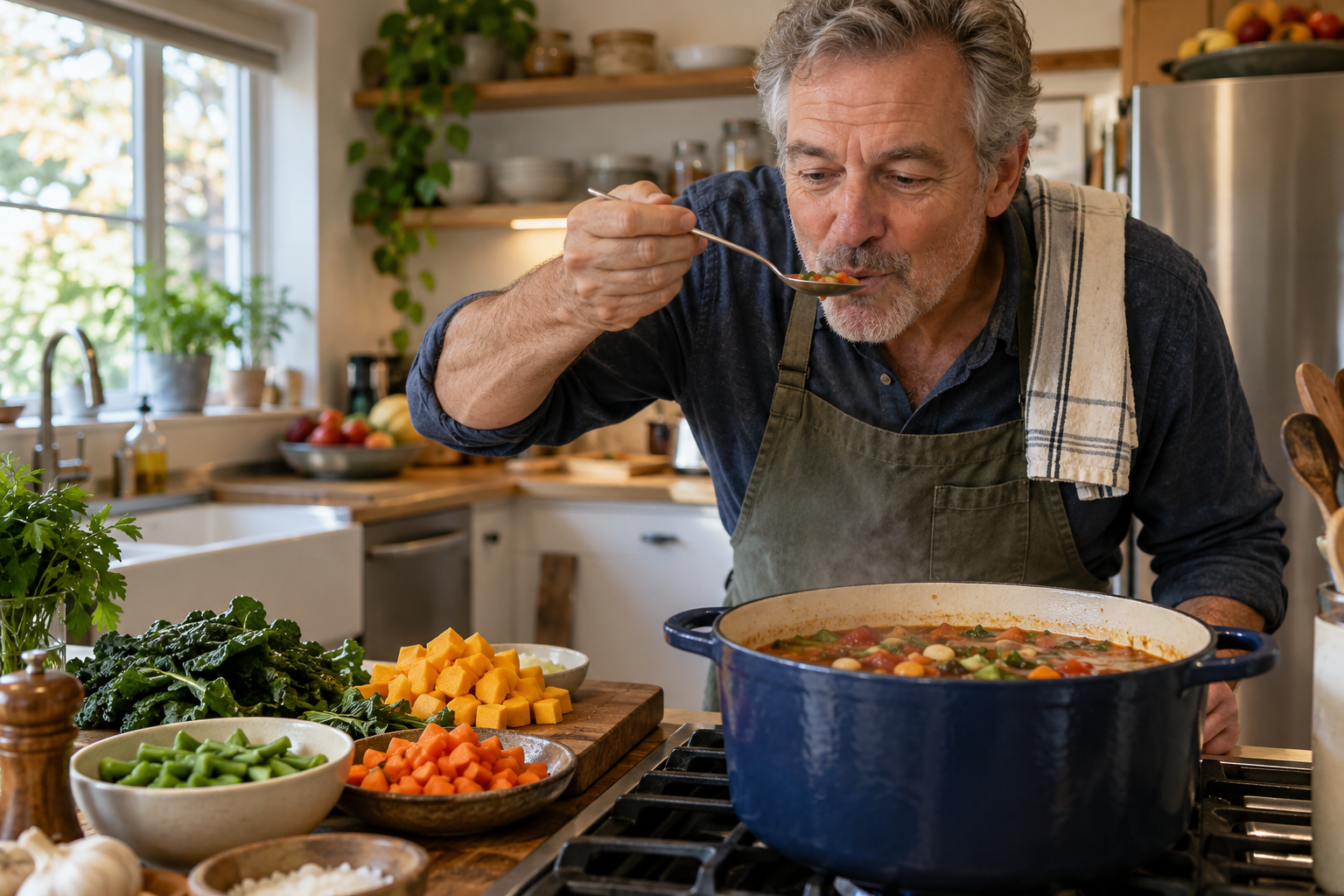
Here is a hearty, flexible version that serves about six, written as a sturdy autumn-and-winter pot. Swap the vegetables freely for whatever the season and your kitchen offer; the method stays the same.
Ingredients
- 3 tablespoons olive oil, plus plenty more to finish
- 1 onion, finely chopped
- 2 carrots, chopped
- 2 celery ribs, chopped
- 3 garlic cloves, minced
- 1 potato, diced
- 1 small squash or a few more root vegetables, diced
- 1 can chopped tomatoes
- 1 can cannellini or borlotti beans, with their liquid
- a parmesan rind, if you have one
- about 6 cups water or vegetable broth
- a few handfuls of chopped cabbage, kale, or cavolo nero
- 1 cup small pasta (such as ditalini) or rice
- salt and black pepper
- grated parmesan, to serve
Instructions
- Warm the olive oil in a large pot over medium-low heat and gently cook the onion, carrots, and celery for about 10 minutes, until soft and sweet. Stir in the garlic and cook a minute more.
- Add the potato, squash, and any other firm vegetables, and stir for a couple of minutes to coat them in the oil.
- Add the tomatoes, the beans with their liquid, the parmesan rind, and the water or broth. Bring to a gentle simmer.
- Simmer, partly covered, for about 30 minutes, until the vegetables are tender and the broth is rich, adding the cabbage or kale partway through so it cooks down without turning to mush.
- Stir in the pasta or rice and cook until just tender, adding a splash more liquid if the soup gets too thick. Season well with salt and pepper, and fish out the parmesan rind.
- Serve hot, with a generous drizzle of good olive oil and plenty of grated parmesan on top. It will taste even better the next day, so make extra.

About the Author: Ruben, co-founder of Gamintraveler.com since 2014, is a seasoned traveler from Spain who has explored over 100 countries since 2009. Known for his extensive travel adventures across South America, Europe, the US, Australia, New Zealand, Asia, and Africa, Ruben combines his passion for adventurous yet sustainable living with his love for cycling, highlighted by his remarkable 5-month bicycle journey from Spain to Norway. He currently resides in Spain, where he continues sharing his travel experiences with his partner, Rachel, and their son, Han.