
Picture a French woman of fifty-five and her visiting American daughter getting ready to go out for the evening. The daughter sits down to a full routine: foundation, concealer, contour, a built-up eye, the works, half an hour of careful construction. The mother dabs on a little tinted moisturizer, swipes on some lip color, maybe a touch of mascara, and is ready in three minutes.
The contrast is striking, and it points to a genuine difference in how the two cultures think about makeup, especially as a woman ages. There is an unspoken French rule about the face, and it runs almost exactly opposite to the American one.
It is worth saying up front that this is a tendency and a cultural leaning, not a law, and plenty of French women break it. But the pattern is real enough to notice, and the thinking behind it is genuinely interesting, and for a lot of women it turns out to be quietly liberating. Here is the face rule nobody says out loud, where it comes from, why it points the opposite way from the American one, and what to make of it. Like most things about French style, it is both more interesting and less mysterious than the marketing would have you believe.
The Unspoken Rule
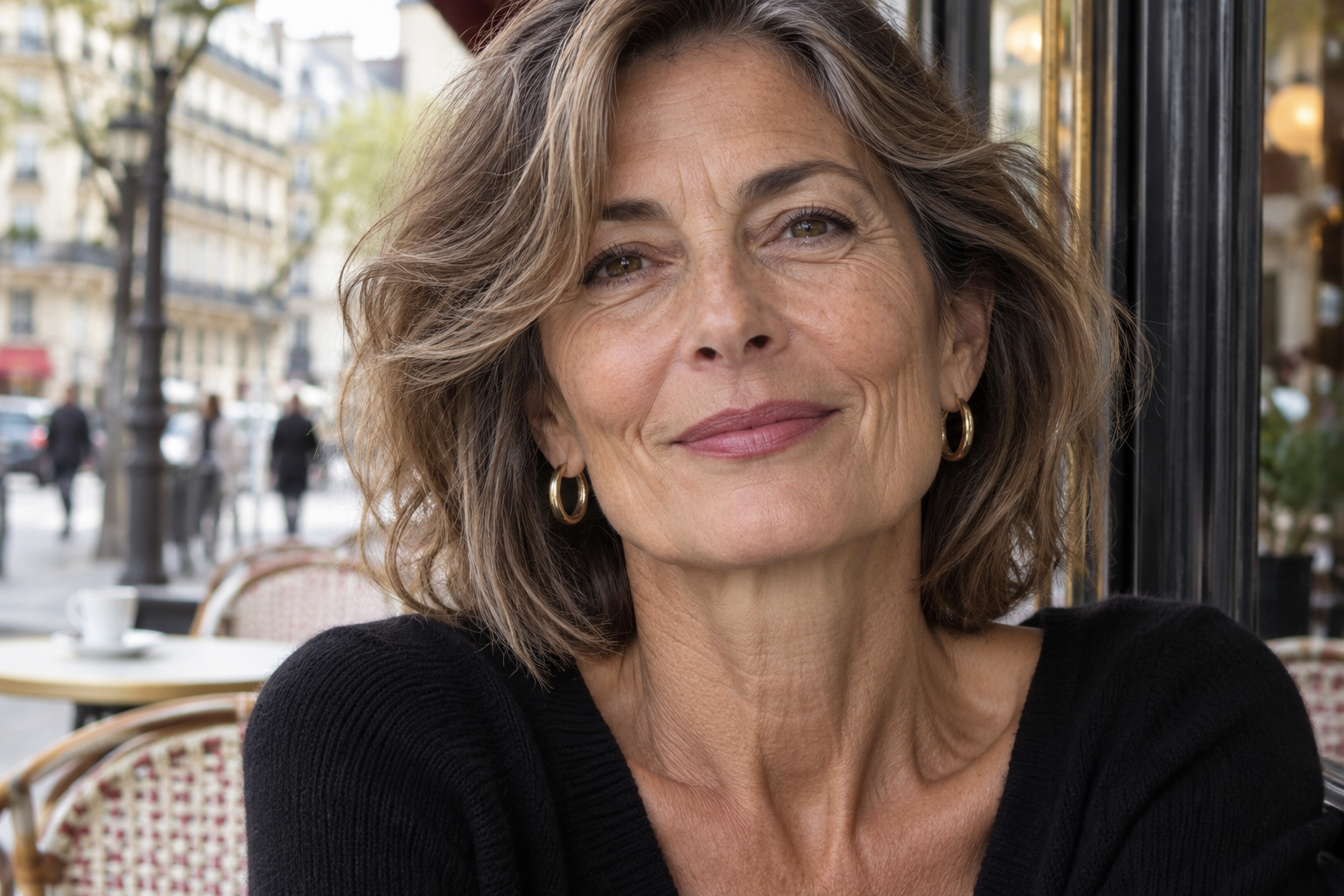
The rule, such as it is, can be stated simply: less, not more. French beauty culture, particularly among older women, tends to prize a light hand with makeup, the look often called no-makeup makeup, where the goal is to appear naturally lovely rather than visibly made up.
The aim is to look like yourself, enhanced, rather than like someone transformed. A little good product, applied well, to even the skin, add a touch of color, and define one feature, is considered more elegant than a full, heavy, sculpted face. The ideal is that someone should notice you look wonderful without quite being able to say why, rather than noticing your makeup. Polished, yes, but not painted.
There is a word the French use for this quality, soignee, which means something like well-groomed or carefully tended, and it captures the idea nicely. The soignee woman looks cared-for and put-together, but not done-up; the attention is evident in the overall impression rather than in any single visible layer of makeup. It is a high standard, but a quiet one, and it is aimed at a look of refinement rather than drama.
This is the rule nobody announces, because announcing it would violate its own spirit; the whole point is that it should look effortless and unspoken. But it is absorbed early and held deeply, and it shows up most clearly in the contrast with the American approach, which often leans the other way, toward more coverage, more definition, and more product, especially as a woman gets older and feels the pressure to cover the signs of age. Where one culture reaches for more, the other reaches for less, and that single difference in direction explains most of what you see in the mirror between that mother and daughter.
Skincare Over Makeup
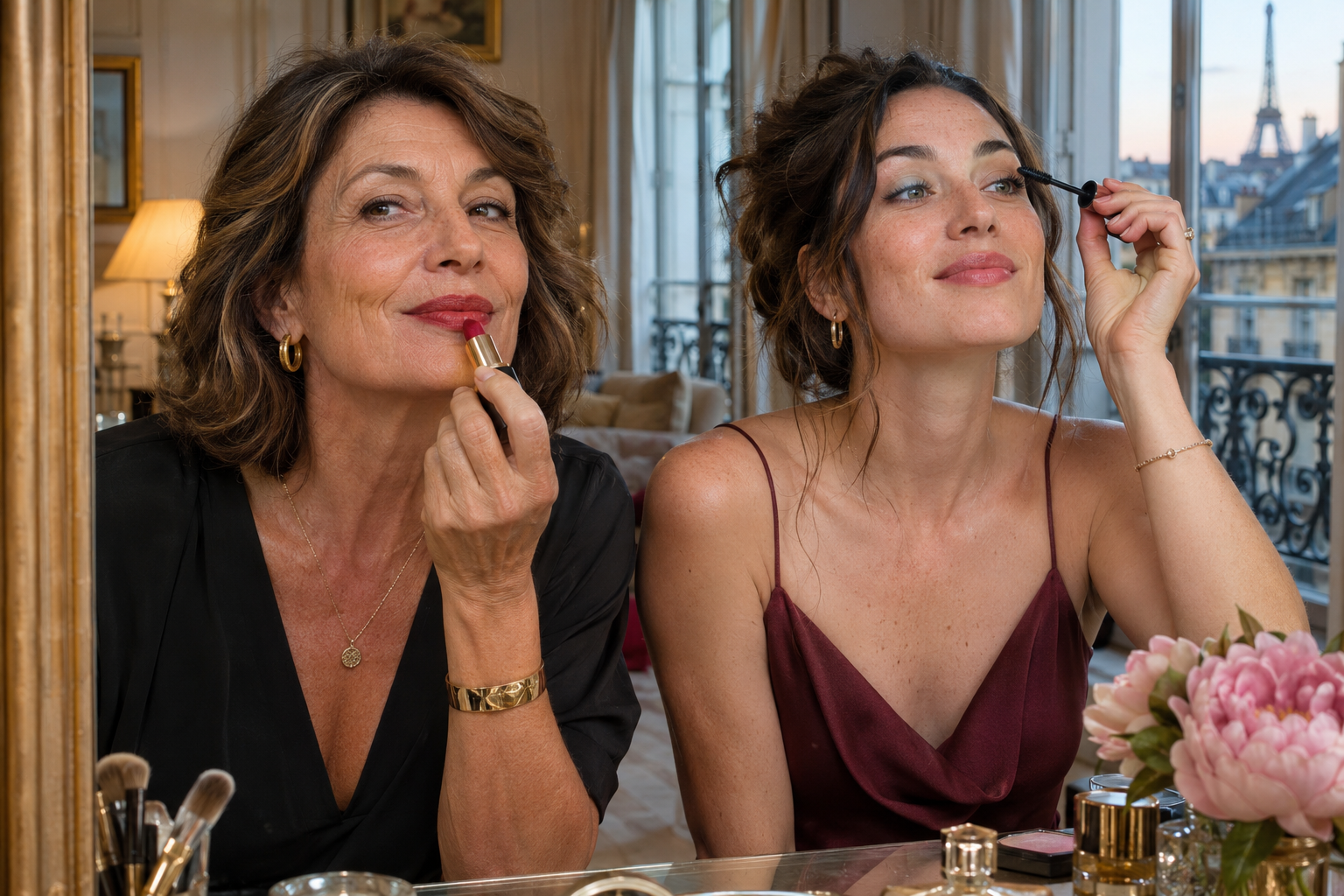
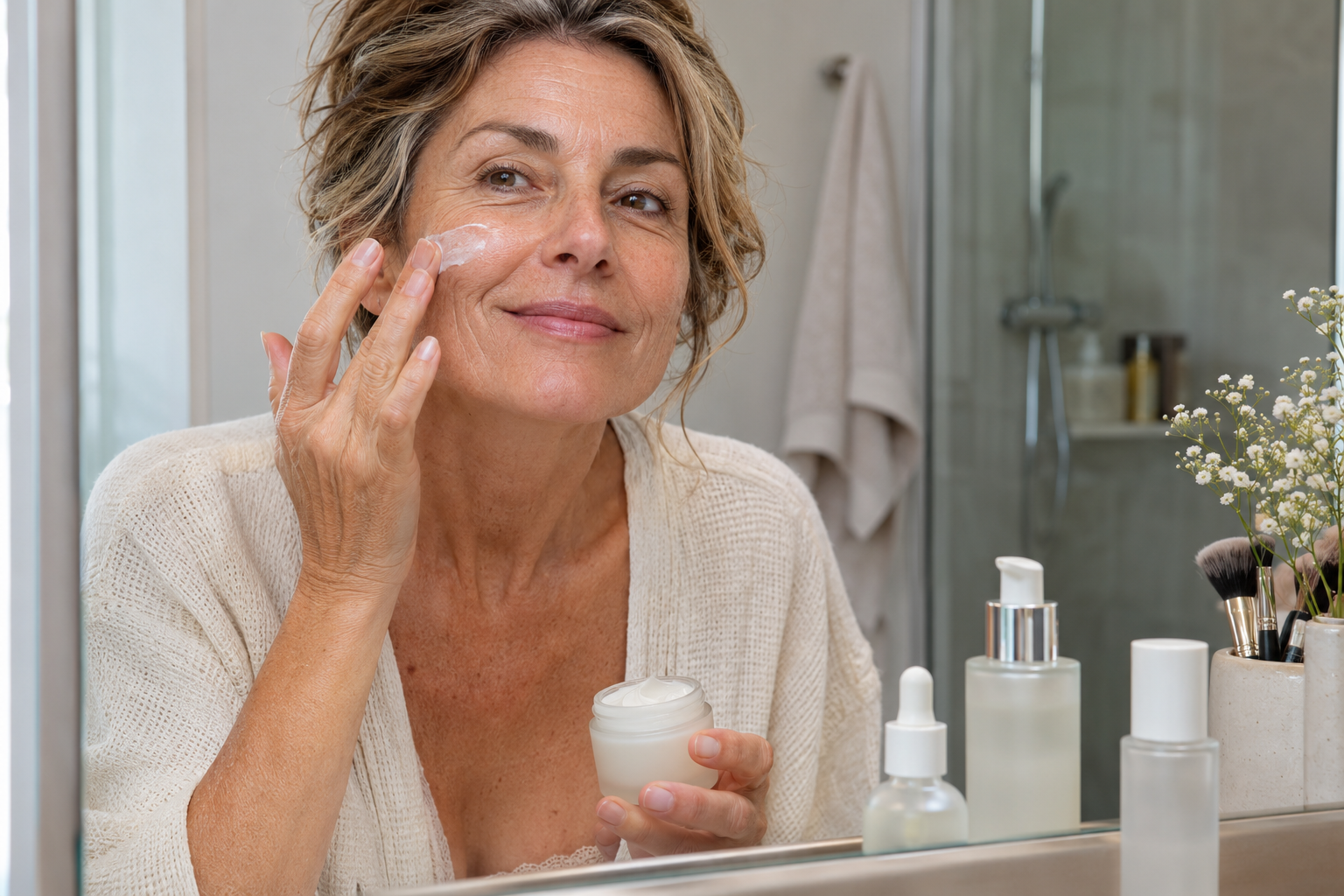
To understand why a French woman can get away with so little makeup, you have to look at where she puts her effort instead, because it is not that she does less overall. The effort simply goes somewhere else: into the skin itself.
French beauty culture places enormous emphasis on skincare, treating good skin as the real foundation and makeup as a light finishing touch rather than the main event. The investment, of time, money, and attention, goes into cleansing, moisturizing, sun protection, regular facials, and a culture of dermatology and pharmacy skincare that starts young and never really stops. The idea is to cultivate a healthy, cared-for complexion so that very little makeup is needed to look good.
It is the difference between investing in the canvas and investing in the paint. If the skin underneath is well cared for and glowing, a woman needs only the lightest touch of makeup to look radiant, because the radiance is largely her own. This is the quiet secret behind the effortless French face: it is not that they wear less makeup and simply look better anyway, but that a lifetime of attention to the skin is doing the work the makeup would otherwise have to do. The minimal makeup is the visible tip of a much larger, mostly invisible effort.
This also explains the famous French pharmacy, that institution of gleaming shelves full of serums, creams, and treatments that visitors make pilgrimages to. Skincare in France is treated almost as a form of health and maintenance rather than vanity, something you simply do, like brushing your teeth, from a young age. By the time a French woman is in her fifties, she has typically been tending her skin diligently for decades, and the dividend of all that quiet upkeep is a face that needs very little help to look its best.
Why Less, Not More, With Age
Here is where the French approach diverges most sharply from the American one, and where it has the most to say to women over fifty. In much of American beauty culture, the instinct as a woman ages is to add, to use more coverage and more product to conceal lines, even skin tone, and fight the visible signs of age. The French instinct tends to run the other way.
The French leaning is to wear less makeup as you get older, not more, and the reasoning is partly practical and partly philosophical. Practically, heavy makeup can actually emphasize age rather than hide it, settling into fine lines and creases and looking cakey on mature skin, so a lighter hand often reads as younger and fresher than a fuller face. A sheer, glowing, lightly made-up face tends to flatter older skin more than a heavily built one.
But the deeper reason is philosophical, a matter of attitude toward aging itself. There is, in the French ideal, a confidence about growing older, an inclination to carry one’s age with elegance rather than to wage war on it. The goal is to look like a beautiful woman of your actual age, not to look like a poor imitation of a younger one, and that acceptance shows on the face. Wearing less makeup as you age is, in part, a quiet refusal to treat your own aging face as a problem to be covered up, which is a genuinely different and, for many women, a freeing way to think about the whole thing.
There is a cultural current beneath this, too. French culture has long prized a certain idea of the older woman as interesting, attractive, and worthy of attention in her own right, rather than as a faded version of a younger one. When the surrounding culture quietly agrees that a woman of sixty can be beautiful as a woman of sixty, there is simply less pressure to perform youth, and less makeup is one visible result of that lower pressure. The lighter hand is downstream of a kinder set of expectations.
The One or Two Things
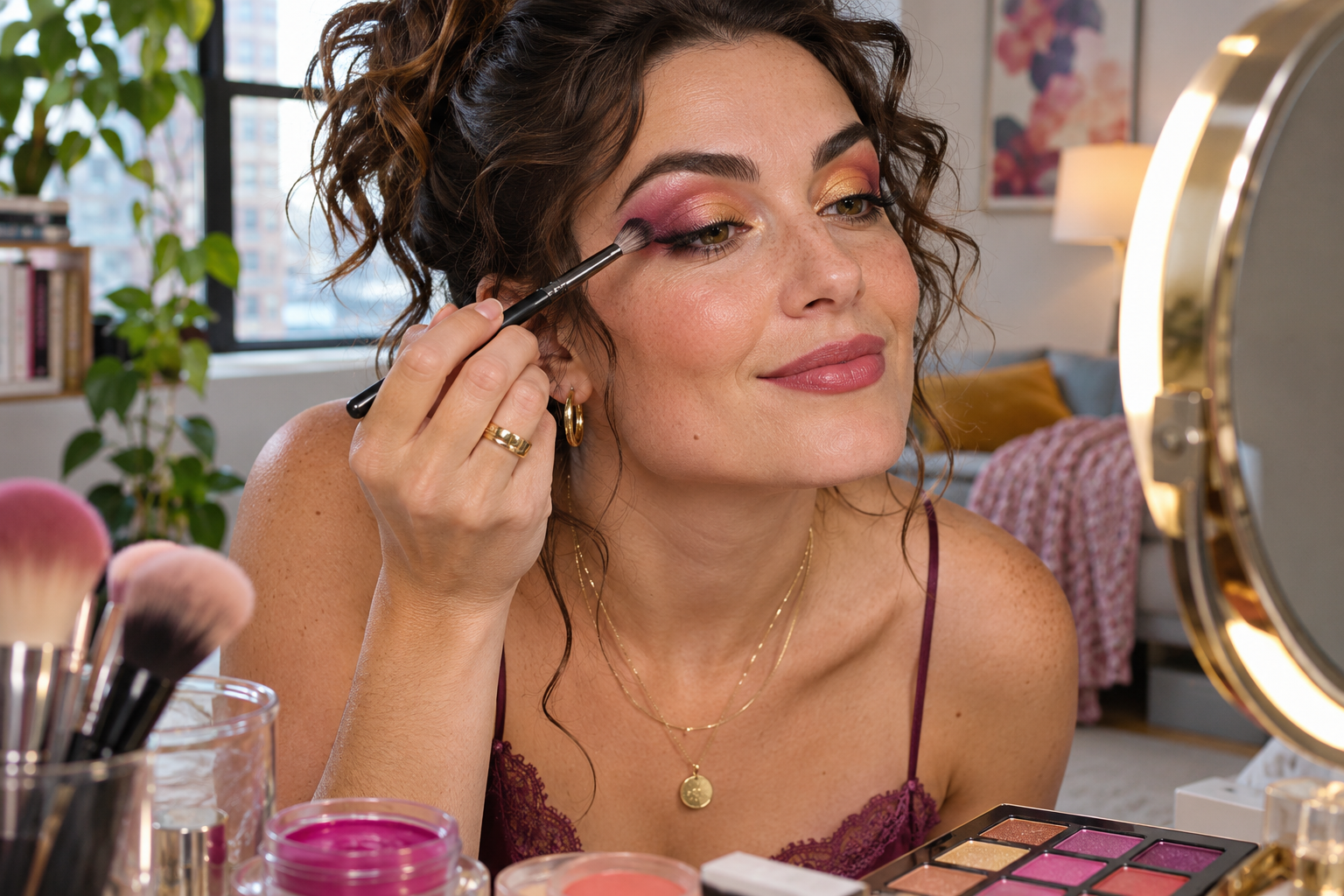
In practice, the French approach often comes down to a simple editing principle: pick one thing. Rather than doing everything at once, the idea is to choose a single feature to emphasize and keep the rest understated.
So it might be a bold red lip against an otherwise bare face, or a defined, smoky eye with nothing more than balm on the lips, but rarely both at the same time. The full face, where eyes, lips, cheeks, and brows are all turned up to maximum together, is considered a bit much; the elegance is in the restraint, in letting one feature speak while the others stay quiet. It is a strategy of emphasis rather than accumulation.
This is why a French woman’s makeup bag is often startlingly small. A tinted moisturizer or light base, a good lipstick, a mascara, perhaps a single multipurpose product for cheeks and lips, and that is frequently most of it. The routine is edited down to a few things used well rather than a vast collection used fully, and the daily application takes minutes rather than the better part of an hour. The minimalism is not laziness; it is a deliberate aesthetic, a belief that a few good choices beat a lot of them.
It is also, pleasantly, a lot less work, which matters more than it might sound. A three-minute routine that you can do half-asleep and never think about again frees up time, money, and mental energy, and there is a real ease to a life lived without a daily half-hour of facial construction. The French minimalism delivers not just a look but a kind of freedom from the whole project, which is part of why women who adopt it often describe feeling lighter in more ways than one.
It Is Not About Effort, It Is About Ease
There is a subtlety here that is easy to miss, and getting it right matters, because the French ideal is often misunderstood as simple effortlessness. It is not that French women make no effort; it is that the effort is hidden, and the look they are after is the appearance of ease.
The famous effortless French face is, in truth, carefully cultivated. The glowing skin took years of diligent care, the perfectly chosen lip color was chosen with real thought, and the whole studiedly natural look is, paradoxically, the product of considerable attention.
What is being avoided is not effort but the appearance of effort, the sense of a woman visibly trying very hard or visibly concealing something. The art is to look as though you simply woke up this lovely, which of course takes work. The illusion of the natural is one of the most carefully constructed looks there is, the small joke at the heart of the whole effortless-French-woman mythology.
Underneath it all sits something that looks a lot like confidence, and that may be the real secret worth borrowing. The willingness to show your own face, your own skin, your own age, with only the lightest enhancement, rests on a certain self-acceptance, a comfort in one’s own appearance that does not need to be heavily mediated or hidden. The French ideal, stripped to its core, is less about a particular quantity of makeup than about a particular relationship with your own face: one of ease rather than anxiety, enhancement rather than concealment.
The Honest Caveats
Now for the necessary honesty, because this whole picture is a generalization, and generalizations about national character deserve a healthy dose of salt. Not all French women wear minimal makeup; plenty wear a great deal, and the idea of the effortlessly natural Frenchwoman is partly a genuine cultural tendency and partly a marketing myth that has been sold back to the rest of the world for decades.
It is also important to say clearly that there is nothing wrong with loving makeup, wearing a lot of it, and enjoying every minute of the ritual. American beauty culture’s more-is-welcome approach is its own valid aesthetic, full of creativity and pleasure and self-expression, and it is not inferior to the French one.
A woman who adores a full face and feels wonderful in it is not doing anything that needs correcting, and framing the French way as the right way would miss the point entirely. This is a difference of cultural aesthetics, not a hierarchy, and anyone who tells you there is a correct amount of makeup to wear is selling something. Beauty is one of the most personal things there is, and the idea that an entire nation has cracked some universal code, while the rest of us have it wrong, falls apart the moment you look at it closely.
So take the French rule for what it is: an interesting tendency with some genuinely useful ideas in it, not a commandment. If the lighter approach appeals to you, there is real wisdom to borrow, especially the emphasis on skin and the gentler relationship with aging. If it does not, and you love your full face, that is completely valid too. The only rule that actually matters is the one that makes you feel good.
Wearing Your Own Face
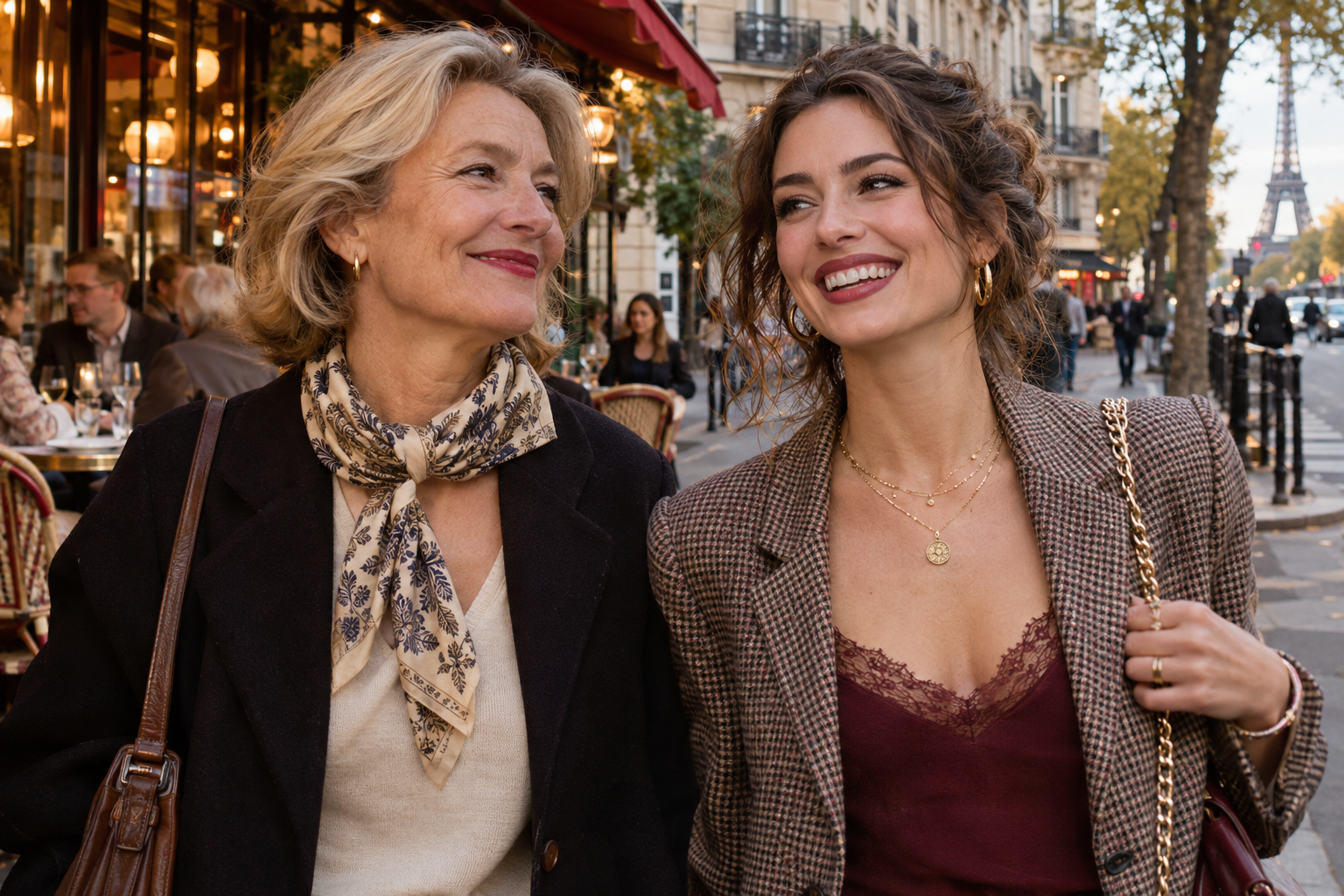
In the end, the most appealing thing about the French approach is not really the specific amount of makeup at all; it is the attitude underneath it, and that is the part worth taking whatever your own style. It is the quiet permission to look like yourself, at your actual age, and to decide that this is beautiful.
That permission is genuinely freeing, particularly for women over fifty who have absorbed years of pressure to fight their own faces. The idea that you might wear less, not more, as you age, not out of laziness but out of a settled confidence in your own looks, is a lovely alternative to the exhausting project of concealment. It reframes the aging face not as a problem to be solved but as a face, simply, worth showing.
So borrow what speaks to you and leave the rest. Take the emphasis on caring for your skin, the elegance of picking one feature, the freedom of a smaller routine, or the deeper gift of making peace with your own reflection.
Ignore it entirely if a full, joyful face is what makes you happy. The real rule nobody says out loud is not about makeup at all; it is that the goal is to please yourself rather than a trend, and to wear your own face, however you choose to adorn it, with ease.

About the Author: Ruben, co-founder of Gamintraveler.com since 2014, is a seasoned traveler from Spain who has explored over 100 countries since 2009. Known for his extensive travel adventures across South America, Europe, the US, Australia, New Zealand, Asia, and Africa, Ruben combines his passion for adventurous yet sustainable living with his love for cycling, highlighted by his remarkable 5-month bicycle journey from Spain to Norway. He currently resides in Spain, where he continues sharing his travel experiences with his partner, Rachel, and their son, Han.