

Picture a couple in their early sixties in Portland, Oregon, staring out at another gray, drizzling spring and doing the math on their retirement. They are not rich. They have a paid-off house, a modest nest egg, and Social Security on the horizon, and they have quietly concluded that a comfortable retirement in the United States, with its healthcare costs and rising prices, will stretch them thinner than they would like. So they do something that a growing number of Americans their age are doing. They sell the house, take roughly two hundred and seventy thousand dollars, and move to the sun of southern Spain.
This couple is a composite, a representative stand-in for the many real Americans making exactly this move, and their two-hundred-and-seventy-thousand-dollar plan is offered as a realistic worked example rather than one family’s literal receipts. But every figure in it is grounded in what a move like this really costs and what life in Andalusia really runs, so while the couple is illustrative, the numbers are real enough to plan by. This is how the arithmetic of trading Portland rain for Andalusian sun really works.
Here is that two-hundred-and-seventy-thousand-dollar plan, itemized, from the visa that lets them stay to the home they buy to the cost of the sunlit life that follows. This is a general financial illustration rather than personalized advice, individual circumstances and exchange rates vary, and anyone contemplating this move needs proper legal and financial guidance, but as a picture of how an ordinary American couple can build a Spanish retirement on a middle-class sum, the itemized plan tells the story.
Why Andalusia, and Why Now
Start with the reasoning, because the destination is a deliberate choice rather than a whim. Andalusia, the sun-soaked southern region of Spain, offers our couple the thing Portland cannot, which is warmth and light, a Mediterranean climate of long dry summers and mild bright winters that stands in glorious contrast to the gray Oregon drizzle they are leaving. For people entering their retirement years, the promise of sunshine is not trivial but a daily improvement in the quality of life.
The financial logic is just as compelling as the weather. Andalusia is one of the more affordable regions of Spain, itself an affordable country by Western European and American standards, so a couple can live there comfortably on far less than a similar life would cost back home, which is what makes a middle-class nest egg go so much further. The sun is the draw, but the value is what makes the move possible. It is worth naming one further advantage that quietly sweetens the Andalusian choice, which is tax. Andalusia has eliminated its regional wealth tax, a feature that matters more to wealthier retirees than to our modest couple but signals a region that has deliberately made itself welcoming to incomers, and it sits alongside a generally lower cost base to make the south a shrewd financial choice as well as a sunny one. The region has, in effect, competed for retirees, and our couple are among the beneficiaries.
There is a timing element too that sharpens the decision. With the cost and complexity of a comfortable American retirement rising, and with Spain offering a clear residency route for financially independent retirees, the move makes sense now in a way our couple feels acutely, at sixty-three, with the health and energy to embrace a new country and the years ahead to enjoy it. The combination of push and pull, of an American retirement that feels precarious and a Spanish one that feels attainable, is what turns a daydream into a plan.
The Visa That Lets Them Stay
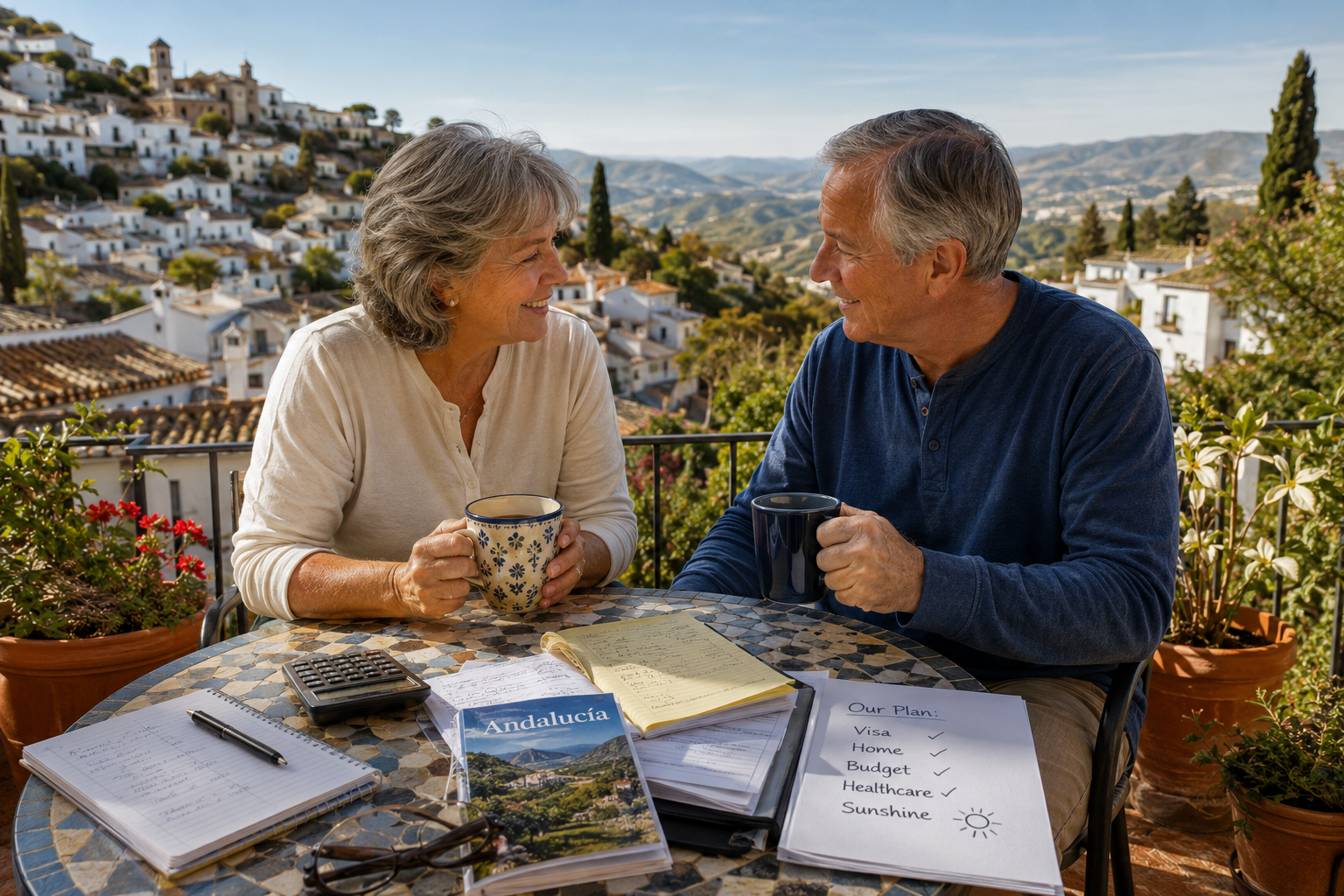
The foundation of the whole plan is the right to live in Spain legally, and for a retired American couple that means the Non-Lucrative Visa, Spain’s main residency route for non-EU citizens who can support themselves without working. Since Spain closed its investor Golden Visa in 2025, this has become the primary pathway for retirees, and it is built precisely for a couple like ours living on passive income.
The visa’s central demand is financial, and the numbers are specific. For 2026, the Non-Lucrative Visa requires the main applicant to show passive income of about twenty-eight thousand eight hundred euros a year, with roughly seven thousand two hundred euros more for a spouse, bringing the couple’s requirement to around thirty-six thousand euros annually, which they can meet through pensions, Social Security, investment income or savings. This is the income floor that unlocks everything else.
There are conditions attached that shape the plan. The visa requires full private health insurance, prohibits working in Spain, and comes with apostilled documents, sworn translations and a consulate application, so it takes preparation and some upfront cost to secure. Crucially, holding it makes the couple Spanish tax residents, meaning Spain will tax their worldwide income, though the US-Spain tax treaty prevents them from being taxed twice on the same money. The visa is the key to the door, and its requirements set the terms of everything that follows. The tax residency point deserves a moment of candor, because it is the part newcomers most often underestimate. Living in Spain for the required part of the year makes our couple Spanish tax residents, which means Spain, not the United States, becomes the primary taxer of their worldwide income, and while the treaty prevents true double taxation, the compliance is real and needs a cross-border accountant. This is not a reason to avoid the move, but it is a line item of effort, if not always of money, that the plan must acknowledge.
Buying the Home, the Biggest Line Item
The largest single piece of the two-hundred-and-seventy-thousand-dollar plan is the home, and here the Andalusian advantage shows most dramatically. The proceeds from a modest Portland house, where prices are high, translate into real buying power in much of Andalusia, where a couple can find a comfortable apartment or a small townhouse in a pleasant town, away from the priciest coastal hotspots, for a fraction of what the same money buys in Oregon.
A realistic allocation tells the story. Our couple might spend somewhere around one hundred and eighty thousand euros on a home in an inland Andalusian town or a more affordable stretch of the coast, buying outright with the proceeds of the Portland sale and carrying no mortgage into retirement, which is itself a profound financial relief. Owning free and clear, they remove the single largest recurring cost most retirees face, and they do it while keeping a meaningful cushion in reserve.
The purchase carries its own costs that the plan must absorb, and they are not trivial. Buying property in Spain adds transaction costs, taxes and fees that commonly run around ten to twelve percent on top of the purchase price, covering transfer tax, notary, registry and legal fees, so a home priced around one hundred and eighty thousand euros carries perhaps twenty thousand euros of additional costs. Budgeting realistically means counting these from the start, so the home and its associated costs together consume the bulk of the plan, as the biggest line item should. The choice of where in Andalusia to buy is what makes these numbers work, and it rewards looking inland. The glamorous coastal strips of the Costa del Sol command far higher prices, but the inland towns and the less fashionable stretches of coast, full of character and Spanish daily life, offer comfortable homes at a fraction of the marquee prices, so a couple willing to live slightly off the tourist track stretches their housing budget dramatically. The Portland proceeds that buy a modest flat on the glossy coast buy a real home with room to spare an hour inland.
Setting Up the New Life
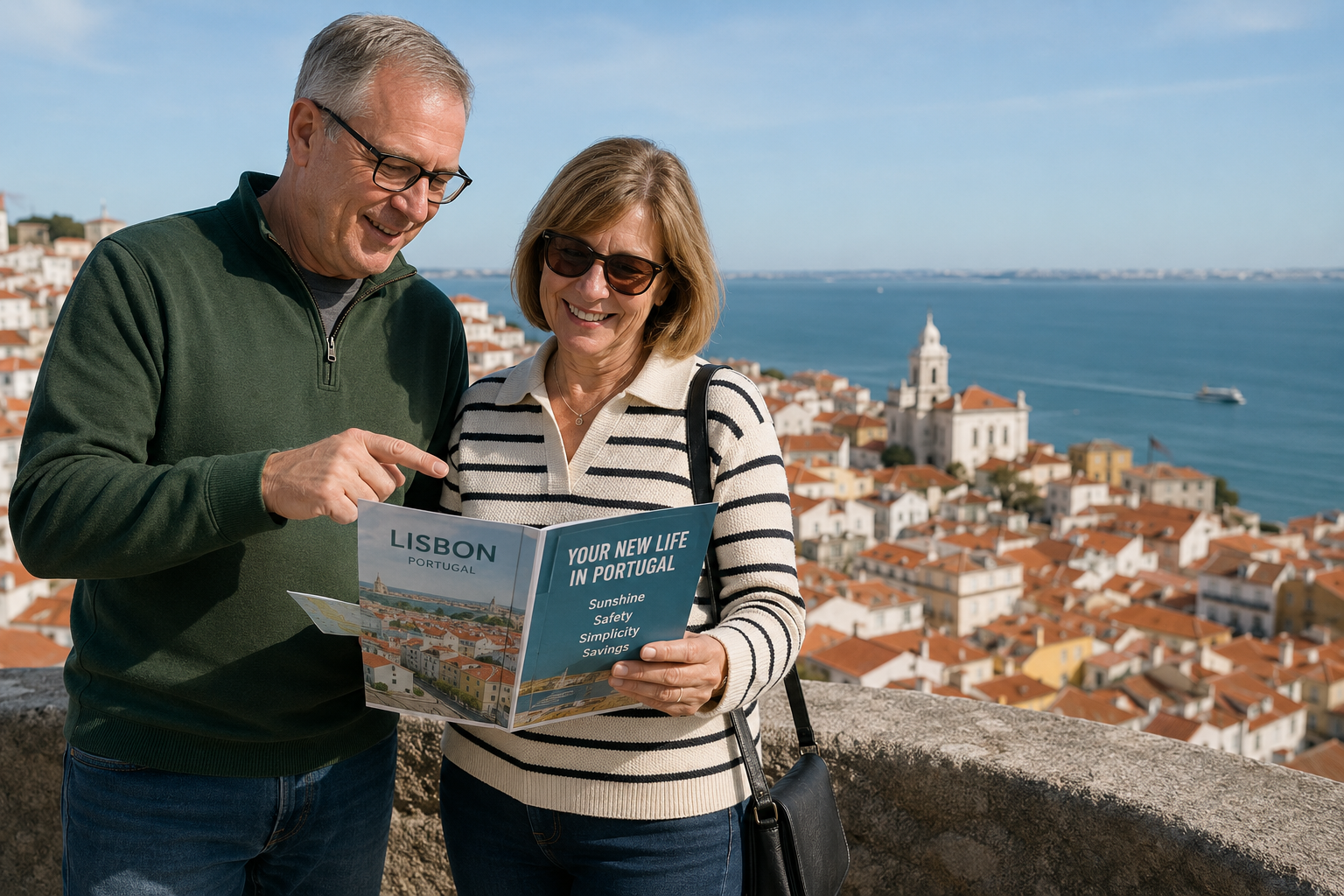
Beyond the home itself, moving countries carries a cluster of one-time setup costs, and a sound plan sets money aside for them rather than being surprised. There is the move itself, the flights and the shipping of whatever belongings make the journey, the initial furnishing of the new home, and the various fees of establishing a life in a new country, from residency paperwork to setting up utilities and buying a car if the location needs one.
These costs add up to a meaningful sum that the plan should reserve. Between the international move, furnishing the home, a modest used car, the legal and immigration fees, and the general friction of resettling on another continent, our couple would be wise to set aside somewhere in the region of twenty to thirty thousand euros for the whole transition, a one-time investment in getting established that they will not face again. Underestimating this bucket is a common mistake, and a realistic plan is generous with it.
There is also the buffer, the reserve that turns a plan into a safe one. After the home, its costs and the setup, our couple would keep a portion of their two hundred and seventy thousand dollars, perhaps several tens of thousands, as an emergency cushion and a hedge against currency swings and surprises, because a move like this should never spend down to zero. The remaining nest egg is not idle but essential, the margin of safety that lets them settle without fear and absorb whatever the first years abroad throw at them.
What Daily Life Actually Costs

With the home bought and the setup handled, the question becomes the ongoing cost of living, and this is where Andalusia rewards the whole gamble. A retired couple can live comfortably in the region on something like two thousand five hundred to three thousand five hundred euros a month outside the expensive big cities, covering their food, utilities, healthcare, leisure and the ordinary texture of a good life, which is well within reach of their pensions and Social Security.
The contents of that budget buy a thoroughly pleasant life. Groceries and dining are markedly cheaper than in the United States, with fresh Mediterranean food and affordable restaurants, everyday services cost less, and the warm climate itself trims expenses, reducing heating bills and inviting an outdoor life that costs little. The couple who lived carefully in Portland can live comfortably, even expansively by comparison, in Andalusia on a similar or smaller income.
Healthcare deserves particular note, because it is so often the American retiree’s greatest fear. Between the private insurance the visa requires and Spain’s broader healthcare system, which is well regarded and far cheaper than the American equivalent, our couple can secure good medical care for a small fraction of what it would cost them in the United States, removing one of the central anxieties of an American retirement. The monthly budget, healthcare included, is the daily proof that the plan works, month after affordable month. It bears emphasizing how large the healthcare saving looms in the overall case, because for many American retirees it is the single most decisive factor. The fear of medical costs devouring a retirement is a distinctly American anxiety, and simply removing it, by living in a country where good care is affordable and universal in reach, transforms the psychology of retirement as much as the budget. Our couple do not just save money on healthcare. They shed a background dread that shadows retirement at home.
Adding Up the Plan
Now assemble the pieces, because the whole two-hundred-and-seventy-thousand-dollar plan only convinces when the arithmetic closes. Translated roughly into euros, the plan buys a home for around one hundred and eighty thousand, absorbs some twenty thousand in purchase costs, spends twenty to thirty thousand on the move and setup, and keeps the remainder, several tens of thousands, as a reserve, so the capital is fully and sensibly accounted for with a cushion intact.
The ongoing life then runs on income rather than capital, which is the crucial distinction. The nest egg buys the home and funds the transition, a one-time deployment of savings, while the daily life is paid for out of the couple’s monthly passive income, their pensions and Social Security, which comfortably covers the two-and-a-half to three-and-a-half thousand euro monthly cost of living in Andalusia. Capital sets them up, and income sustains them, and the plan works because both halves add up.
This is what makes the whole thing achievable on a middle-class sum. Our couple are not wealthy, and two hundred and seventy thousand dollars would not fund a comfortable retirement in a high-cost American city, but deployed this way, buying a paid-off home in an affordable sunlit region and living on modest passive income, it delivers a truly good retirement that the same money could not buy back home. The plan is not a trick but an arbitrage, trading the high costs of one country for the lower ones of another, with sunshine thrown in.
The Life the Numbers Buy
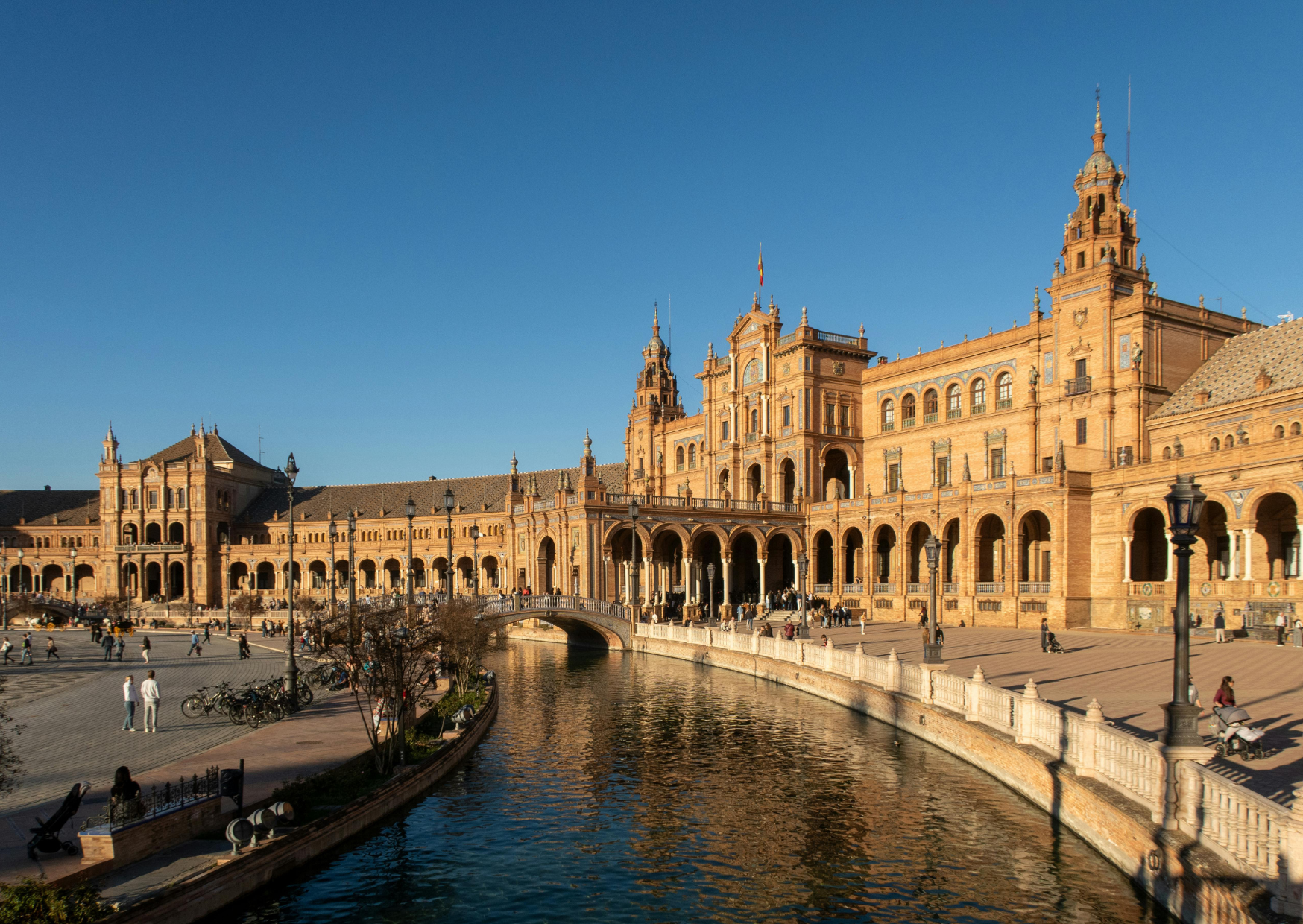
Step back from the itemized figures and consider what they truly purchase, because the point was never the spreadsheet but the life. For their two hundred and seventy thousand dollars, our composite couple gets a paid-off home in a warm and beautiful region, a comfortable life funded by their existing income, good and affordable healthcare, and a daily existence of sunshine and Mediterranean ease in place of the Portland gray. The numbers buy a materially better retirement than the same money would afford in much of the United States.
It is worth being clear that the plan is an illustration and that real life is messier than any itemized budget. Exchange rates move, the visa demands real effort and ongoing compliance, tax residency brings complications that need professional handling, and leaving one’s home country carries emotional costs that no spreadsheet captures, from missed grandchildren to the disorientation of a new language and culture. The numbers are real, but they are the skeleton of the thing, not the whole of it, and anyone tempted by this path needs proper advice and clear eyes.
Still, the core truth the plan illustrates is real and quietly powerful, that an ordinary American couple of modest means can, by moving to an affordable and sunlit corner of Europe, turn a middling retirement into a comfortable one. The couple staring out at the Portland rain are not dreaming an impossible dream but contemplating a well-worn and workable path, one that thousands have walked before them, itemized here to show that the arithmetic really does close. Trade the rain for the sun, deploy the nest egg wisely, live on the income, and a good retirement in Andalusia is not a fantasy but a plan, and a surprisingly attainable one at that.

About the Author: Ruben, co-founder of Gamintraveler.com since 2014, is a seasoned traveler from Spain who has explored over 100 countries since 2009. Known for his extensive travel adventures across South America, Europe, the US, Australia, New Zealand, Asia, and Africa, Ruben combines his passion for adventurous yet sustainable living with his love for cycling, highlighted by his remarkable 5-month bicycle journey from Spain to Norway. He currently resides in Spain, where he continues sharing his travel experiences with his partner, Rachel, and their son, Han.