
Italian dinner happens at 8:30 or 9:00pm. American nutrition advice has spent decades insisting that eating late causes weight gain, that the body stores evening calories as fat, that the kitchen should close by 7:00pm. The Italians eat late and maintain lower obesity rates than Americans who eat early. This apparent paradox confuses Americans who have absorbed the eat-early gospel.
The paradox dissolves when you look at what the Italians do around their late dinner rather than just when they eat it. The timing of dinner matters far less than the size of dinner, the composition of dinner, the pace of dinner, and the overall daily eating pattern that the late dinner sits within. The Italian late dinner is small, follows a substantial midday lunch, is eaten slowly and socially, and fits a daily rhythm that the early American dinner does not share. The American early dinner, by contrast, is frequently the largest meal of the day, eaten fast, followed by evening snacking, within a daily pattern that promotes weight gain regardless of the early timing.
This piece walks through what the Italian dinner pattern really is, what the science says about meal timing and weight, what the American early dinner does differently, and what individual adults can adopt. The patterns here are observed across populations and are not medical or nutritional advice for any specific individual. Anyone with metabolic conditions, or with a history of disordered eating, should work with their physician rather than making changes alone.
What The Italian Dinner Pattern Really Is

The Italian relationship with dinner has specific features that distinguish it from the American dinner.
Dinner is small. The Italian dinner is typically the lightest substantial meal of the day. A soup, a simple pasta, a piece of fish with vegetables, some bread, a modest serving. The dinner is not the day’s caloric centerpiece but a light close to the day’s eating.
Dinner follows a large lunch. The Italian lunch, eaten at midday, is the day’s largest meal. By the time dinner arrives, the body’s main needs have been met. The late dinner sits atop a day that has already done its substantial eating, so the evening meal adds modestly rather than dominating.
Dinner is eaten slowly and socially. The Italian dinner develops across an extended period with family or friends. The slow social eating produces satiety signaling that prevents overconsumption. The meal is an event rather than a rapid refueling.
Dinner is followed by minimal additional eating. The Italian who eats dinner at 9:00pm does not then consume evening snacks across the following hours. The dinner is the close of the eating day. The American pattern of dinner followed by hours of snacking has no Italian equivalent.
Dinner is composed of whole foods. The Italian dinner is real food, vegetables, fish, modest pasta, olive oil and bread. The whole food composition produces satiety and a good metabolic response. The processed convenience foods common in American dinners are less present.
Dinner is bounded by the daily rhythm. The Italian day has shape, a light breakfast, a substantial lunch, a light dinner and minimal snacking. The late dinner fits this rhythm rather than disrupting it. The timing works because the surrounding pattern supports it.
The combined Italian dinner pattern is a small, whole-food, slowly eaten, socially shared meal that follows a substantial lunch and closes the eating day without subsequent snacking. The late timing is almost incidental to these features. The pattern would produce similar outcomes at most reasonable dinner times. That last point is worth holding onto, because it reframes the entire question. If the same set of habits would work at seven or at nine, then the hour was never the mechanism, and a person copying only the hour has copied the one feature carrying no weight.
Why The Large Lunch Changes Everything

The feature that does the most work in the Italian pattern is the one Americans notice least, which is the midday meal. Everything about the light Italian dinner depends on the substantial lunch that came before it, and without that lunch the whole structure collapses.
The mechanism is simple and it operates through appetite rather than willpower. A person who has eaten a real, satisfying meal at midday arrives at evening without the sharp hunger that drives large portions, so the small dinner is not an act of restraint but the natural response of a body that has already been fed. The Italian is not resisting a big dinner. They are simply not very hungry for one.
This is why attempts to copy the Italian dinner without the Italian lunch tend to fail. An American who keeps a thin desk lunch and then tries to eat a light dinner is fighting genuine hunger, and genuine hunger wins, usually in the form of the evening snacking that follows a dinner too small for the day behind it. The light dinner only works when it closes a well-fed day.
The pattern also front-loads the day’s eating toward the hours of activity, which is the arrangement that some metabolic research modestly favors. Calories arrive when the body is awake, moving and working, rather than concentrated at the end of the day when activity is winding down. The Italian eats late, but the Italian eats most of the day’s food early, and that distinction is the whole of the paradox. It also explains why the Italian dinner can look so modest without feeling like deprivation. Nobody is going hungry in this arrangement, because the hunger was answered hours earlier at a table that took its time.
What The Science Says About Meal Timing And Weight
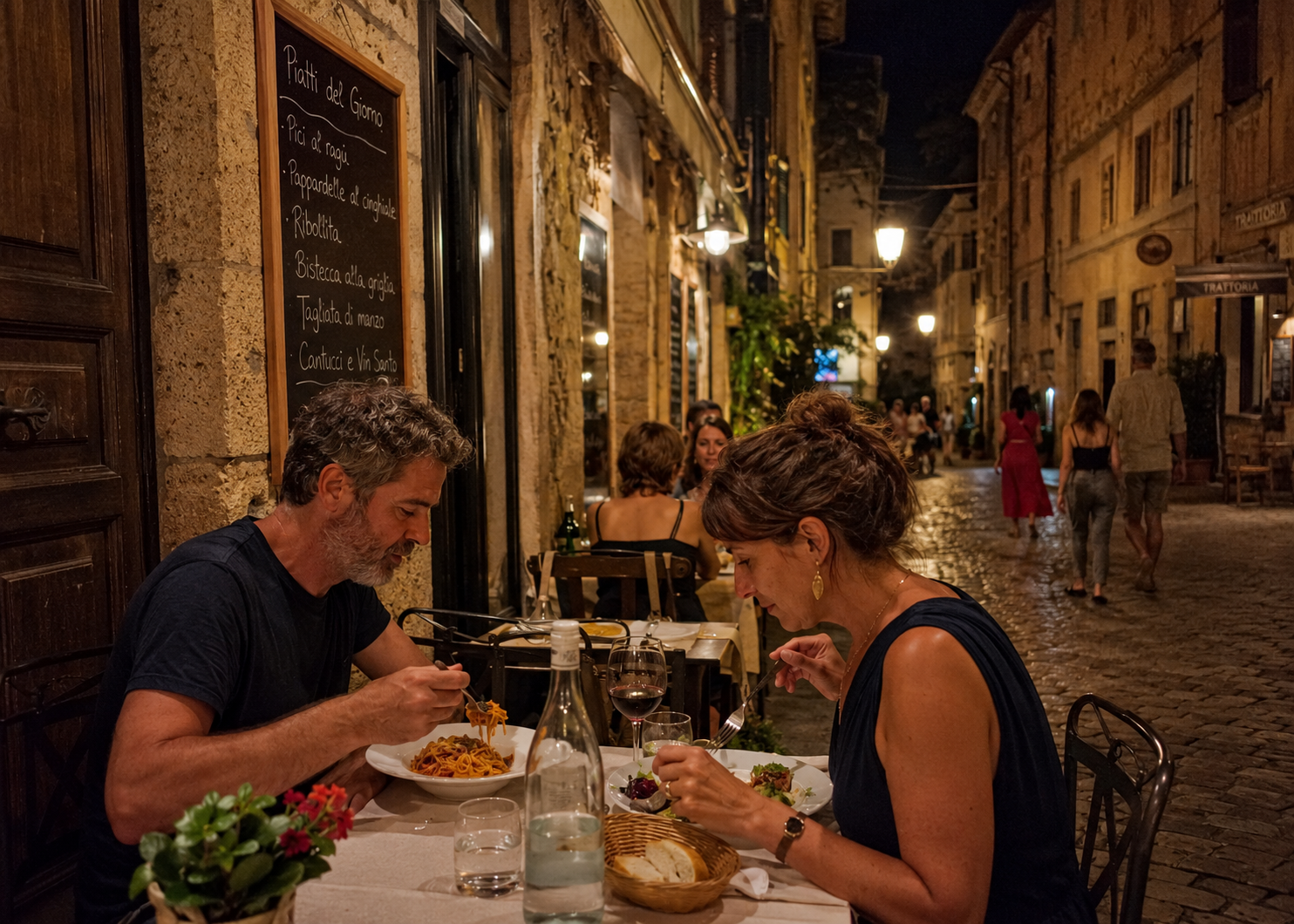
The research on meal timing and weight has produced a more nuanced picture than the American eat-early gospel suggests.
Total daily intake matters more than timing. The fundamental driver of weight is the relationship between energy consumed and energy expended across the day. The timing of that intake matters less than the total. A person eating the same amount at different times shows smaller weight differences than the timing emphasis would predict.
Meal composition matters more than timing. What is eaten affects weight more than when it is eaten. A small whole-food dinner at 9:00pm affects the body differently than a large processed dinner at 6:00pm, in favor of the late small meal.
There is some evidence for circadian effects, but the picture is complex. Some research suggests the body handles food somewhat differently at different times of day, with very late eating potentially less favorable for some people. This effect appears modest compared to total intake and composition, and it primarily concerns very late eating combined with poor sleep rather than the Italian 9:00pm dinner followed by a full night.
Front-loading toward earlier in the day may carry modest benefits. Eating more at breakfast and lunch and less at dinner aligns with some metabolic research. The Italian pattern does exactly this, with the large lunch and small dinner, even though the dinner hour is late. The front-loading, not the dinner timing, is the relevant feature.
Evening snacking is a major driver of American weight gain. The food consumed in the hours after dinner, often processed snacks eaten in front of a screen, contributes substantially to American excess. The Italian pattern of no post-dinner snacking eliminates this source, while the American early dinner followed by hours of grazing does not.
Sleep quality interacts with eating patterns. Eating a heavy meal immediately before sleep can disrupt it, and disrupted sleep affects weight regulation. The Italian dinner at 9:00pm with sleep at 11:30pm or midnight leaves a digestion window. The gap matters more than the clock time.
The science does not support the simple American claim that late eating causes weight gain. It supports a more nuanced picture in which total intake, meal composition, the daily distribution of food and post-dinner snacking matter far more than the hour of dinner. The Italian late dinner is associated with good outcomes because of these features, not despite the late timing.
What The American Early Dinner Does Differently
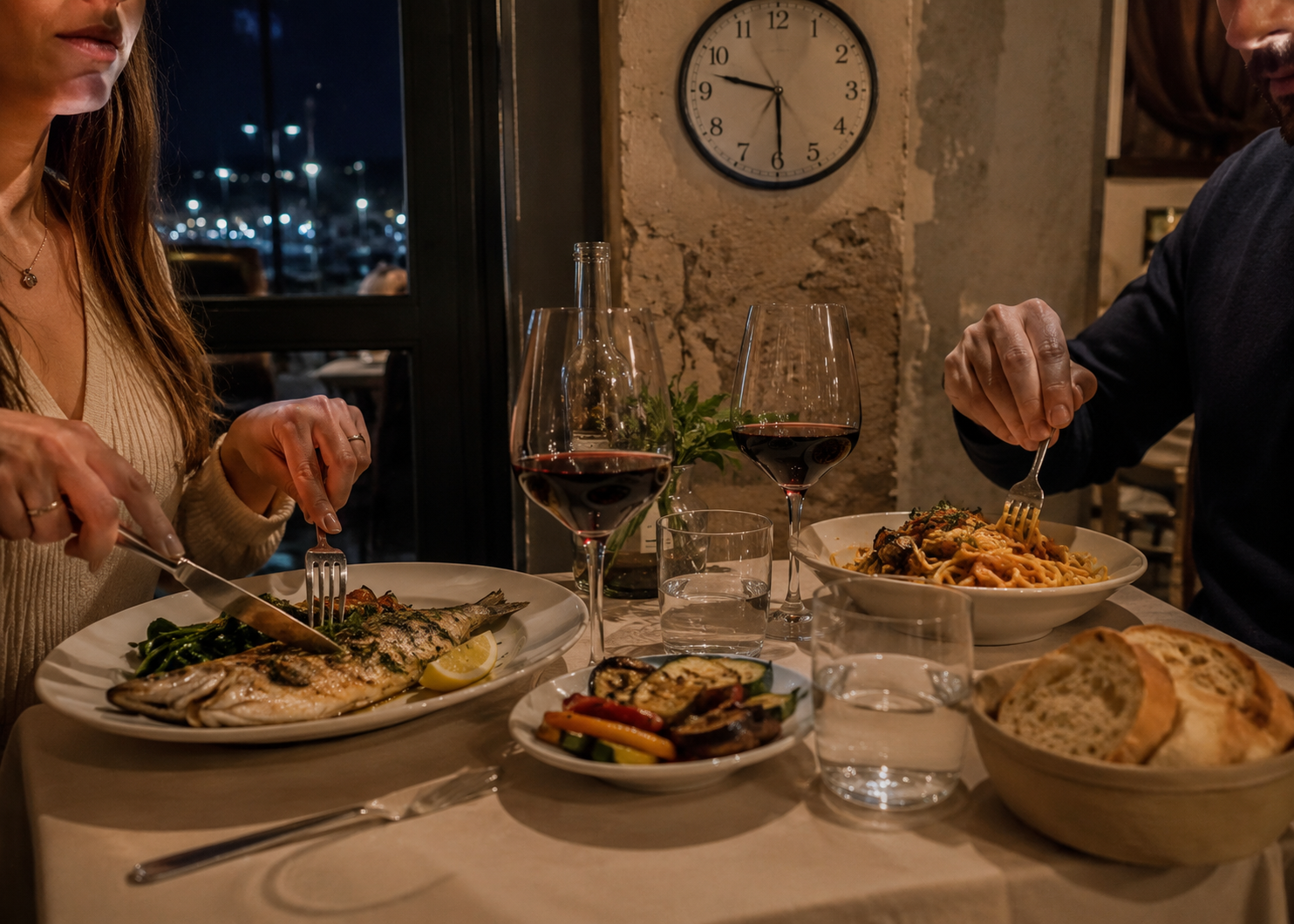
The American early dinner differs from the Italian late dinner in the features that matter for weight.
Dinner is the largest meal. The American dinner is frequently the day’s centerpiece. The large evening meal delivers the bulk of the day’s food at the end of the day. The Italian pattern of a small dinner after a large lunch is reversed.
Dinner follows a small lunch. The American lunch is often light, a sandwich or salad eaten fast at a desk. The body arrives at dinner under-fed and then consumes a large meal. The distribution is back-loaded rather than front-loaded.
Dinner is eaten fast. The American dinner is often consumed quickly. Fast eating bypasses satiety signaling and promotes overconsumption before the body registers that it has had enough.
Dinner is followed by extensive snacking. The American pattern of dinner followed by hours of evening snacking adds substantially to the daily total. This is arguably the single largest difference from the Italian pattern.
Dinner is often processed food. Convenience foods, takeout and packaged products. The processed composition produces less satiety and a worse metabolic response than whole foods.
Dinner sits within a grazing pattern. Many Americans eat across the entire day, with snacks between meals, large portions and continuous availability of food. The grazing pattern produces excess regardless of dinner timing.
The combined American early dinner pattern is associated with weight gain not because of the early timing but because of the large size, the back-loaded distribution, the fast eating, the post-dinner snacking, the processed composition and the surrounding grazing pattern. The early timing that American nutrition culture prescribes does nothing to address any of these actual drivers.
The Snacking Hours Nobody Counts
If one difference deserves singling out, it is the stretch of hours after the American dinner, because this is where the early-dinner strategy quietly defeats itself. Finishing dinner at 6:00pm creates a long evening ahead, and that evening tends to fill with food.
The arithmetic is unforgiving and almost nobody performs it. A dinner that ends at six is followed by five or six waking hours, and the food consumed across those hours, the chips, the ice cream, the second helping of something in front of the television, is rarely counted as part of dinner at all. It registers mentally as nothing much, and it is often a substantial share of the day’s eating.
The Italian schedule closes this window almost by accident. A dinner that ends at ten or half past leaves an hour or two before bed, not six, and the eating day ends because there is simply no evening left to fill. The late dinner is protective in a way the early dinner is not, which inverts the entire American assumption.
This is the deepest irony of the eat-early advice. Pushing dinner earlier without changing anything else lengthens the snacking window rather than shortening it, so a person can follow the advice faithfully and end up eating more across the day than they did before. The rule was designed to reduce evening eating and, applied on its own, it can quietly increase it. The evening is the hardest stretch of the day for most people, being the hours when tiredness, boredom and the television all converge, so the shorter that stretch is, the less there is to manage.
What Individual Adults Can Adopt
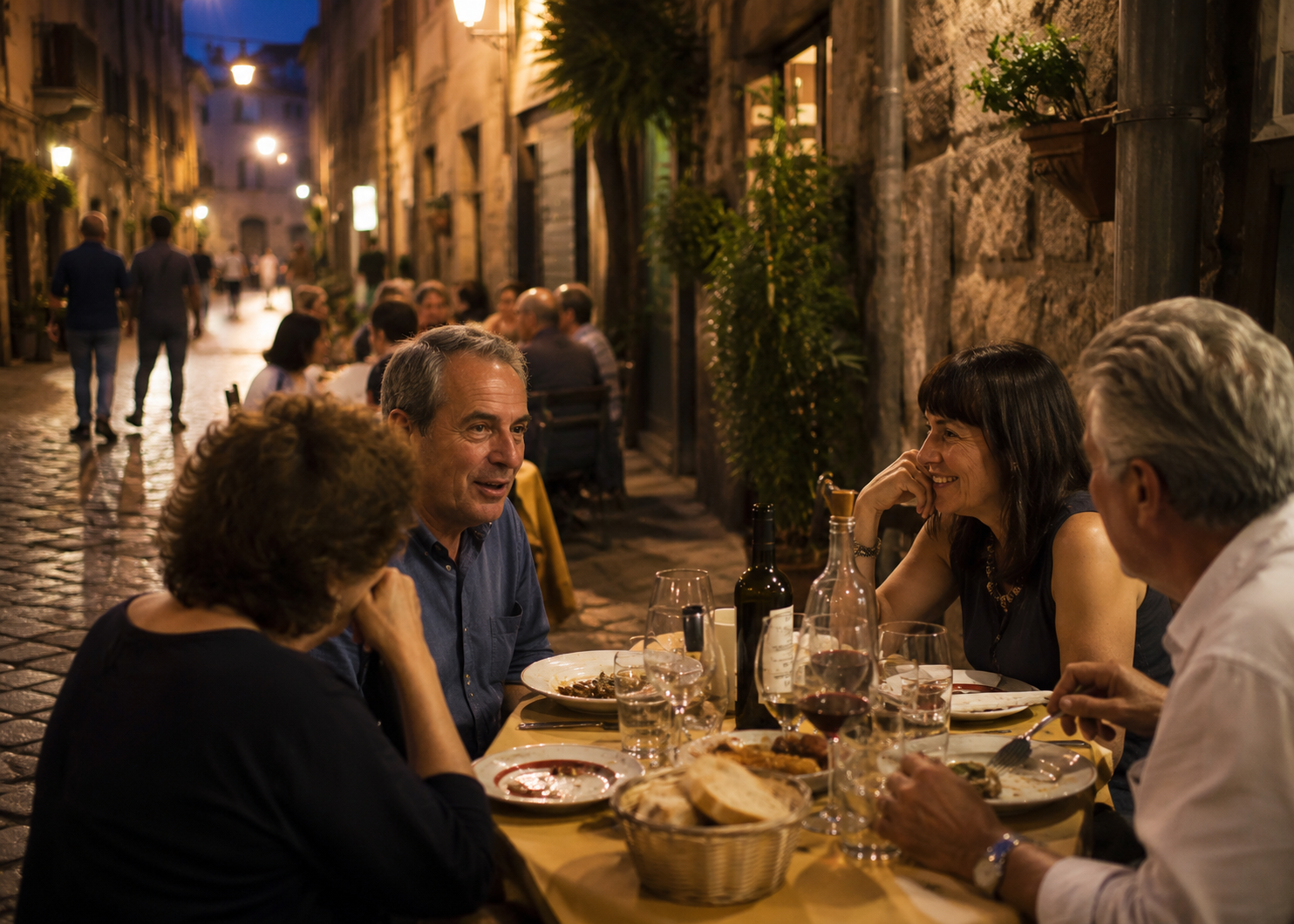
For adults interested in the pattern, the Italian approach offers specific features that matter more than dinner timing.
Make lunch the more substantial meal and dinner the lighter one. Shift the day’s eating toward midday. This redistribution aligns with metabolic research and models the Italian pattern, and it matters far more than the hour of dinner.
Let dinner be lighter. Regardless of timing, a smaller evening meal addresses the actual driver more directly than shifting the clock earlier would.
Close the eating day with dinner. Ending the day’s eating at dinner addresses one of the largest sources of American excess, and it is easier when dinner is late and the evening is short.
Eat dinner slowly. Take time, eat with other people when possible and allow satiety signaling to work. Slow eating prevents the overconsumption that fast eating invites.
Eat whole foods at dinner. Vegetables, fish, modest portions of whole grains and olive oil. The whole food composition produces satiety and a good metabolic response.
Move away from all-day grazing. Structured meals rather than continuous eating tend to reduce the daily total without any counting.
Stop worrying about the clock. A small whole-food dinner at 8:00pm is better than a large processed dinner at 6:00pm. The timing is the least important variable, and treating it as the most important one is what has misled so many people.
None of this is a diet, and it should not be turned into one. These are observations about a cultural pattern rather than a plan to be followed rigidly, and anyone who finds that structured eating advice makes their relationship with food more anxious rather than less should set it aside and speak to a professional instead.
What The Italian Late Dinner Reveals
The Italians eat dinner late and maintain lower obesity rates than Americans who eat dinner early. The difference is not the timing but everything around the dinner.
The Italian pattern is a small whole-food dinner that follows a large lunch, is eaten slowly and closes the eating day without subsequent snacking. The American pattern is a large processed dinner that follows a small lunch, is eaten fast and is followed by hours of snacking. The Italian timing is later, and the Italian outcomes are better, which is precisely what shows that the timing is not the driver.
For American adults, the recognition is that the eat-early gospel has been focused on the least important variable. The size, composition, daily distribution and post-dinner snacking matter enormously. The clock time of dinner matters little. The person who shifts dinner earlier while keeping the large size, the back-loaded distribution and the post-dinner snacking will see little benefit. The person who adopts the Italian pattern of a lighter dinner, a fuller lunch, slow eating and a closed evening may well see real benefit, even if dinner stays late.
There is something freeing in this for anyone who has spent years watching the kitchen clock with guilt. The rule that generated all that anxiety turns out to be the one that mattered least, and the features that do matter are pleasant ones, a proper lunch, an unhurried meal, real food and the company of other people. The Italian family eating at 9:00pm is not defying nutritional science but demonstrating it, and the same pattern is available to anyone willing to adopt the parts that count rather than the hour that does not.

About the Author: Ruben, co-founder of Gamintraveler.com since 2014, is a seasoned traveler from Spain who has explored over 100 countries since 2009. Known for his extensive travel adventures across South America, Europe, the US, Australia, New Zealand, Asia, and Africa, Ruben combines his passion for adventurous yet sustainable living with his love for cycling, highlighted by his remarkable 5-month bicycle journey from Spain to Norway. He currently resides in Spain, where he continues sharing his travel experiences with his partner, Rachel, and their son, Han.