
Walk past any pastry shop in Spain in the last days of October, and the window will be full of what look, at a glance, like a tidy pile of small white bones. They are pale, cylindrical, ridged like a section of marrow bone, and dusted or glazed to a soft ivory, and Spaniards are buying them by the boxful to eat on the first of November. They are called huesos de santo, which means saints’ bones, and no one in Spain finds this in the least bit odd or ghoulish.
These little marzipan bones, filled with a golden egg-yolk cream, are simply the quintessential sweet of All Saints’ Day, as ordinary a part of the season as a pumpkin is to an American October. Here is what huesos de santo actually are, the marzipan and the egg yolk that make them, the long history behind them, why Spain happily eats bones to honor the dead, and how to make a batch of your own. They are one of the loveliest and least morbid ways any culture has found to mark a season of remembrance.
What follows is the sweet shaped like a bone, the marzipan and the yema behind it, why Spain eats bones for the dead, the week of marzipan around it, and the recipe.
The Sweet Shaped Like a Bone
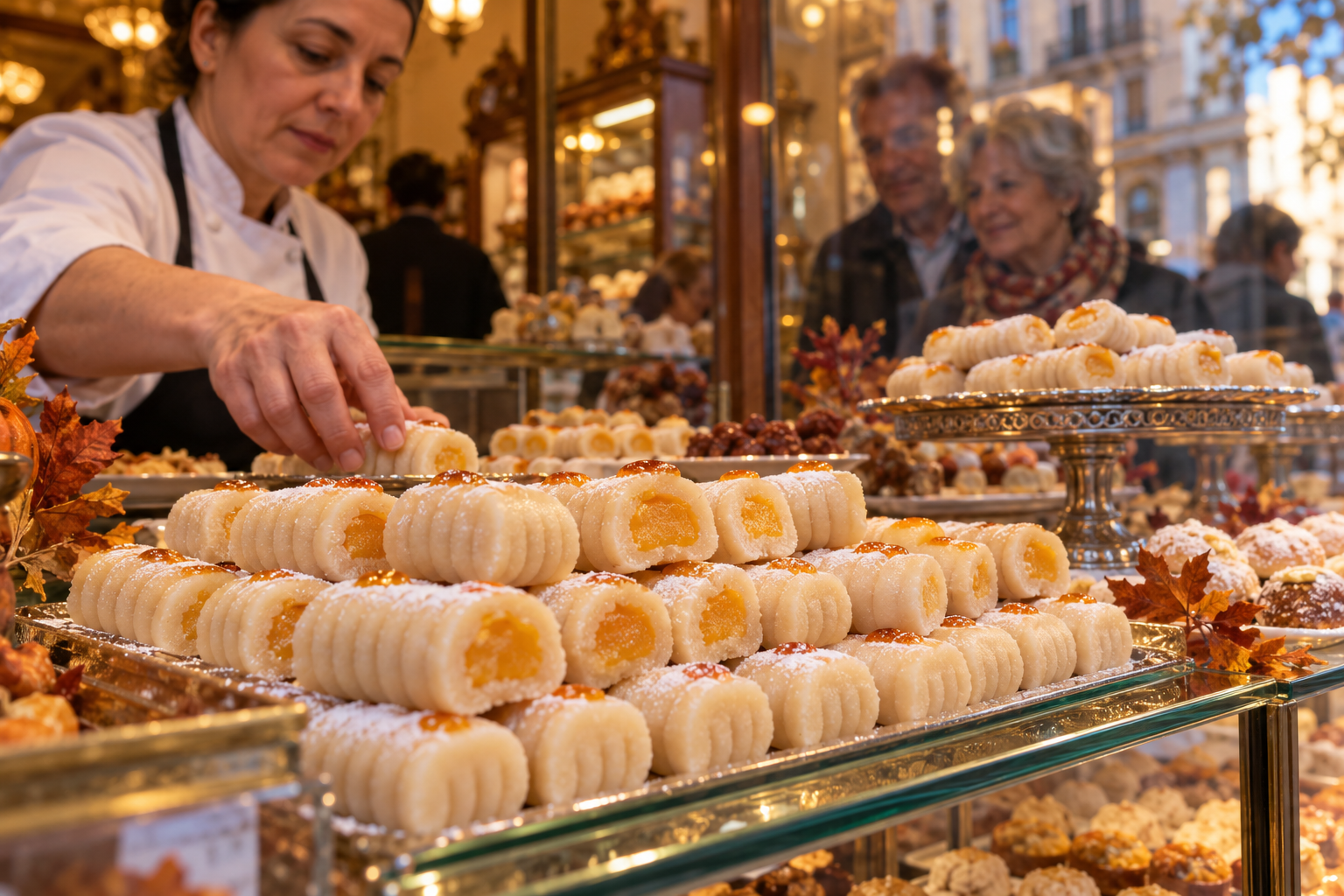
A hueso de santo is a small tube of marzipan filled with a sweet cream, shaped to resemble a bone. The marzipan, that dense, sweet almond paste, is rolled out and formed into little hollow cylinders, scored lengthwise with ridges so that they genuinely call to mind a section of bone, and then filled with a bright-yellow egg-yolk cream that stands in, charmingly, for the marrow. A glaze of sugar gives the outside its pale, slightly glossy, bone-like finish. The result is a bite-sized sweet that is unmistakably, deliberately shaped like a bone, which is exactly where its name comes from.
To an outsider, the idea of eating something designed to look like a bone, on a day dedicated to the dead, might sound a touch macabre, but that reaction says more about the squeamishness of other cultures around death than about anything dark in the sweet itself. In Spain, huesos de santo carry no spooky or morbid charge at all; they are simply a traditional, beloved, slightly whimsical sweet of the season, eaten with coffee, shared with family, and enjoyed entirely without a shiver.
The bone shape is a gentle, affectionate nod to the day’s theme of remembering those who have died, not a scare, and the overwhelming feeling around them is one of warmth and tradition rather than anything ghostly. They are, in the end, just a very good almond sweet that happens to be shaped like a bone, and the first time you eat one you realize how quickly the supposedly unsettling shape stops mattering at all once the sweetness takes over. The name raises an eyebrow; the taste disarms it completely.
The Marzipan and the Yema
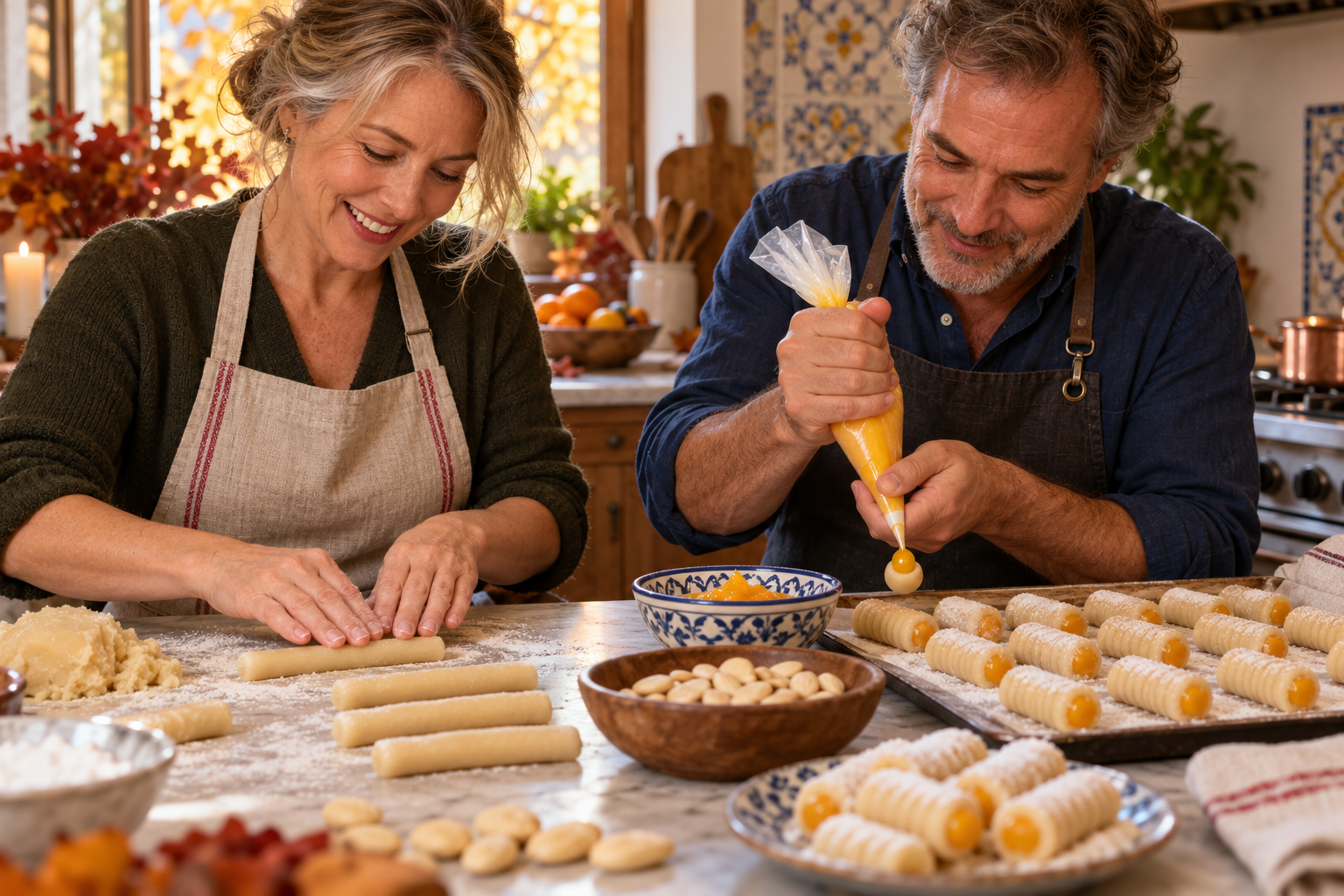
Everything good about a hueso de santo comes down to its two components, and both are gloriously simple. The first is the marzipan, made from nothing more than ground almonds and sugar, usually cooked together with a little water into a smooth, pliable, intensely almond-scented paste. This is not an accident of the calendar, either: All Saints’ Day falls right at the tail of the almond harvest in Spain, so the sweet is, in the oldest sense, a seasonal one, made from the nuts just gathered. Marzipan carries a Moorish inheritance going back over a thousand years that stretches back over a thousand years, which is part of why Spanish almond sweets are so refined and so central to celebrations.
The second component is the filling, the dulce de yema, a sweet egg-yolk cream that is a small marvel in its own right. It is made by cooking egg yolks gently with a sugar syrup, stirring patiently over low heat until the mixture thickens into a dense, glossy, deep-yellow custard, rich and sweet, that is then piped into the hollow marzipan tubes.
The combination is what makes the sweet sing: the firm, almondy marzipan shell against the soft, rich, intensely sweet yolk center, a contrast of textures and a double hit of two of the great Spanish confectionery traditions, almonds and egg yolk, in a single small bite. Modern pastry shops now offer huesos de santo filled with chocolate, coconut, or fruit creams, and those are pleasant enough, but the traditional egg-yolk version remains the real and best one, the one that tastes of the day.
A Taste Older Than You Would Guess
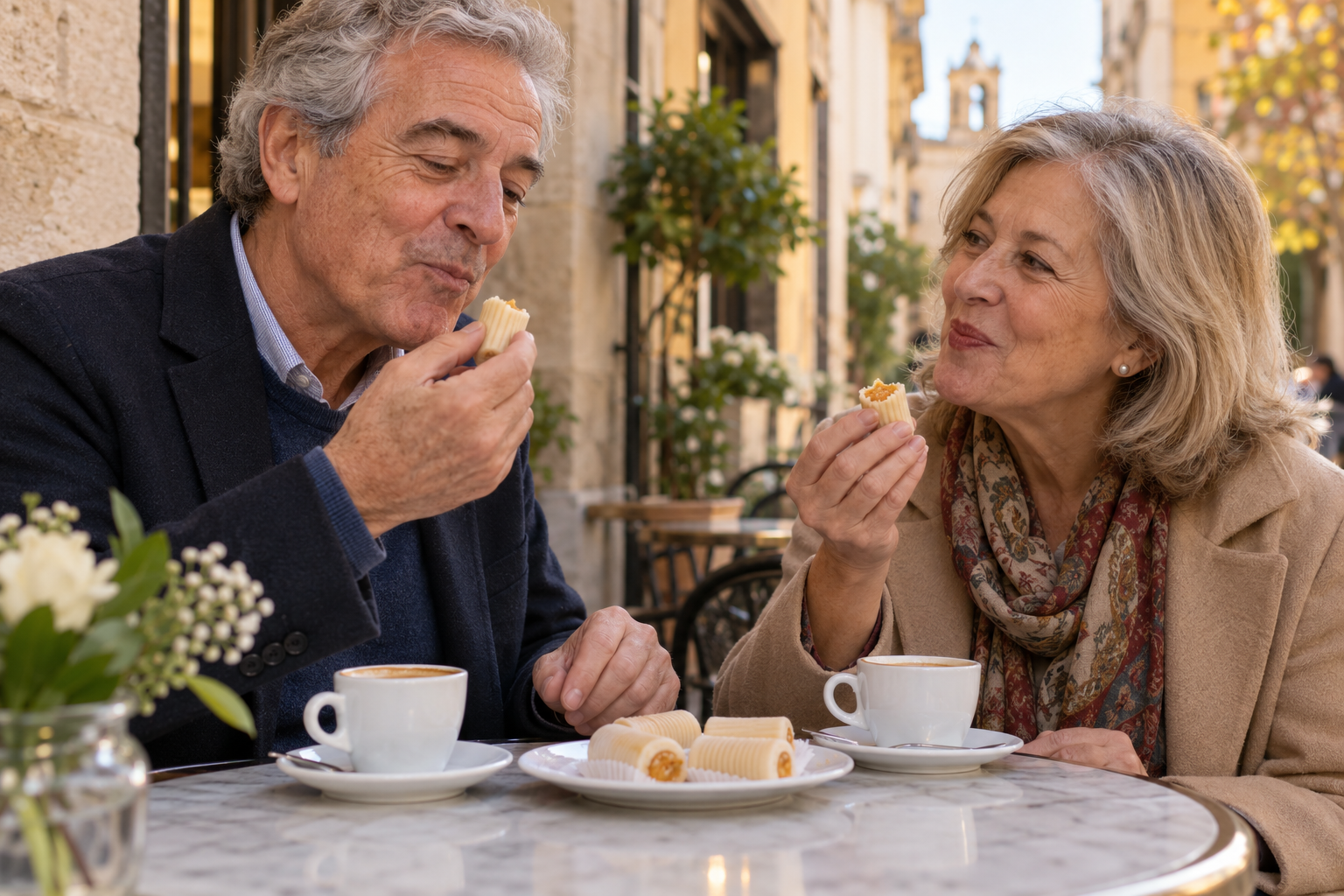
There is a lot of history folded into this small sweet, more than its humble appearance suggests. Marzipan, the heart of the hueso de santo, is one of the oldest confections in the Mediterranean world, and its presence in Spanish baking is a direct inheritance from the centuries of Moorish rule, when Arab cooks brought with them a sophisticated tradition of almond-and-sugar sweets that Spain absorbed and made its own. When you eat a hueso de santo, you are tasting a confectionery lineage that runs back more than a thousand years, long before Spain was Spain, which is a remarkable thing to find in a little bone-shaped treat from a pastry shop window.
The tie to the dead is ancient too. The marking of the first days of November as a time to honor and remember the departed is a very old observance, layered over even older autumn rites about death and the turning of the year, and sweets made specially for the occasion have long been part of how communities marked it.
Huesos de santo sit squarely in that tradition, a food made for a season of remembrance, carrying both the almond craft of medieval Iberia and the far older human impulse to mark death with something shared and sweet. The result is that this unassuming pastry, bought casually by the box each autumn, is actually a small edible monument, linking the modern Spaniard sipping their coffee to a very deep past, which only makes the pleasure of eating one a little richer.
Why Spain Eats Bones for the Dead
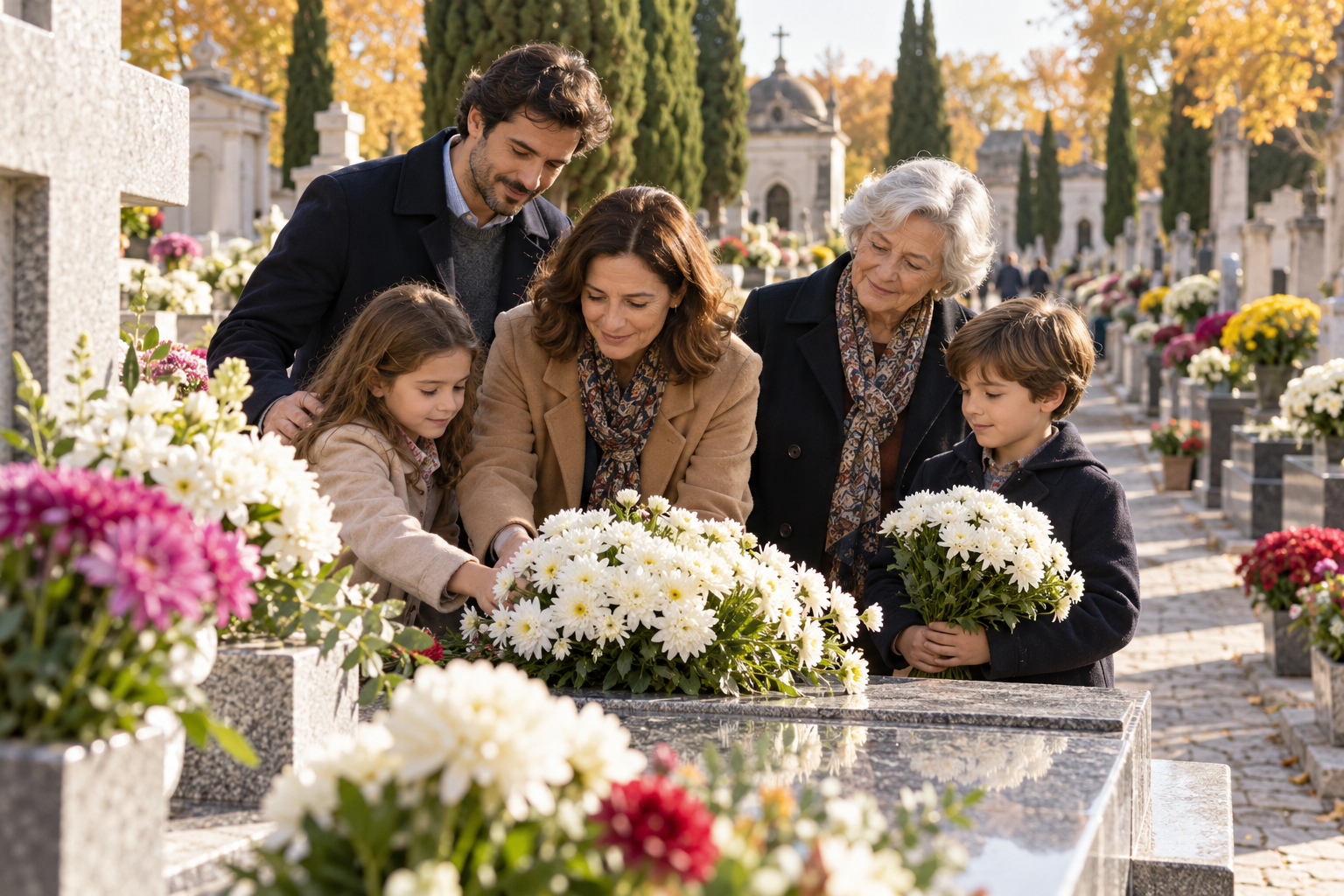
To understand why a bone-shaped sweet feels natural rather than grim in Spain, you have to understand what the first and second of November actually are there. These are the days of Todos los Santos, All Saints’ Day, and the day after, the Day of the Dead or All Souls’, when Spaniards traditionally honor the saints and, above all, remember their own dead. It is a time when families visit cemeteries and decorate graves with flowers, and gather to remember those who have gone before them. It is solemn, yes, but it is also warm, familial, and entirely woven into the rhythm of ordinary life rather than set apart as something frightening.
In that context, a sweet shaped like a bone is not a provocation but a fitting, gentle companion to the day, a small culinary nod to mortality that sits comfortably within a culture with a famously direct and unflinching relationship with death. Spaniards do not hide death away or dress it up only as horror; they fold it into the calendar, honor it with family and flowers and food, and then sit down and eat a sweet shaped like a bone without a second thought.
There is something quietly healthy and humane in this, a way of acknowledging death as part of life rather than a taboo, and the huesos de santo are a perfect small expression of it. To eat one is not to make light of death but to mark the day in the tender, matter-of-fact way the whole culture does, with something sweet shared among the living in memory of the dead.
A Week of Marzipan
Huesos de santo do not appear alone, and for a week or so around the start of November the pastry shops of Spain fill with a whole little family of traditional All Saints’ sweets. Alongside the saints’ bones you will find bunuelos de viento, the light fried puffs of the season, and, especially in Catalonia, panellets, the marzipan sweets rolled in pine nuts. Together these form the recognized trio of Todos los Santos confectionery, and their arrival in the shop windows is one of the sure signs that the season has turned, as reliable a marker of the calendar as the first cold morning.
Part of the pleasure is precisely that they are fleeting. For most of the year you will not find them; then, for a brief window around All Saints’, they are suddenly everywhere, piled in every pasteleria, and Spaniards buy and eat them with the particular relish reserved for things that come only once a year. That seasonality is part of what keeps them special, a sweet tied so tightly to a single moment in the calendar that eating one is inseparable from the time of year and all its associations of family, remembrance, and the turn toward winter.
They are a taste of a specific few days, bound tightly to the turn of the season and the remembering of the dead, and when those days pass the bones quietly vanish from the pastry windows until next November comes around again. Their brief, annual return is part of what makes them feel less like a product and more like a small seasonal ritual.
Make It: Huesos de Santo
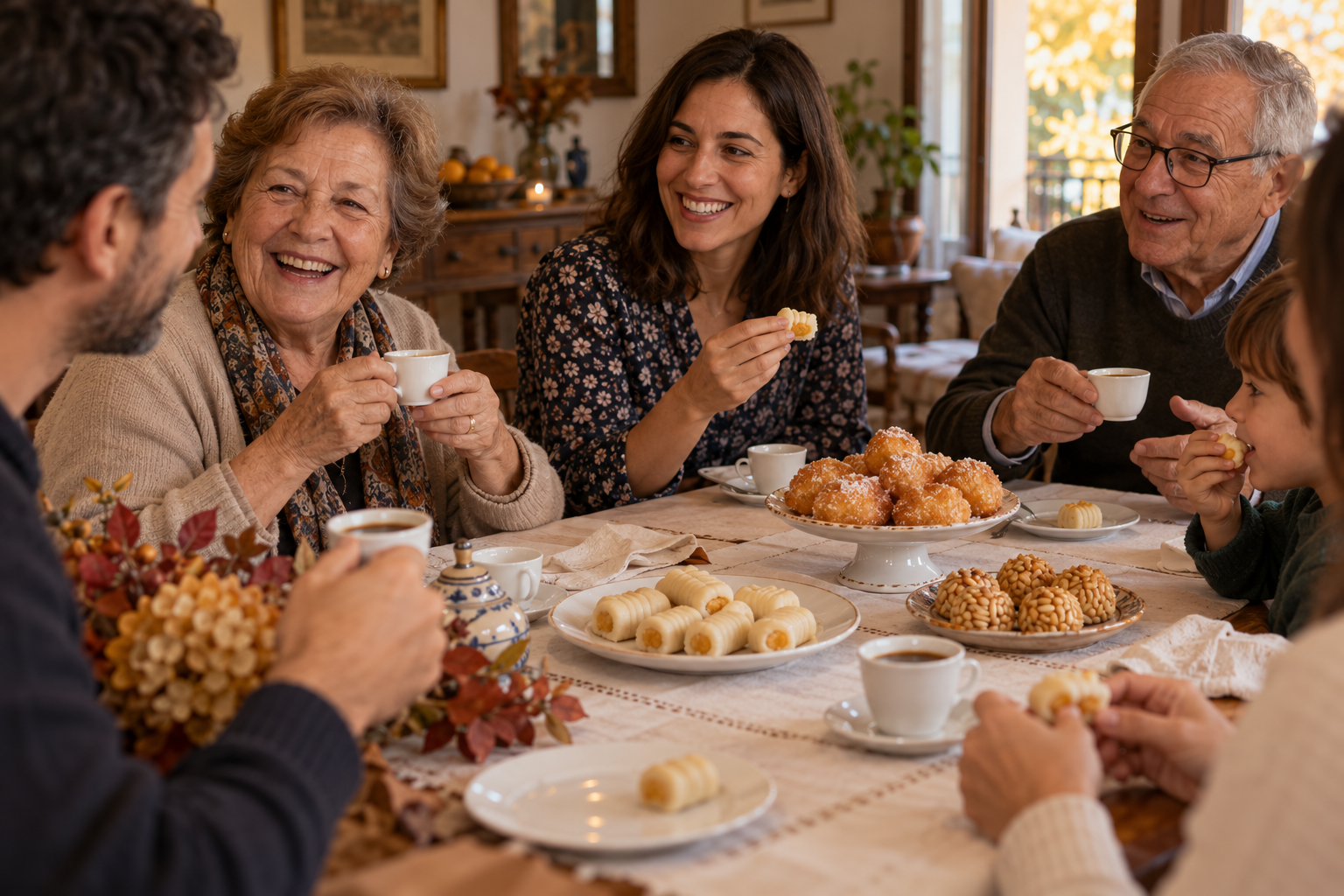
Here is a traditional version with the classic egg-yolk filling, making around a dozen to fifteen small bones. Allow time for the marzipan to rest and the bones to dry; this is a sweet that rewards a little patience.
Ingredients
For the marzipan:
- 200g ground almonds
- 200g granulated sugar
- 100ml water
- icing sugar, for rolling
For the egg-yolk filling:
- 4 egg yolks
- 100g granulated sugar
- 50ml water
For the glaze:
- 100g icing sugar
- a little water
Instructions
- Make the marzipan: heat the granulated sugar and water in a saucepan until it forms a light syrup, then remove from the heat and stir in the ground almonds until it comes together into a paste. Let it cool, then knead on a surface dusted with icing sugar until smooth. Wrap and rest for at least an hour.
- Make the filling: heat the sugar and water into a syrup. Beat the egg yolks in a bowl, then slowly pour in a little hot syrup while whisking. Return everything to the pan and cook very gently over low heat, stirring constantly, until it thickens into a dense custard. Do not let it boil or the yolks will curdle. Cool completely.
- Roll the rested marzipan out on an icing-sugar-dusted surface to about 3mm thick. Cut it into squares of roughly 5cm. Score each square with lengthwise ridges using a fork or skewer, then wrap each one around a thin greased stick or dowel to form a hollow tube, pressing the seam to seal. Slide off the stick and let the tubes dry for an hour or more.
- Spoon the cooled egg-yolk filling into a piping bag and pipe it into each hollow marzipan tube from both ends until filled.
- Make the glaze by mixing the icing sugar with just enough water to form a thin, pourable icing. Dip or brush each filled bone with the glaze and set on a rack to dry, giving them their classic pale, bone-white finish.
- Let the glaze set before serving. Enjoy with coffee, in the Spanish way, over the first days of November.

About the Author: Ruben, co-founder of Gamintraveler.com since 2014, is a seasoned traveler from Spain who has explored over 100 countries since 2009. Known for his extensive travel adventures across South America, Europe, the US, Australia, New Zealand, Asia, and Africa, Ruben combines his passion for adventurous yet sustainable living with his love for cycling, highlighted by his remarkable 5-month bicycle journey from Spain to Norway. He currently resides in Spain, where he continues sharing his travel experiences with his partner, Rachel, and their son, Han.